


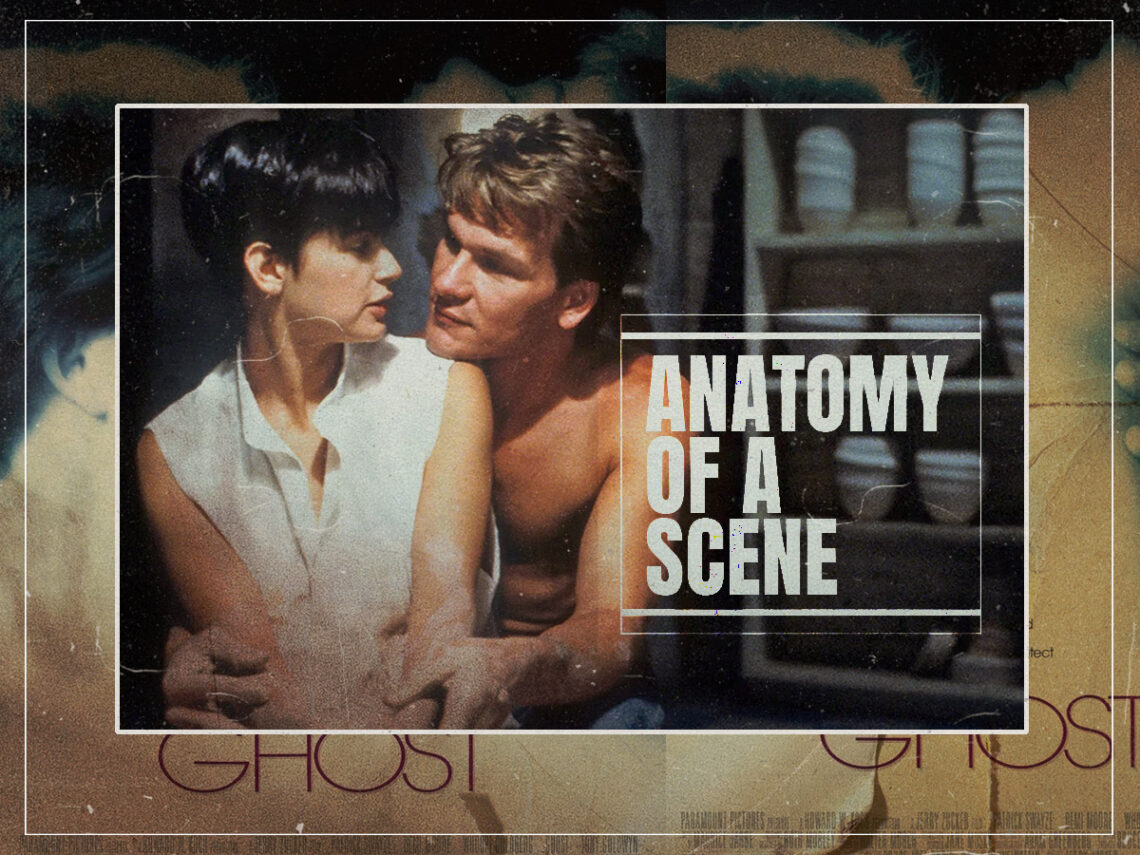
Anatomy of a Scene: The supernatural pottery of ‘Ghost’

No offence to Seth Rogen – who, it must be said, has crafted some beautiful creations since picking up his side hustle and displaying an increasing mastery of it – but pottery has never been sexier than it was when Demi Moore and Patrick Swayze took things to supernaturally sensual levels in Ghost.
The way pop culture operates is that certain scenes, moments, and soundbites tend to linger longer in the memory than the movies and TV shows that made them iconic, to begin with, and that’s true of Jerry Zucker’s romance. Everybody knows about the pottery, and it’s been parodied so often for so long that it’s not even imaginative to do it anymore, but it’s easy to forget that Ghost was an absolute monster.
It was the highest-grossing release of 1990, sold over 50 million tickets in the United States, became the top-earning film of all time in the United Kingdom after spending eight consecutive weeks at number one, earned five Academy Award nominations including ‘Best Picture’ and won two, with Whoopi Goldberg earning Ghost a ‘Best Supporting Actress’ trophy to go alongside Bruce Joel Rubin’s victory for ‘Best Original Screenplay’.
As was the case with many Demi Moore movies throughout the 1990s, the star’s status as a sex symbol helped drive audiences to their nearest multiplex, which worked a treat for Indecent Proposal and Disclosure, if not so well for Striptease. Meanwhile, Swayze had been a poster boy for Hollywood hunks ever since Dirty Dancing, so putting the two together was destined to make the sparks fly.
On paper, a grieving woman indulging in some innocuous pottery being visited by the ghost of her murdered boyfriend for some paranormal foreplay is preposterous. That being said, as easy as it would have been for the pottery scene in Ghost to become unintentionally hilarious, part of the reason why it works so well is because Moore and Swayze are so committed to the bit.
‘Unchained Melody’ was a brilliant choice for the Ghost soundtrack, adding a layer of musical pathos that resonated deeply with audiences. Its inclusion elevated the emotional intensity of the film, particularly against the backdrop of the sizzling chemistry between the stars. The symbolism of the phallic clay creations, which initially held significance, became secondary as Molly Jensen and Sam Wheat transcended the boundaries between the living world and the afterlife.
The film exists in several genres all at once, with the pottery sequence hammering home the fact it’s a fantasy with supernatural trappings. The murder mystery element can’t be forgotten about, either, but as obvious as it is to say, Ghost was always a love story first and foremost. Molly is left with a cavernous void in her life following Sam’s death, but just because he’s technically six feet under, it doesn’t mean their story needs to end.
The one person who meant everything to her is no longer there in the physical plane, but she’s so unwilling to let him go and unable to move on that the greatest shot at closure she can find is bumping uglies with his spectral form. That’s a fairly lascivious way of putting it, but it nonetheless establishes the emptiness she feels, and that longing carries right through to the final scene.
She can’t – and won’t – rest until she’s discovered the identity of his killer and witnessed them suffering the consequences, while he’s not ready to float off into heaven until it happens, too. The bond between them is so strong that neither can move forward until the issue has been resolved, but along the way, they find the time to display the power of their love through inter-dimensional eroticism that stands tall as one of the most iconic moments 1990s cinema had to offer.
