


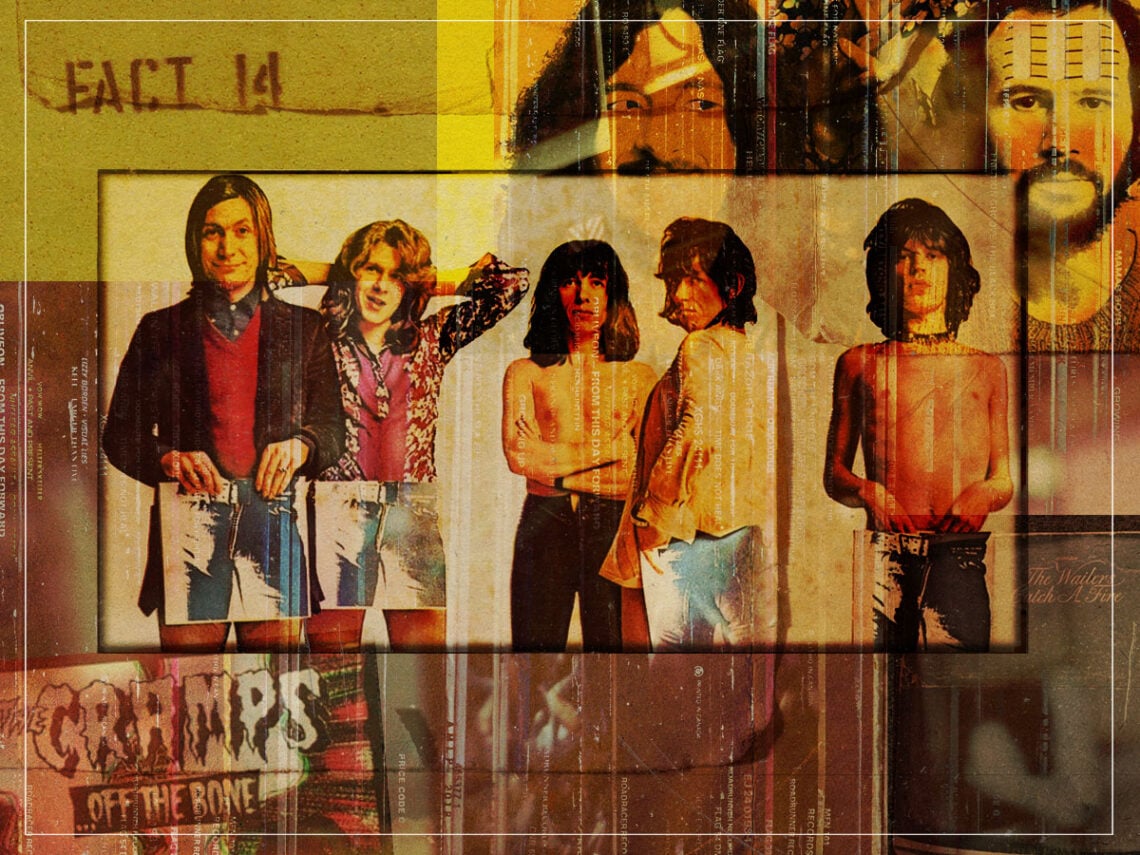
The five strangest record sleeves of all time

Vinyl records have witnessed a colossal resurgence in recent years, and a lot of that popularity is down to the inherent visual appeal of physical media. On music streaming services, you are granted a low-quality digital rendering of an album cover that some underpaid designer has spent months crafting, but physical record sleeves allow you to study the intricacies of that art in person. It is a simple fact of life that album covers look better when rendered on a 12-inch cardboard sleeve, and the format allows for much more creativity, too.
There was once a time, not too long ago, when vinyl was the standard music format, and records did not have the novelty appeal that they are often marketed with in the present day. As a result, artists and record labels – particularly those who were operating on limited budgets and smaller scales – would employ all sorts of techniques to make their records stand out among the rest on the shelves of record stores. This desire to stand out led to some of the most iconic record sleeves of all time.
Particularly during the psychedelic age of the 1960s, album covers switched from being simple press shots of the artists themselves to being captivating works of art in their own right. Covers like Sgt. Pepper’s Lonely Hearts Club Band or Miles Davis’ Bitches Brew could hang just as easily on the walls of art galleries as on the shelves of record stores. Album covers often provided an accessible form of art for music consumers, but some artists took the art of record sleeves a step further.
From the interactive sleeves of The Velvet Underground & Nico or Led Zeppelin III to the film casing of Public Image Limited’s Metal Box, there have been numerous releases over the years that have challenged the conventions of what a record sleeve is. While these releases might be the ire of record collectors, dismayed that they do not fit neatly onto shelves, they also form some of the most interesting examples of music on physical media. So, join us as we look at five of the strangest examples of artists adding a little slice of intrigue into their record sleeves.
Five of the strangest album covers:
The Return of the Durutti Column – The Durutti Column
More so than most labels, Tony Wilson’s Factory Records recognised the importance of incredible, interesting artwork. For instance, Peter Saville’s die-cut ‘floppy disk’ record sleeve of New Order’s ‘Blue Monday’ ended up costing Factory money for every copy sold, but they did it anyway. The pinnacle of this artistic endeavour came with the debut album from The Durutti Column, The Return of the Durutti Column.
Initial copies of the album were issued in a record sleeve constructed from coarse sandpaper. This meant that, when placed in your record collection, the sleeve would essentially destroy whatever LPs it was placed beside – as if to say, ‘This is the only record you need’. While this kind of stunt was certainly in keeping with the ethos of Factory Records, constructing 3,600 sandpaper record sleeves was a fairly time-consuming task for an independent label, and so members of Joy Division and A Certain Ratio were recruited to help out.

Catch A Fire – The Wailers
Bob Marley is among the most iconic recording artists of all time, and the Jamaican songwriter was a defining figure of the reggae genre. Of course, the influence of ‘ganja’ on both Marley and reggae music as a whole is hard to entirely ignore. Marley did not help this reputation when, in 1973, The Wailers released their Catch a Fire album in a sleeve designed by Rod Dyer and Bob Weiner, which was meant to replicate a Zippo lighter.
Like the iconic American lighters, the sleeve for Catch a Fire opened via a hinge on the side of the record sleeve, revealing a lit flame along with the vinyl record itself. The gimmick sleeve worked, and the album quickly became something of a collector’s item, both for its incredible music and the strange record sleeve. Inevitably, the record label soon decided that hand-riveting 20,000 record sleeves was not cost-effective, and later, reissues featured a lacklustre cover showing Marley smoking a spliff.

…Off the Bone – The Cramps
One of the issues that designers and artists often run into when creating album covers is the lack of depth that a 12-inch flat square offers. Luckily, American psychobilly progenitors The Cramps had the answer. Their blistering 1983 compilation album …Off the Bone featured cartoonish artwork by Dead Jaw, rendered as a 3D anaglyph. Anaglyphs have been used for years to create 3D images in the minds of viewers, but the effect is rarely employed on album covers.
The initial pressings of the compilation album featured this captivating 3D scene along with a pair of paper ‘3D glasses’, which allowed the listener to view the cover in three dimensions. The cinematic quality of the sleeve tied in well with the influences of The Cramps, who always loved B-movies and kitsch. Although later pressings featured Dead Jaw’s artwork unencumbered by the red and blue anaglyph filter, the 3D cover remains a collector’s item among fans of The Cramps.

Tadpoles – Bonzo Dog Doo Dah Band
The 1960s was a revolutionary period for both music and comedy, and no group exemplified that quite as well as the Bonzo Dog Doo Dah Band. Blending novelty songs with profound psychedelia, the group required an album cover befitting of their eccentric style. So, for their third album, Tadpoles, the band employed the powers of a die-cut sleeve.
The record sleeve featured seven holes in the eyes and heads of the band members, while the inner sleeve featured a menagerie of different imagery. So, when listeners moved the inner sleeve back and forth, they could visualise the psychedelic goings-on inside the heads of the Bonzo Dog Doo Dah Band. While die-cut sleeves have been employed by many artists over the years, ranging from Led Zeppelin to Jeffrey Lewis, Tadpoles remains one of the most endearing examples.

Sticky Fingers – The Rolling Stones
Andy Warhol never paid much notice to the ‘normal’ way of doing things, so it makes sense that the album covers he designed were pretty unique. It was Warhol who was responsible for the ‘peelable’ banana cover of The Velvet Underground & Nico, but he managed to top that while designing the cover of The Rolling Stones’ 1971 album Sticky Fingers. Adding to the suggestive nature of the album’s title, the sleeve featured a functional zipper on the jeans of the cover star.
If fans were willing to unzip the jeans on the cover of Sticky Fingers, they would be greeted with an alternate album cover underneath, featuring a pair of white y-fronts emblazoned with the signature of Andy Warhol. Although, like many of the entries on this list, this interactive sleeve was abandoned for later pressings of the record as a cost-cutting measure, the original sleeve for Sticky Fingers remains one of the strangest and most intricate sleeves of all time.

