


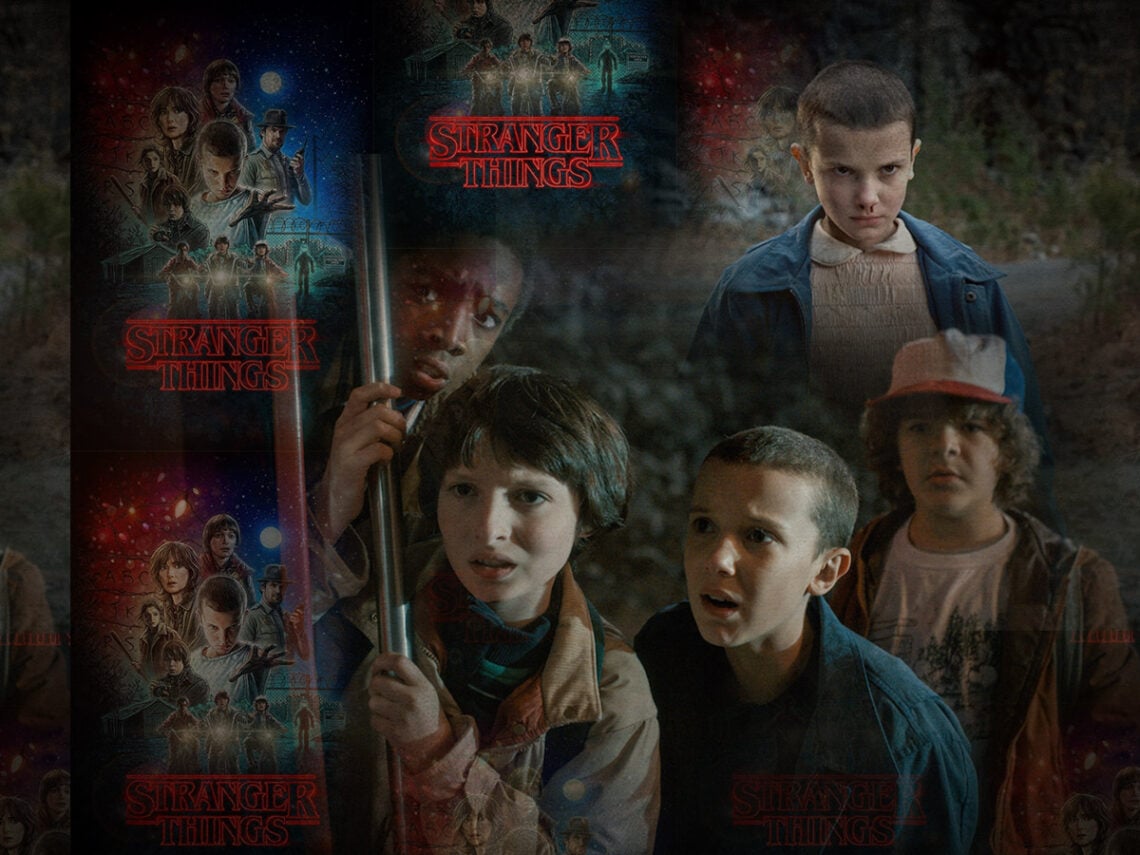
Era-defining politics and 1980s nostalgia: ‘Stranger Things’ 10 years later

Ten years ago, Stranger Things debuted on Netflix and spawned an unparalleled cultural phenomenon, one which saw the Duffer brothers tap into an era that was both nostalgic for adults and excitingly new for younger viewers, but the legacy of the show extends far beyond its sparking of an 1980s revival.
It tapped into the tumultuous political landscape of the time like nothing else, and people consumed the show so obsessively that even now, many social media users reflect on the nostalgia of their ‘2016 Stranger Things summer’, longing to be anywhere else.
It was the year of Donald Trump, and tensions were high that the dictatorial figure really was going to take power after all, a crushing blow for many of us, even outside of the United States, and 2016 became an especially terrifying time to be a woman, a person of colour, an immigrant, LGBTQ+, or disabled; things felt bleak.
But then came a show that offered escapism like nothing else. When we first meet the characters in Stranger Things, it’s 1983, which means Ronald Reagan would’ve been president, so while the show didn’t exactly present us with a political utopia, by contrasting a world constantly in the shadow of governmental oppression and mysterious experiments with bright ‘80s aesthetics and retro nostalgia, Stranger Things seemed to resonate with audiences in an oddly comforting way.
Of course, there were monsters, a bizarre and unfathomable ‘Upside Down’, terrifying human experiments that recalled the CIA’s torturous MKUltra, and the backdrop of a missing child, all of which is not exactly what you’d call comforting viewing, yet the Duffer brothers brought this to us in the style of classic ‘80s horror and coming-of-age movies that many audiences loved as kids, drawing on the likes of The Goonies and Stand By Me as much as A Nightmare on Elm Street and Poltergeist.
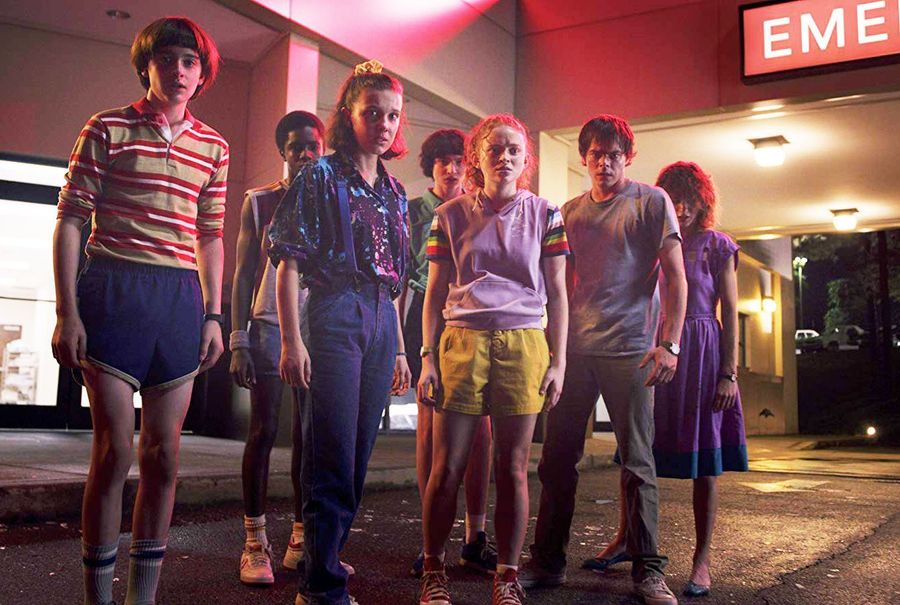
There was thus something so familiar about Stranger Things when it emerged on the streaming service, and this aesthetic quality drew a line between the uneasy political climate of America during the ‘80s and the one happening as the series aired. The show’s distrust of the government felt very prescient at the time of its 2016 release, with references to surveillance and covert experiments only further emphasising the cultural and political unease of the present time.
Of course, the Duffers didn’t consciously make Stranger Things as a commentary on the political climate of America, as the battle between Trump and his opponent, Hillary Clinton, raged on and ultimately resulted in him becoming president a few months after it aired. Yet, 10 years on, it’s hard not to look back at Stranger Things and admire how perfectly it fell into public consciousness, tapping into an era where nostalgia was needed as a form of respite, even if the show did balance images of shellsuits and Pac-Man with mind-control testing and aliens.
Stranger Things went on to be record-breaking, with millions of viewers tuning in and soon making the show one of the service’s top-performing titles. As the fandom continued to grow and more seasons emerged to further success, it’s safe to say that it made an impact like few shows this side of the 2010s. Seasons four and five stand as some of the most-watched series in Netflix history, only narrowly beaten by the likes of Squid Game and Wednesday.
But despite the success of these aforementioned shows, they arguably haven’t had quite the same cultural impact as Stranger Things, which truly immersed its audiences in a world that was somehow both familiar and far-removed from reality. With its reliable cast of teenage stars and a synth-heavy score from Michael Stein and Kyle Dixon, the show swept audiences off their feet, and with spin-offs and prequels still being made, it seems like it’s only continuing to resonate as much now as it did 10 years ago.
