


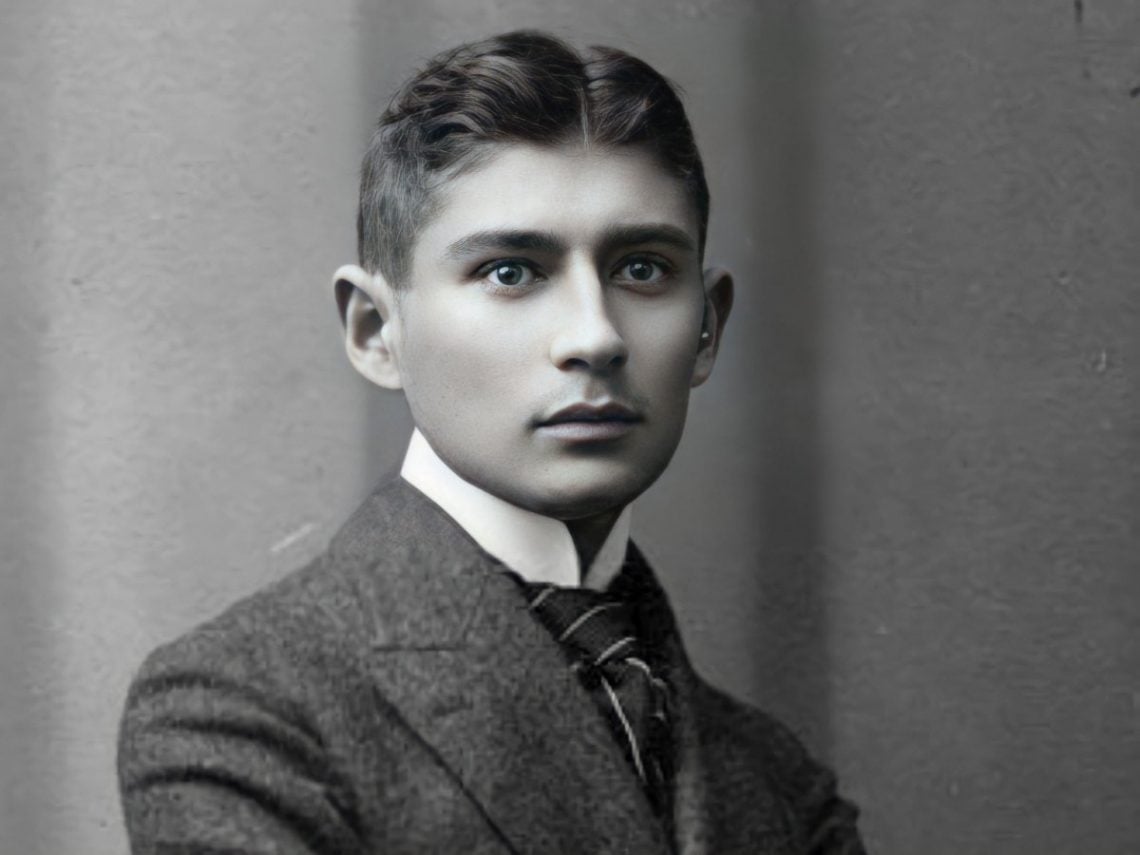
The strange tale of Franz Kafka, the little girl, and the lost doll

In a legacy rife with enigma and conjecture, one of Czech writer Franz Kafka‘s most enduring pieces of lore is also his most uncharacteristically heartwarming.
Legend has it, that Kafka came across a little girl crying over her lost doll in a Berlin park. Promising to keep an eye out and arrange to meet at the same spot the following day, rather than return empty-handed, he wrote her a letter from the doll’s point of view instead. “Please do not mourn me, I have gone on a trip to see the world. I will write you of my adventures.” This continued, passing by the same spot and gifting repeated letters from the doll reporting on her global travels.
As the meetings gradually came to a close, Kafka presented her with a new doll. Naturally different to her original beloved toy, attached was a letter describing how her travels had changed her. Years later, the girl now a young adult found a letter carefully positioned in a nook she’d neglected to investigate all those years ago. It poetically stated “In “everything that you love, you will eventually lose, but in the end, love will return in a different form.”
It’s a beautiful anecdote which displays the most tender empathy for the young girl and touches the universal, wounded ‘inner child’ in all of us who must navigate the human condition’s fraught terrain of grief and loss. It’s also shrouded in apocryphal ambiguity, an unverified tale that we all desperately hope is true despite its lack of evidence.
The Metamorphosis writer was not known for his warm and fuzzies. His dairy entries routinely document the idle morbid dreamings of his demise, from being incrementally hacked into numerous thin slices with a butcher’s knife or dragged through several floors of a tall building via a noose around his neck til his bloodied and broken stump of a body finds itself on the top floor. Plagued with a complex over dirt, internalised antisemitic tropes, sexual anxiety, and gnawing pangs of inadequacy, it would have been quite a feat to muster the emotional energy to conceive such a compassionate creative venture at odds with his tortured neurosis.
Kafka’s body of work is dominated by impregnable edifices of authority, existential anxiety, and absurdist explorations of alienation, which are starkly realised in his novels The Trial and The Castle. These, plus his various journal entries and short stories, only form ten per cent of his literary endeavours, frequently burning the majority of his work due to crippling bouts of self-doubt. It’s plausible that the drafts he wrote for the little girl may have ended up in the fireplace along with his myriad of lost sketches and outlines for other ideas.
The story reportedly came from Kafka’s girlfriend, Dora Diamant, whom he was living with when he died in 1924. Relaying the anecdote to Kafka’s friend and literary executor Max Brod, it remains a case of her word in the absence of any corroborating evidence, but those who knew her claim she wasn’t one to indulge in such a fabrication. If the letters were real and Kafka had made copies, it’s possible the Gestapo took them during a 1933 raid of communist leader Ludwig Lask’s Berlin apartment where Diamant was living. With all their joint papers confiscated, including many Kafka manuscripts, the doll letters would have disappeared in the Third Reich’s fortified bureaucracy just like a plot from one of his own novellas.
Kafka and the doll’s verification perhaps doesn’t matter, and should simply live on as an example of how to hold a child’s grief and guide them to comfort.
