


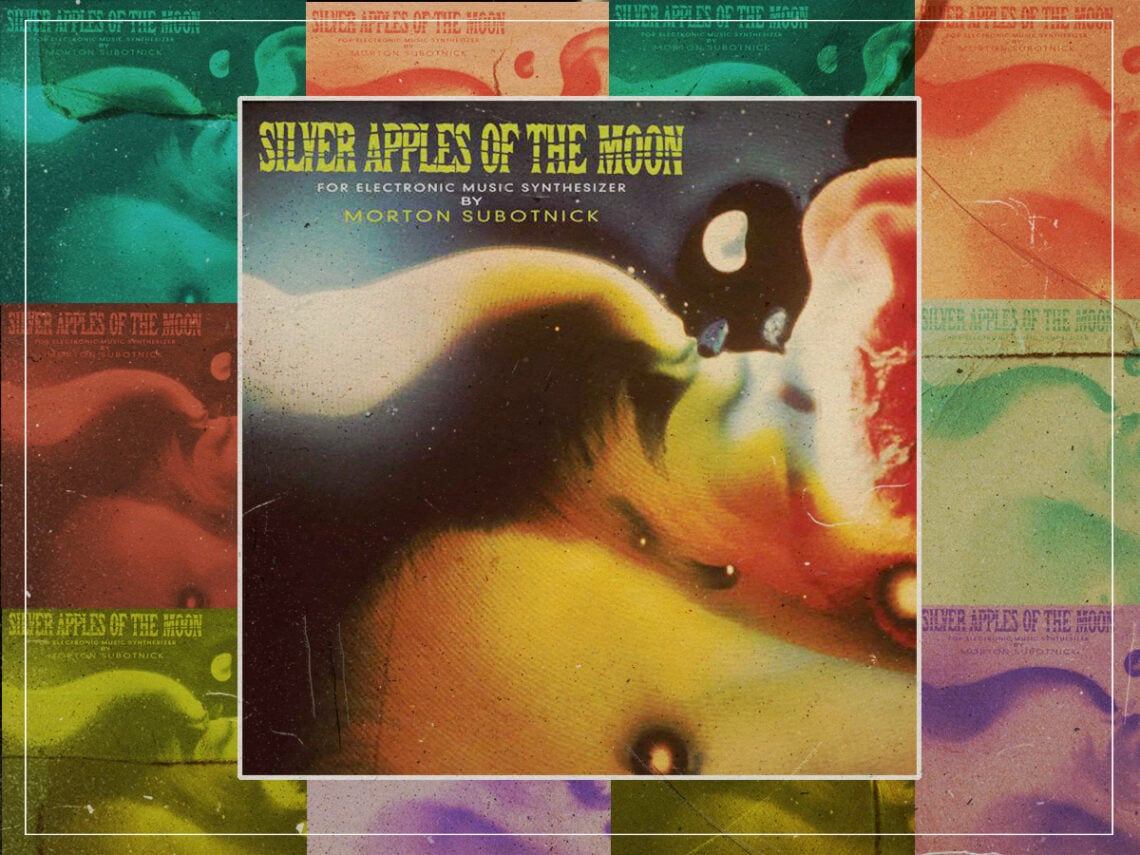
‘Silver Apples of the Moon’: the strange tale of the first revolutionary electronic album in history

Before the 1960s, electronic music largely had its roots in experimental and avant-garde compositions, often created using electronic equipment such as oscillators, tape recorders, and synthesisers. Musique concrète, which originated in the 1940s, included repurposing recorded sounds to create new sounds. All of these innovative designs were bubbling, but nothing could have predicted the explosive reaction to Morton Subotnick’s Silver Apples of the Moon in 1967.
Silver Apples of the Moon is widely considered the first electronic LP in history due to Subotnick’s bold leap into unchartered territory. Composed entirely on the Buchla synthesiser, Subotnick’s work eschewed traditional musical structures in favour of a tapestry of otherworldly sounds, offering listeners an immersive journey through a sonic mosaic unlike any they had experienced before.
Recorded over 13 months, Silver Apples of the Moon was ultimately a product of Subotnick’s own unwavering commitment to the project. He spent up to ten hours each day working on the compositions, with the aim of creating something no one else had, or would be able to replicate. Sound manipulation had been a passion of Subotnick’s since college, which ultimately led him to Don Buchla.
After receiving a grant from the Rockefeller Foundation with his friend and fellow musician Ramon Sender, Subotnick commissioned Buchla to create something that changed the way music was made, relying on the manipulation of frequencies rather than traditional musical notes. “To me, this was Day Zero for the evolution of music,” Subotnick recalled, envisioning the invention as a new gateway to creativity.
In 1955, Subotnick became a resident artist at New York City University. He was approached one night by Jac Holzman of Nonesuch Records to create an electronic album for the label, offering him $500. Thinking he was joking, Subotnick declined and kicked him out. The next day, after discovering a Nonesuch release of Bach’s concerts sitting in his collection, the musician dwelled on the disappointment of having missed out on a huge opportunity.
To his surprise, however, Holzman soon returned, offering Subotnick $1,000 to create an electronic album for the label. Subotnick accepted and got to work on Silver Apples of the Moon, creating history as the first-ever electronic album to be commissioned by a major label. Despite the success it enjoyed after release, Subotnick didn’t entirely understand what he was doing the whole time he was creating.
“I purposefully did not know what results I was after”, Subotnick explained, claiming that he was aware music was embarking on “a new period for composition, that the composer had the potential for being a studio artist”, but therein lies the difficulty. “I was offering something that isn’t easy to do,” he added, “but that was the point.”
Perhaps what’s most striking about Silver Apples of the Moon is that it still holds up. Some may find its lack of structure and penchant for drifting off course a little jarring, but ultimately, it remains the epitome of the boundless world of electronic music. Often, it oscillates between featherlight notes and heavier, more haunting offerings, but that level of experimentalism is precisely the appeal.
