


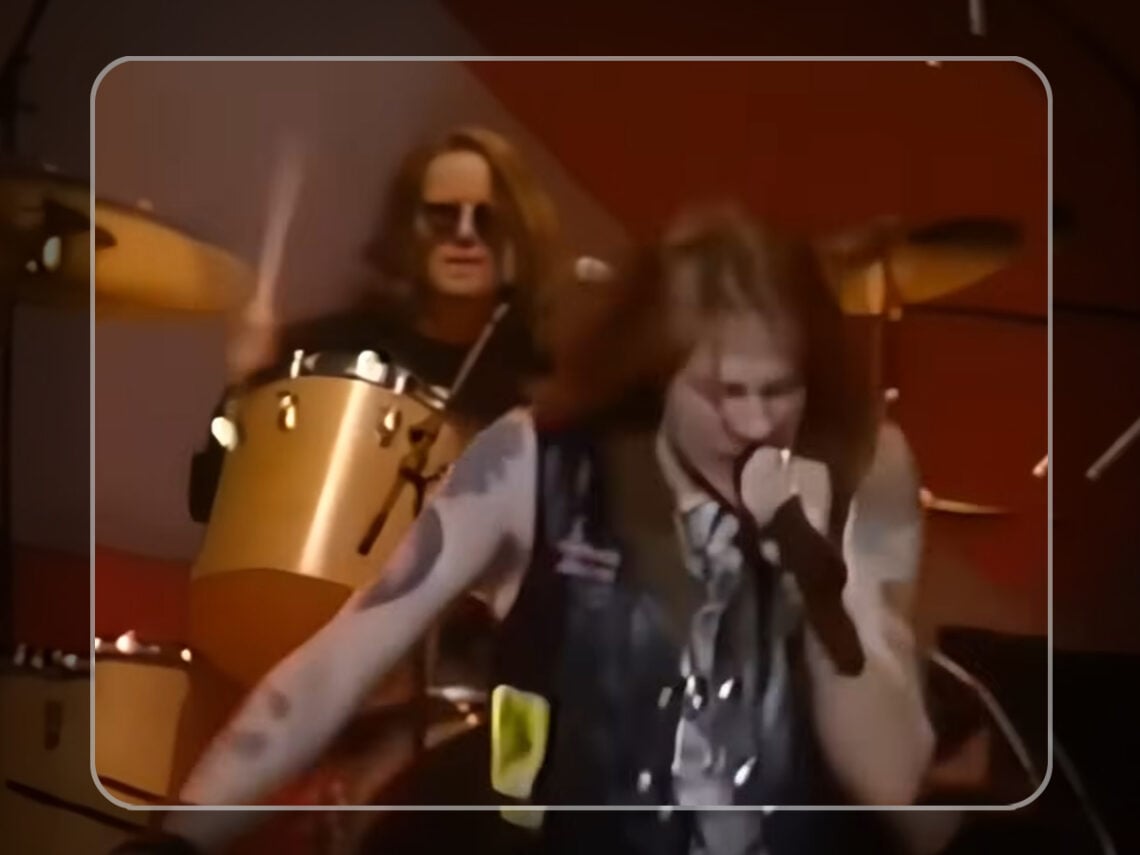
Watch the strange moment Don Henley played drums for Guns N’ Roses

When bands are in bad places, they can be full of cruel punches. Fighting in the studio, not speaking to each other outside work, making snide comments in interviews – the list goes on. But for Guns N’ Roses, replacing the drummer without informing the original one was a real low blow.
But this was no ordinary case of bringing in some fresh blood by mutual agreement to change the dynamic or freshen things up a bit. Instead, it was a decidedly nasty attempt to make a point and stir up some publicity when the band were already at one of their lowest ebbs. However, who could be so powerful, so head-turning, as to replace the drummer and really make a splash while doing it? Don Henley, that’s who.
This is not an invitation to paint poor Henley as the villain in this story, as, really, he was fooled into the plot under false pretences, too. But given that none of Guns N’ Roses were in particularly great shape at the end of the 1980s, he maybe should have had his suspicions. The band’s original drummer, Steve Adler, was in rehab at the time they needed to perform at the 1989 American Music Awards – but rather than doing the civil and logical thing, of approaching Adler and discussing a potential solution, Axl Rose decided there was no time like the present to give his old pal Henley a ring.
It was a matter of convenience and returning the favour because Rose had only recently provided backing vocals to Henley’s The End of Innocence album, so he didn’t hesitate in picking up the phone. “I was in the studio about two or three weeks later, and the phone rang,” the Eagles frontman later recalled. “It was Axl. He says, ‘I got a proposition for you. We’ve got to play the American Music Awards, and our drummer’s sick. We want you to play the drums.’ I was a little taken aback by the proposition. So I told him I’d think about it and call him back.”
Henley was eventually swayed by the fact that the band were set to perform the song ‘Patience’, a ballad, “not a balls-to-the-wall number,” to use his own vernacular. You could tell Henley never thought much more of it as he described the whole episode as “a piece of cake,” but as soon as Adler caught wind of his replacement, he was on the warpath, to say the least.
“When I got out, someone asked me why I hadn’t appeared on the American Music Awards,” the drummer fumed. “I didn’t know what the hell he was talking about. I was stunned and hurt. I can’t begin to describe the feeling of betrayal. Nobody in our organisation even mentioned the AMAs to me.” In the end, he would last a little over a year later in the band before being fired; a sign of the consequences, for them all, of when things got taken too far.
Henley was very much the human symbol of the piggy caught in the middle of this incident, wanting to do his friend a favour but not understanding the gravitas of the upheaval he would cause. It also serves as a cautionary tale of warning to learn from his mistakes – if you get a call with an offer that sounds too good to be true, maybe do a little digging around first. You don’t want to be the catalyst of the fracture of one of the biggest rock bands in the world, after all.
