


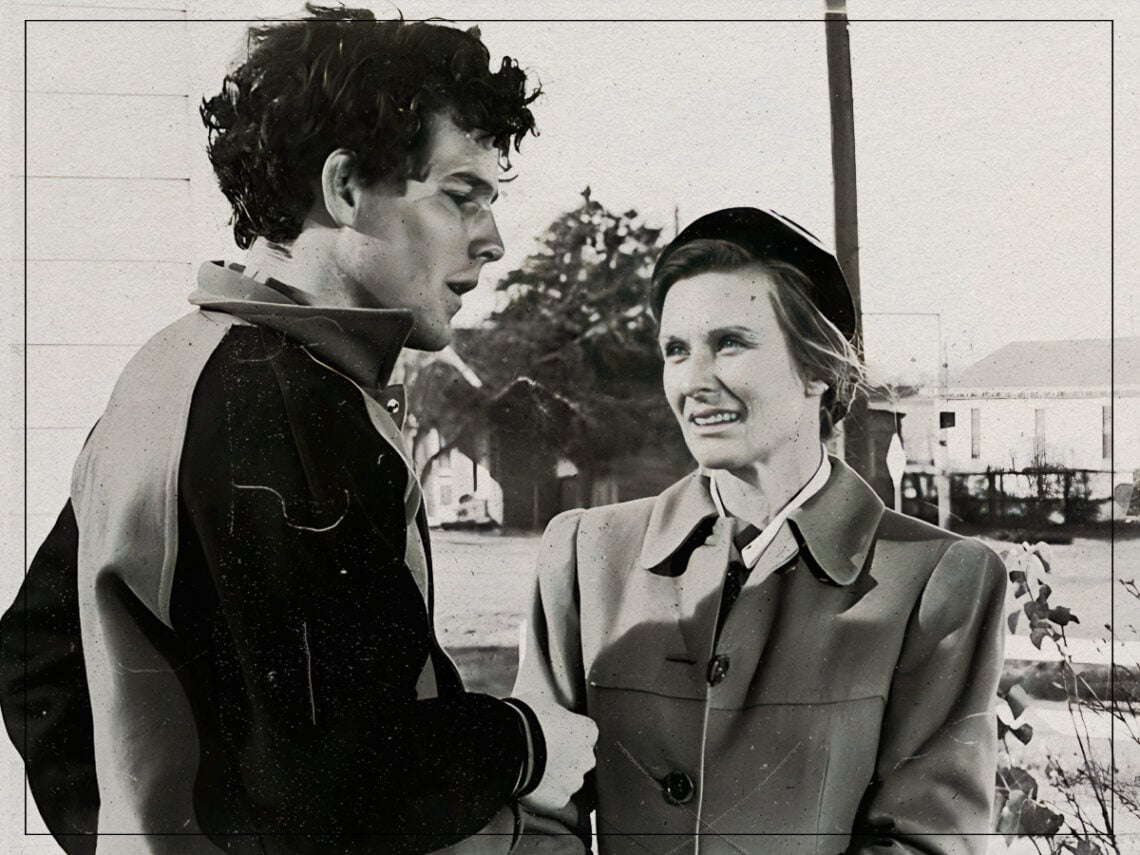
The true story behind Peter Bogdanovich’s ‘The Last Picture Show’

Not just one of the most important filmmakers of the 20th century, Peter Bogdanovich was also a great champion of the cinematic medium. While his beautiful masterpieces continue to move contemporary audiences, his published interviews with directors like Orson Welles are considered valuable academic resources by many scholars. Whenever his illustrious career is discussed, one movie that always pops up is the 1971 classic The Last Picture Show.
Based on Larry McMurtry’s eponymous novel, the movie explores the very specific sociocultural environment of a small town in Texas during the early 1950s. Starring the likes of Jeff Bridges and Cybill Shepherd, the coming-of-age tale paints a nuanced portrait of youth and the unique elements that are associated with living in such a place. Bogdanovich chanced upon the novel but its potential as a film adaptation was clear to him from the start.
Shortly before his passing, the filmmaker told ACMI: “When I was in an airport or a store, on one of those displays, I saw a bunch of paperback books. One of them said, The Last Picture Show. I turned it over to the side and I looked at it and thought this sounds like it could make a good film. Then, about two weeks later, Sal Mineo comes over to the house, and he had the same paperback in his hand, and he said, ‘I always wanted to make this, but I’m too old to play it now, you might like it.’ So, I thought, wow, that was a hell of a coincidence.”
Although McMurty insisted that none of the characters were based on people he knew, scholars have claimed that the character of Sonny Crawford was actually inspired by a schoolmate named Bobby Stubbs. Like Timothy Bottoms’ on-screen rendition, Stubbs also drove a pickup truck and shared a lot of similarities with the character’s background. In addition, it has been suggested that McMurty drew from his own life experiences for Jeff Bridges’s Duane Jackson.
Apart from the characters, the theatre in the film also existed at one point, but it has now been transformed into a tourist spot. At the time of its release, the residents of the town did not appreciate the cinematic representation of their home, and the local preacher labelled it as a “sinful” work. However, with time, that negative perception changed as The Last Picture Show became a vital part of that small town’s legacy.
In the same interview, Bogdanovich reflected: “It doesn’t feel like it’s been 50 years [since Picture Show was made]… it’s hard to believe it’s 50 years. Half a century… My marriage fell apart, I fell in love, my mother died – all that happened while we were shooting… I look back on it with affection and sadness. Happy and sad. The picture turned out well.”
An important part of the New Hollywood movement, The Last Picture Show set the ball rolling for Bogdanovich who went on to create many other unforgettable gems like Paper Moon.
Watch the trailer below.
