


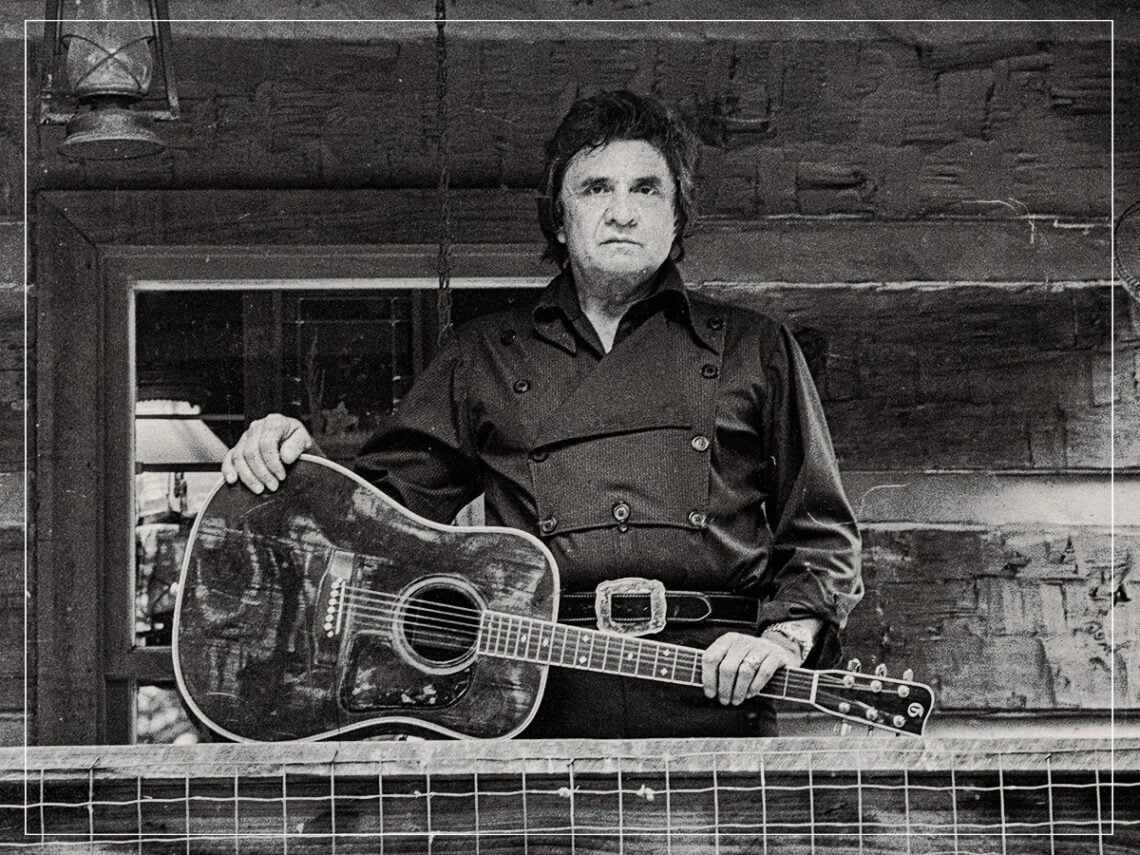
The manic story of Johnny Cash’s scathing ‘Chicken in Black’

Novelty records are a lost art in the modern musical age; there once was a time in which novelty acts would stand proud in the pop charts alongside the very artists they were parodying, whereas now novelty music tends to be viewed as the lowest form of musical expression. Whatever your view on the matter, though, it is fair to say that Johnny Cash isn’t the kind of songwriter you might expect to enter into the world of novelty.
Authenticity had, after all, always been at the heart of ‘The Man In Black’. Sure, his outlaw image might have been a misrepresentation of his true character, in order to shift a few more records, but as a songwriter, he always spoke directly from the soul. During an age in which the pop charts were increasingly focusing on pithy, run-of-the-mill love songs, Cash offered something entirely different, establishing himself among America’s all-time greatest songwriters in the process.
In the fast-moving world of the music industry, though, that reputation wasn’t going to hang around forever. Cash might have been on the top of his game during the 1950s and 1960s, but it didn’t take long for things to come crashing down in a cloud of public expectations and substance abuse. By the time the 1980s rolled around, Cash was at risk of being forgotten about entirely.
Even though he – or, rather, Columbia Records – had continued to churn out exhaustive albums on a yearly basis throughout the 1970s, interest in Cash’s output was certainly waning, and he was running out of artistic avenues to explore. In the mind of the performer, then, the antidote for this tricky situation came in the form of a novelty track, ‘The Chicken In Black’.
Written by Gary Gentry and released back in 1984, ‘The Chicken In Black’ tells the bizarre tale of Cash’s brain being transplanted into a chicken, while Cash himself receives the brain of a bank robber – and, as I’m sure you can imagine, hilarity ensues.
During his second memoir, Cash labelled the track “intentionally atrocious,” but that is not an overly fair view of the track. Yes, it is an utterly fever-dream of a song, and the accompanying music video hardly helps with that fact. At the same time, though, the song essentially allowed Cash to escape from the public’s expectations of him and the persona that he had built up over a period of decades. As a novelty, then, it isn’t half bad.
Nevertheless, the song does give the impression of being a decision made by Cash, along with some record company executives, in a cocaine-fueled haze that they soon came to regret. As the years marched on, Cash’s view of the track only seemed to sour further, once claiming that it was the only track he ever recorded that he “flat-out hated” – which, when you’ve had a career as illustrious and often tumultuous as Cash, is quite impressive.
The fact that the novelty track didn’t reintroduce Cash to any commercial success likely added to that sense of regret. Peaking at a disappointing 45 in the US country charts, it hardly signalled a rebirth for the ‘Man – or Chicken – in Black’.
Still, all’s well that ends well. Once the dust had settled on Cash’s misguided novelty track, his career found a well-deserved resurgence at the hands of Rick Rubin, who spurred on some late-period masterpieces from the ageing songwriter and, thankfully, rendered ‘The Chicken In Black’ an often forgotten obscurity within his extensive discography.
