


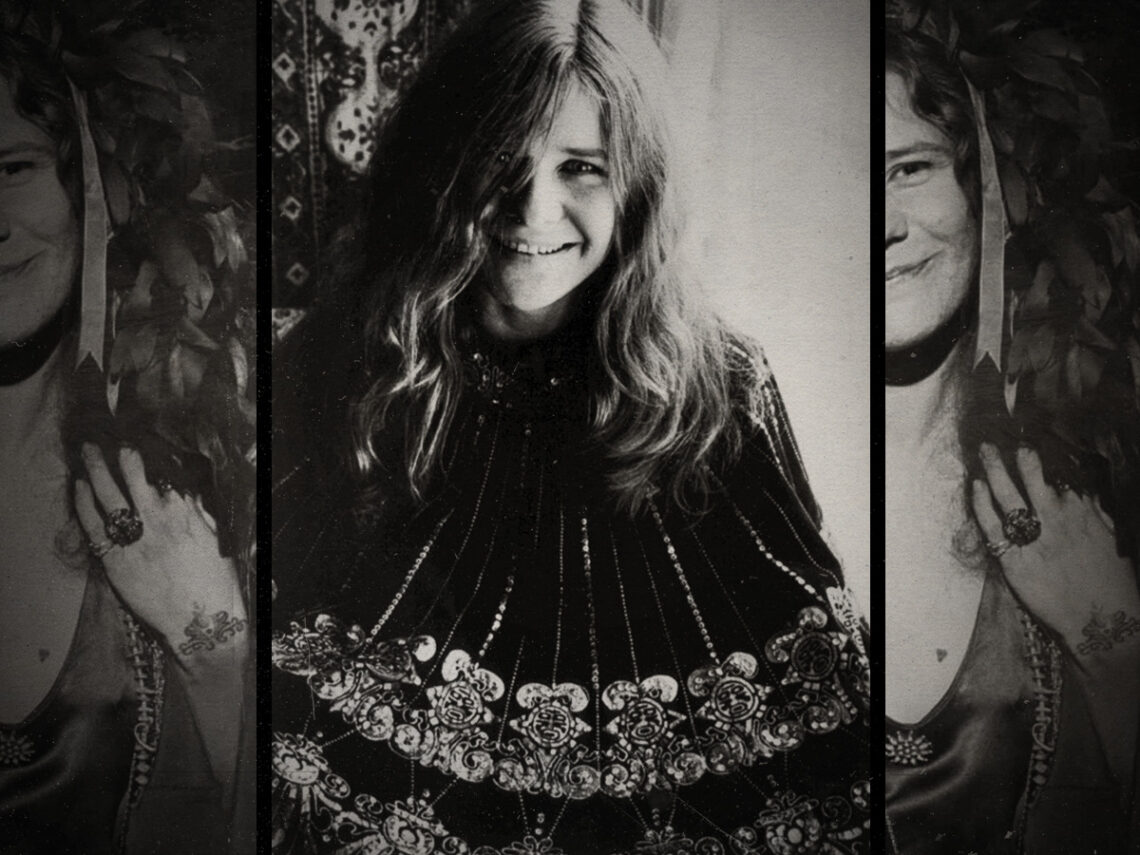
The story of Janis Joplin and the first famous tattoo

With her powerhouse vocals, thrilling stage presence and bewitching personality, Janis Joplin was a radical breath of fresh air against any and all norms of femininity.
Even in the midst of a tragedy that proved difficult for her to escape, Joplin lived life on her own terms, whether that meant expressing herself through eccentric fashions and hairstyles or speaking her mind freely to any interviewer who took notice, and in one particular moment of subversion, Joplin decided to adorn her body with some tattoos.
In early 1970, Joplin visited Lyle Tuttle, a pioneer of American tattooing, at his tattoo parlour in San Francisco, his first location that had opened 16 years earlier. At the time, tattooing was an underground art form, its audience largely composed of sailors and travellers passing through San Francisco, and the hippie idealist crowd that had begun to flood the city.
From Tuttle’s account, Joplin arrived fresh from a tour in South America with her two Samoyed dogs (much to his English Bull Terrier’s chagrin) and made an instant impression. “She was this groovy little hippie chick with the clothes and all these bracelets and necklaces,” he recalled, in conversation with photographer Vince Hemingson. “I liked her. She was a nice girl.”
Joplin requested not one, but two tattoos: a decoration on her wrist and a small heart on her left breast. “The tattoo on her wrist was patterned after one of these bracelets that she was wearing, one that she had picked up on her tour in South America,” Tuttle explained. “I just free-handed it with a ball-point pen, and that was that.”
Even Joplin, as charismatically defiant as she was, the pain of a tattoo (especially her first) was nearly unbearable. “Now, Janis was a Capricorn and Capricorn women can be tough as Hell,” Tuttle noted. “But she told me that getting a tattoo was just about the worst pain she could imagine, and she wasn’t going to get the second tattoo. She said it in a lot more colourful language than that, I can tell you!”
Tuttle ended up convincing Joplin to brave the tattoo chair once more, dissuading her from leaving the shop with any “unfulfilled desires”: “So, I told Janis to go downstairs and get a drink and come back,” Tuttle said and, following his advice, she walked down to the bar, a vision in a feathered boa, as Tuttle remembered.
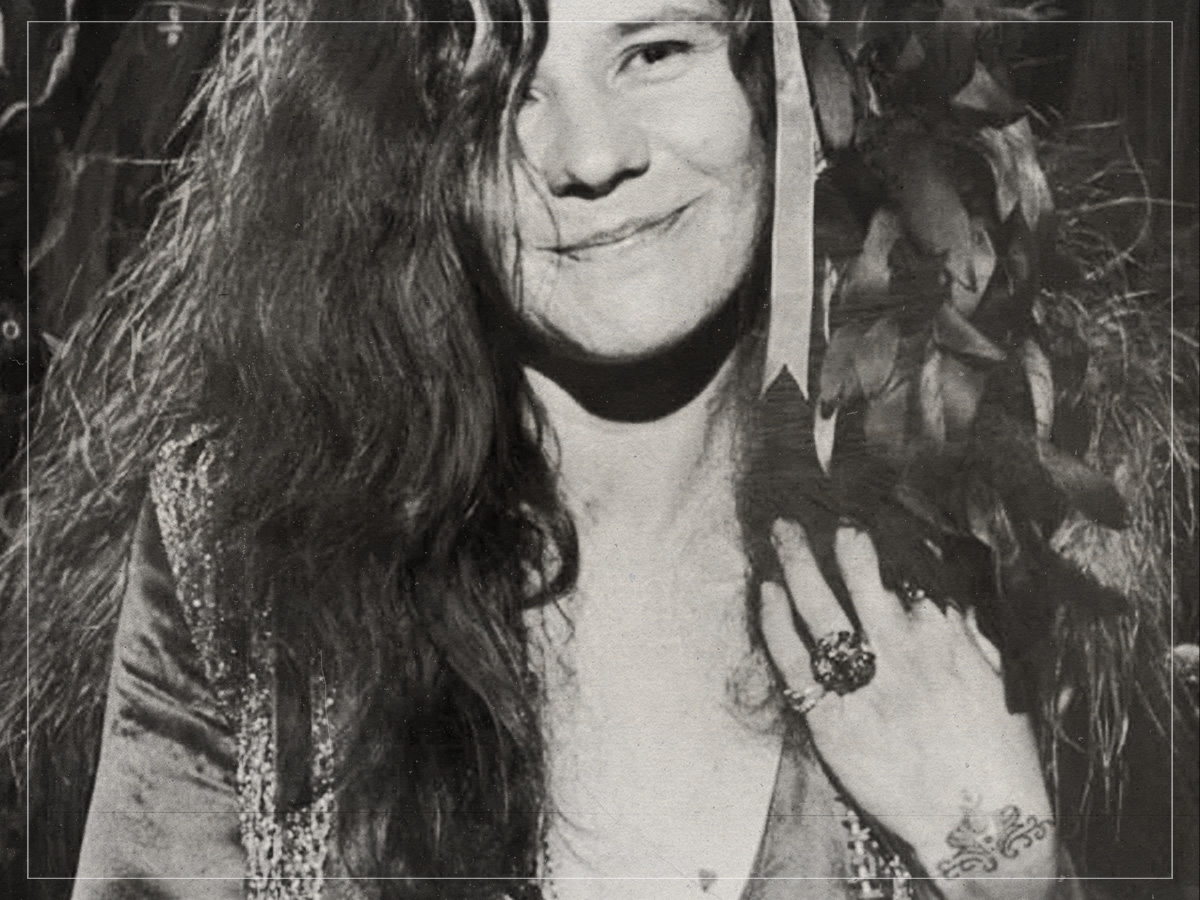
“Let me tell you, Janis threw those boys for a loop. They were all shook up,” he recalled. “It was a real working-class bar, and she walked in with her ensemble and one of those things, a boa, wrapped around her neck. They hadn’t seen the like!”
Returning to Tuttle’s shop once more, Joplin got the small heart tattooed on her breast, once again free-handed by Tuttle. Visible in numerous photographs of Joplin, the minuscule black heart became a symbol of the times, one of the earliest moments where tattoos were introduced into popular culture as a valid art form – by, of course, one of its biggest stars.
Joplin’s body art became a frequent topic of conversation, as, despite its small scale, her decision was a bold choice during a time when tattoos were largely considered taboo – whether she was speaking with the San Francisco Chronicle or appearing on the Dick Cavett Show, Joplin proudly showed off her artwork for every curious onlooker.
“It was just a trip. I wanted some decoration,” she explained, as quoted in Rolling Stone when Tuttle was on the cover, in October 1970. “See, the one on my wrist is for everybody; the one on my tit is for me and my friends.” She paused, with a laugh: “Just a little treat for the boys, like icing on the cake.”
After meeting Tuttle, Joplin threw a party at her home in Mill Valley, California, where the tattoo artist was her guest of honour. On his account, he tattooed 18 of her friends that night alone. Tragically, Joplin would pass in October of that year, and, as Tuttle remembered, the very next day, a girl visited his shop, requesting the same little heart that he had given Joplin.
“Over the years, I guess I’ve done more than a hundred of those,” Tuttle revealed. “I get more e-mail about that than just about anything else.”
Tuttle, who passed away in 2019, went on to tattoo numerous stars, including Cher, the Allman Brothers, Paul Stanley of Kiss and more, famously working across all seven continents. Notably, as Joplin ventured into his tattoo shop, she conceded with his growing clientele of women looking to get tattooed, as well, ranging from college-aged young women to older members of the Hells Angels. Tuttle, in turn, credited the women’s liberation movement with tattooing gaining popularity early in his career.
“That put tattooing back on the map,” Tuttle asserted to Prick Magazine in 2001, concluding, “With women getting a newfound freedom, they could get tattooed if they so desired… Most women got tattooed for the entertainment value… circus side-show attractions and so forth. Self-made freaks, that sort of stuff. The women made tattooing a softer and kinder art form.”
