


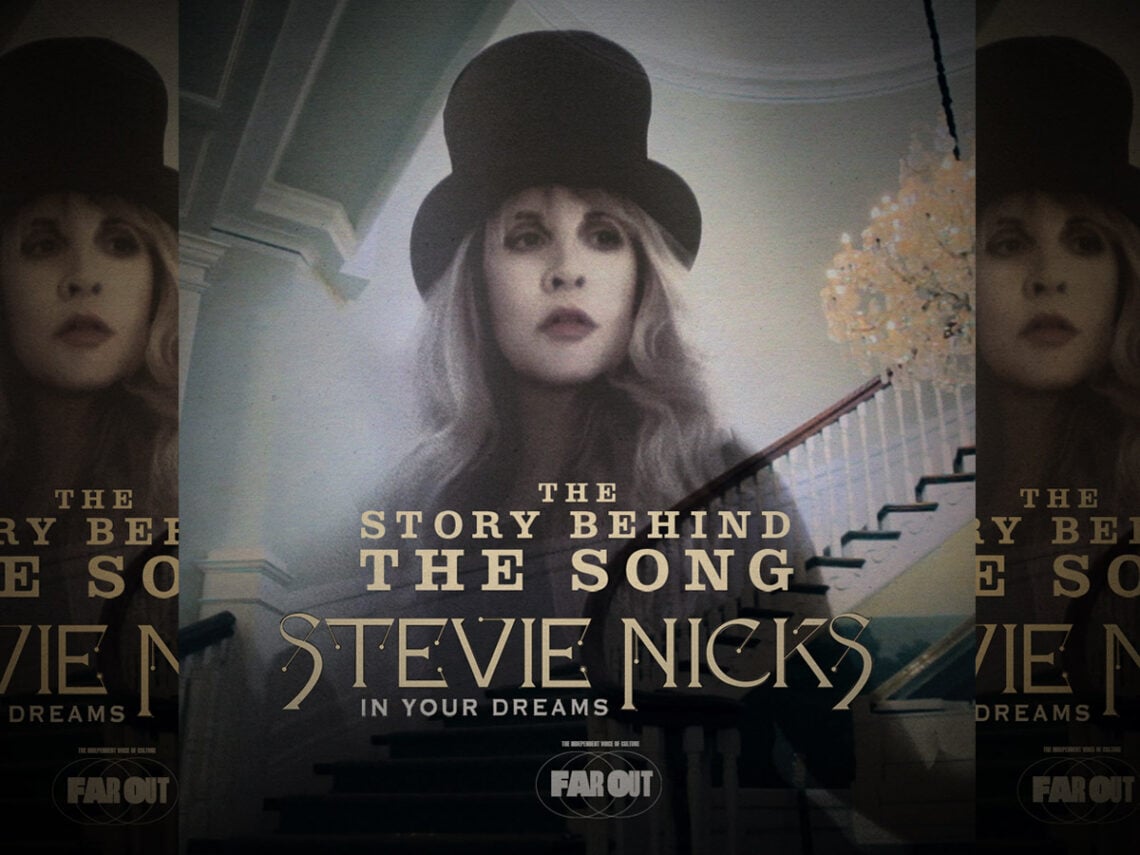
The Story Behind The Song: Stevie Nicks’ moving reflections on ‘For What It’s Worth’

Across the brilliance of Stevie Nicks‘ songbook, even the stories that resonate with her least echo with a heartfelt tone that reaffirms her standing as rock ‘n’ roll’s greatest storyteller.
For Nicks, her 1994 album Street Angel was the one that waned, in comparison to the rest – and understandably so. The album had been born from strife, with Nicks having an unfortunate lesser hand in its production and therefore, being dissatisfied with its overall sound. She had also made the album in the midst of treating her dependency on the prescription drug Klonopin, and she had entered treatment during the mixing and mastering sessions.
“I’d been taking Klonopin for almost eight years,” Nicks later explained to Time Out. “Street Angel was done in the last two years of that, when it had kicked in to the point that it took away my soul and my creativity.”
Coming out of her rehabilitation, Nicks revisited the album: “I listened to the record – I’m off all the drugs – and I knew it was terrible,” she revealed. She’d gone back and tried to fix the recording, but found her efforts to be impossible. She continued with Street Angel, as it stood, but was disheartened at what it had become.

Nicks toured for Street Angel, as well, a daunting feat as she had just finished her treatment and was wracked with nerves over how she would be perceived, and be able to handle the task. “It was the only time I ever went on a bus right after rehab, and I was really fragile and scared, and I should not have been on a big tour, which I was,” Nicks reflected in her 2013 album documentary, In Your Dreams.
Adding, “When you come out of rehab, they tell you, don’t do anything. You need to be careful: don’t get married, don’t sell your house, don’t do anything stupid because you may not feel that way in a year. So, we basically made out across the United States. It was fantastic, and that’s what this song’s about.”
The song in question is ‘For What It’s Worth’, the second single from her seventh album, 2011’s In Your Dreams, released upon the 30th anniversary of her solo debut, Bella Donna. In Your Dreams also saw a release ten years after 2001’s Trouble in Shangri-La, and for a time, once she returned to touring with Fleetwood Mac, her next project was unknown. Then, a chance viewing of Twilight ignited the spark Nicks needed to start writing again and soon, In Your Dreams began to take shape.
Where ‘For What It’s Worth’ was concerned, however, the song’s story had long lingered in Nicks’ mind, dating back to the Street Angel tour in 1994. The tour was not a particularly favourable one for Nicks to look back on: aside from her dissatisfaction with the album and having the tour coincide with her recovery period, the tour had been downsized upon Street Angel’s lack of chart success. But Nicks found a sense of happiness in the midst of it all, in a companion on tour. While she does not name who her partner was during that period, Nicks reflected on his impact in her documentary: “He did save my life, because I was not ready for thousands and thousands and thousands of people, you know, sober,” she admitted.
Nicks began to write the lyrical story of ‘For What It’s Worth’ on May 27th, 2010, during her stay in the city of Napili, in Maui, Hawaii. Her friend and collaborator, Mike Campbell, had sent her 13 instrumental tracks to consider months before the recording of In Your Dreams. “The day before I came back from Hawaii, I had taken all my recording equipment with me [and] I sent it all back the day before,” she recalled. “On that Thursday morning, I’m sitting on my bed, looking out at the ocean, and I thought, ‘You know, I think I’m gonna revisit the 13 tracks.’”

Then, track seven came on, and the sounds brought forth memories of a documentary she had seen about the act of “riding the rails,” or hitching rides on freight trains.
The image struck a chord in Nicks, who resonated, in her own way, with such a sense of adventure. “I’m thinking about me going across the United States in a bus, one time in my life; we always have a plane. And I’m thinking about riding the rails and watching the cities go by and how amazing that is.” In the In Your Dreams documentary, we are shown footage that Nicks recorded of herself, listening to the then-named ‘Track 7’, from her point of view while staring out at the beach from her room.
As she recounts, she began furiously writing the words to what would become ‘For What It’s Worth.’ “I swear to God, this is not an old poem,” Nicks emphasises, whereas some songs from In Your Dreams were. “I just started writing. Lori and my niece, Jessie, who’s 18, came upstairs, and I said, ‘You gotta hear this,’ and I just sat and sang it for [them], and I had just written it. My little niece, I think it’s the first time that she had ever really seen me create. When it was over, she goes, ‘Aunt Stevie, that was awesome!’”
In the song’s lyrics, Nicks quotes an instance where the fate of her relationship reached its end. “‘Cause this man said that to me: ‘If I packed up all my stuff and came to your house, and said – Here I am – that’s not what you want,’” she remembered. “‘It happened on the road; it was what it was. It was beautiful, but it wouldn’t have lasted off the road.’ And he knew that; he was wise enough to say that to me.”
‘For What It’s Worth’ turned into a sweet acoustic ballad, with a western feel that evokes the same image of Nicks sitting on a tour bus, watching America pass her by. She reflects on the lost romance and what it afforded her at a time when she needed it most, and the story stands as one of Nicks’ most poignant moments as a songwriter – moreover, the song harnesses the energy that Nicks often does in her lyrics: acknowledging what once was, the beauty and the pain of it, and immortalising it in song.
“The whole love that surrounded that situation,” Nicks reflected, “I was so appreciative of it, because there’s nothing more scary than walking on that stage in front of 10,000 people, and thinking that you might not be good enough to do it anymore, or all your insecurities are right there in your hand.”
Concluding, “And he took that away, and he saved my life… I call them my ‘heart songs’, and this is one of those heart songs.”
