


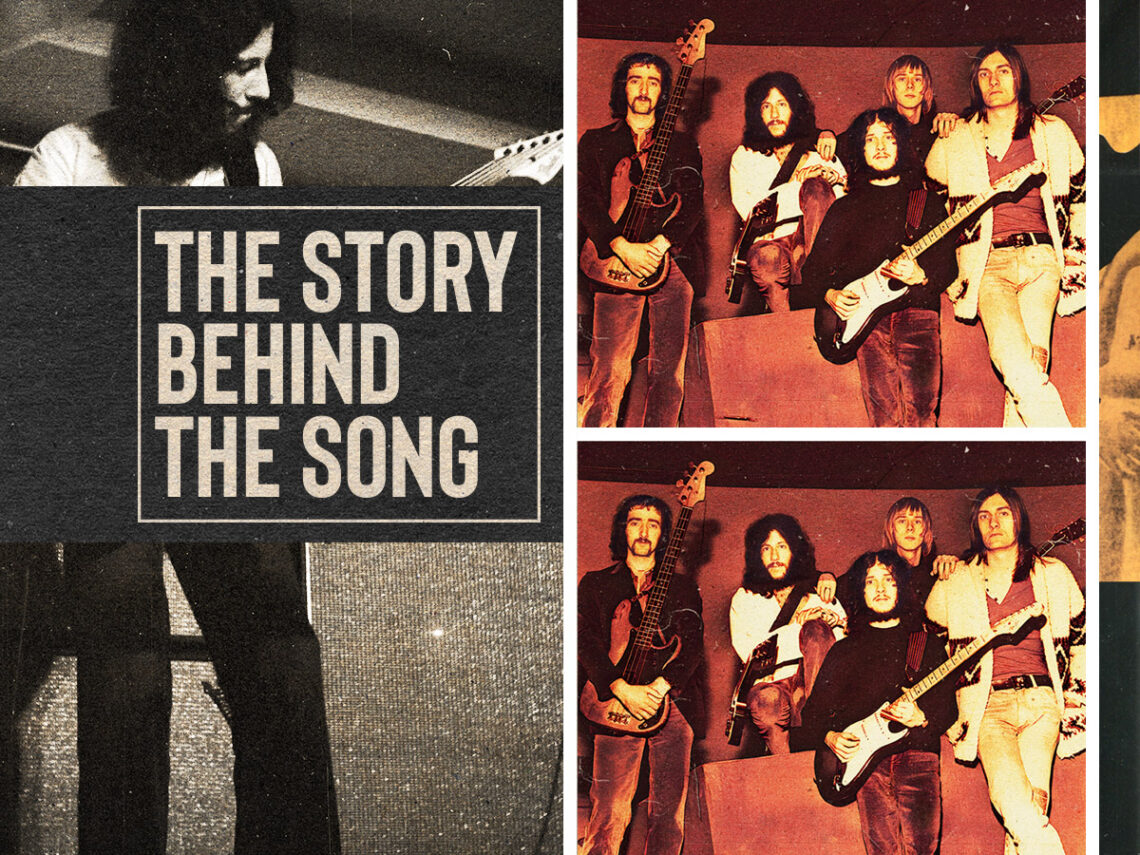
The Story Behind The Song: Fleetwood Mac – ‘Black Magic Woman

In 1969, some six years before the recruitment of Lindsey Buckingham and Stevie Nicks, Fleetwood Mac found themselves at the peak of their early incarnation. In its first form, the band comprised frontman Peter Green, drummer Mick Fleetwood, bassist John McVie and guitarist Danny Kirwan following the disbandment of John Mayall’s Bluesbreakers.
During part two of Peter Jackson’s 2021 documentary The Beatles: Get Back, John Lennon asked his bandmates if they had seen Fleetwood Mac on Late Night Live the night before. “They’re so sweet, man,” he said. “And their lead singer’s [Peter Green] great. You know, looks great, and he sort of sings quiet as well. He’s not a shouter.”
Paul McCartney agreed, saying they sounded like Canned Heat. “Yeah, but better than Canned Heat,” Lennon asserted.
Besides the unbound endorsement heard in this exchange, Lennon notes the unique style that Green brought to Fleetwood Mac’s music. The late 1960s was littered with bands looking to burst some eardrums. John Bonham and Keith Moon had begun a heavy blues rock earthquake, forcing vocalists to scream and shout to outshine the fog. Meanwhile, Fleetwood Mac took a more laid-back approach, most apparent in their instrumental 1968 single, ‘Albatross’.
Earlier that same year, accompanying ‘Albatross’ on the 1969 compilation LP English Rose, Green gave one of his finest vocal and instrumental performances in ‘Black Magic Woman’. The single was eminently representative of Fleetwood Mac’s early soft blues-rock sound and a favourite of many fans, including Carlos Santana, who recorded his popular cover in 1970.
‘Black Magic Woman’ can be traced back to two earlier tracks involving Green and gained evident refinement from careful nurturing over time. Initially, Green was inspired by Otis Rush’s 1958 blues standard ‘All Your Love (I Miss Loving You)’. The track had been treated to an updated cover in 1966 by Green’s former band John Mayall & the Bluesbreakers, with Eric Clapton, Green’s predecessor, on lead guitar.
“One of the things [John Mayall] said was that if you really like something, you should take the first lines and make up another song from them,” Green said in Peter Green: The Biography. “So that’s what I did with ‘Black Magic Woman’.”
Before the song became ‘Black Magic Woman’, however, Green first arrived at ‘I Loved Another Woman’, an earlier incarnation of the composition that appeared on Fleetwood Mac’s eponymous debut of ’68. Although the lyrics are somewhat different, the mellow minor blues composition with an accompanying Latin rhythm is much the same.
“My baby gone and left me/ Crying by myself/ My baby gone and left me/ Crying by myself/ I loved another woman/ I lost my best gal,” Green sings in the first iteration. These lyrics were changed for the dark, mystical tale of the ‘Black Magic Woman’: “Yes, I’ve got a black magic woman/ Got me so blind I can’t see/ But she’s a black magic woman/ And she’s tryin’ to make a devil out of me”. These more absorbing lyrics were said to be inspired by Green’s former girlfriend, Sandra Elsdon, whom he nicknamed “Magic Mamma”.
Fleetwood Mac’s single version of ‘Black Magic Woman’ became a major hit for the band at this early juncture, but Santana’s rework, as sung by Gregg Rolie and appearing on his album Abraxas became the most popular version. Abraxas was Santana’s second album, and although he had achieved notable fame since his debut with a memorable performance at Woodstock, ‘Black Magic Woman’ was a pivotal release reaching number four on the US Billboard Hot 100.
Listen to Fleetwood Mac’s ‘Black Magic Woman’ below.
