


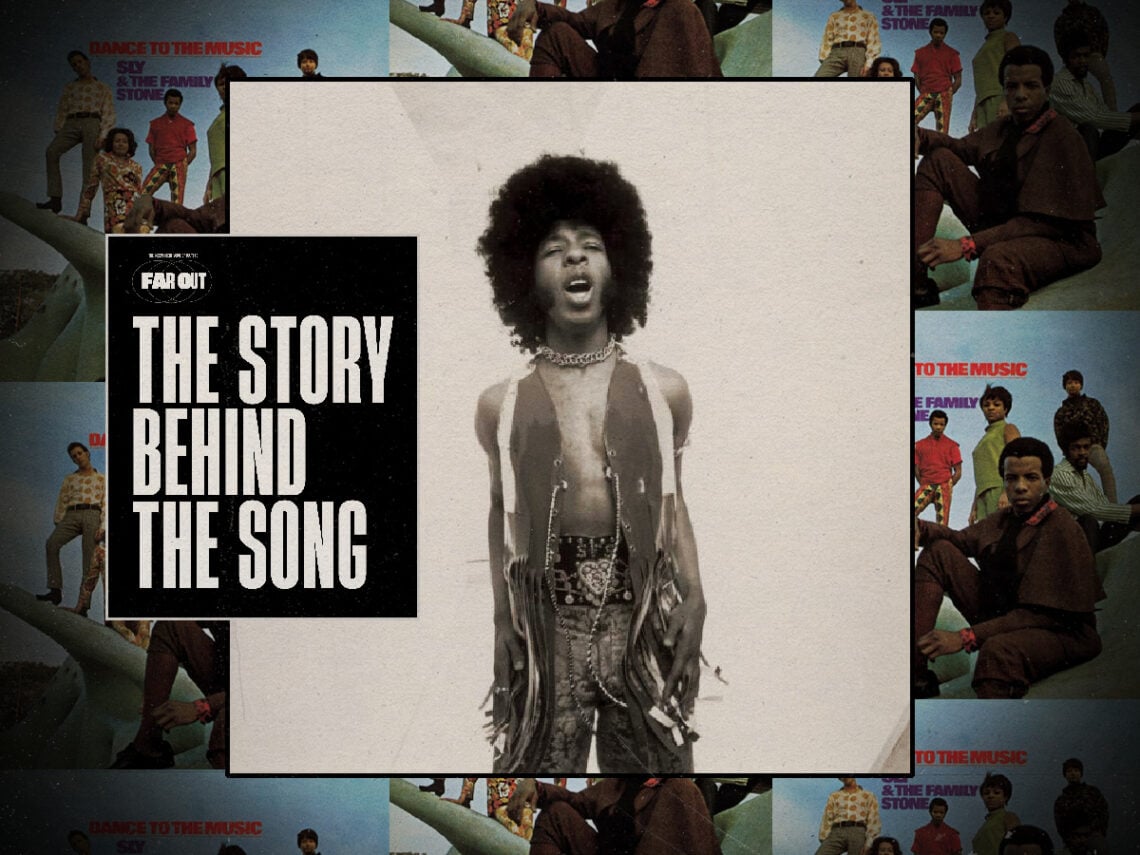
The Story Behind the Song: Sly Stone and his breakout hit ‘Dance to the Music’

It is often said that every cult musician, on some level, yearns for mainstream success. Within the cut-throat world of the music industry, though, that commercial appeal doesn’t arrive without making a few artistic sacrifices; a fact which Sly and the Family Stone were forced to reckon with on their 1967 classic, ‘Dance To The Music’.
From the outset, even before Sly Stone formed his Family Stone back in 1966, the songwriter was already deeply imbued in the revolutionary realm of countercultural psychedelia. What had begun with the acid tests of the Grateful Dead and the Bay Area scene had quickly spread across the musical world in a kaleidoscopic cacophony of spaced-out sounds, infecting everybody from the fresh-faced Beatles to the ever-growing number of barefoot hippies strumming acoustic guitars and campaigning for peace and love.
Throughout it all, Sly Stone was there to soak up its acid-infused influence. First, he had introduced the masses to these emerging sounds on his KSOL radio slot in San Francisco, but it didn’t take long for Stone to generate his own unique brand of psychedelic rock, blending its mind-expanding sound with his roots in funk, soul, and R&B excellence. Inevitably, the resulting sound was totally revelatory, unlike anything else available on the airwaves at that time.
One of the prevailing issues with being a musical innovator, however, is that it takes mainstream audiences depressingly long to cotton on to your genius, and you cannot pay the bills with critical acclaim. So, after Sly and the Family Stone’s utterly revolutionary debut album, the aptly-named A Whole New Thing, failed to generate much revenue for the band’s label, Epic, record executive Clive Davis came to the band with certain demands. Namely, to record some hits or find another record label.
Reluctantly, the band opted for the former, beginning work on ‘Dance To The Music’ shortly after the release of that debut. Unsurprisingly, based on the song’s title, its sparse lyrical content didn’t extend very far beyond being a run-of-the-mill party single, while its instrumentation offered a far more accessible take on The Family Stone sound in comparison to their first record.
Admittedly, their psychedelic influences were still an unavoidable presence – they were, after all, the lifeblood of the band – but the hard funk stylings of their earlier material were switched out for pop-centric soul. Alternatively, as the band’s saxophonist Jerry Martini put it, the song incorporated “glorified Motown beats”.
If you couldn’t guess, from Martini’s dismissal of the track, both Sly and his Family Stone despised working on ‘Dance To The Music’, viewing its commercial-focused psych-soul sound as selling out their artistic principles. Ultimately, though, the song ended up giving the band a much greater degree of artistic freedom in the long run.
It did, after all, succeed in its aims of becoming a hit record, breaking into the US single chart’s top ten upon its 1967 release, and introducing the entire nation to the incredible sounds emanating from The Family Stone. Ironically, in fact, its influence was so great that Motown itself used its success to influence their psychedelic-soul output during the late 1960s – without ‘Dance To The Music’, there is no ‘Papa Was a Rollin’ Stone’.
By making Sly Stone’s output a little more digestible for mainstream audiences, the band might have felt as though they were selling-out or wasting their time, but they created one of the defining sounds of the late 1960s and, without that, Sly and the Family Stone could easily have become yet another lost gem of a funk outfit whose genius was never truly appreciated during their time.
