


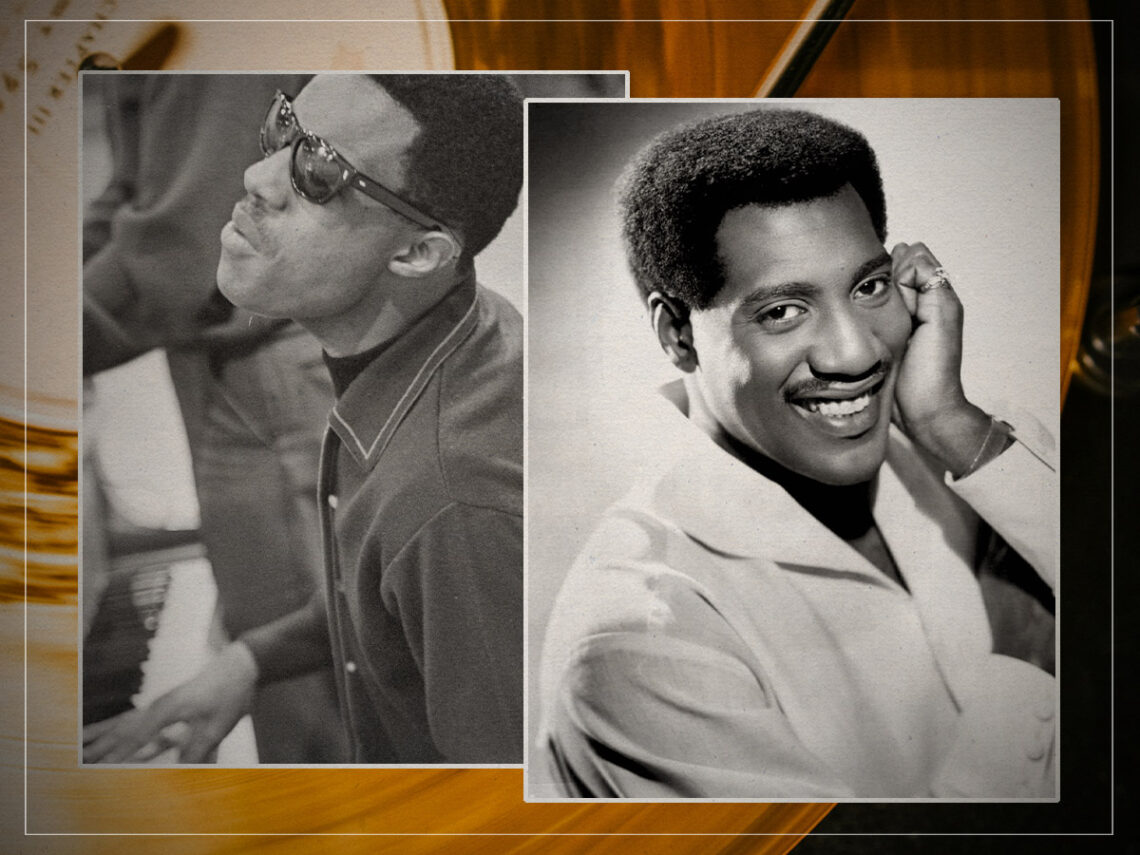
Stevie Wonder always believed Otis Redding was perfect: “Anything he did was incredible”

Some voices predate my interest in music. They’re so deeply woven into the fabric of everyday life that before I actively started rummaging through crates and carefully curating playlists, I felt as though I was familiar with these artists’ entire discographies.
For large parts of my childhood, while I wasn’t aware it was him, Otis Redding was that familiar voice.
From simple sing-along tales like ‘(Sittin’ On) The Dock Of The Bay’ to his cover of The Temptations’ ‘My Girl’, he seemed like an ever-present figure in culture whose painfully soulful voice acted like the doorway into understanding just what music was. Original or a rework, he had your undivided attention, pouring emotion and soul into every syllable to make whatever song he was singing uniquely his.
If you’re looking to find a concentrated example of this unfiltered humanity, then look no further than his 1964 record Otis Blue: Otis Redding Sings Soul. Featuring a host of tracks, from ‘Respect’ ‘Change Is Gonna Come’ all the way to a cover of The Rolling Stones’ ‘(I Can’t Get No) Satisfaction’, it’s widely considered to be the soul artists’ best work.
The latter track is so compelling that it’s a wonder how The Rolling Stones’ career didn’t end right there upon the release of the track. While Jagger’s charisma is deemed as unmatched, Redding sprinkled something extra into the sentiment of the song that elevated it to a new level. All while getting the words completely wrong.
“You notice on ‘Satisfaction’ that Otis said ‘fashion’ not ‘faction’,” the song’s producer Steve Cropper explained in 1965: The Most Revolutionary Year in Music. “I love it. That’s what made him so unique. He’d just barrel right through that stuff, unaware of anything. He just didn’t know the song. He hadn’t heard it, as far as I know.”
Regardless of the pronunciation, Redding understood exactly what was required of that song, the acute sense of longing that laced the story, as well as the story of so many other blues hits he took on. When it came to writing his own music, he elevated that formula by wearing his heart on his sleeve and writing songs that quite simply ached at every melodic turn.
He was the perfect artist for the mid-1960s, when greats like Stevie Wonder were cutting their teeth in the music industry and slowly learning their craft in the realms of songwriting and performance.
“Anything that Otis Redding did was incredible,” Wonder boldly stated. He continued, explaining the essence of Redding’s charm as an artist and what made his performances so unique. “You wanted him to have whatever he was wanting, whatever he was crying for, whatever he longed for, you wanted him to have it. Please let him have it.”
So much is made of Motown in the 1970s, and the wave of soulful brilliance that came with it. But in the mid-1960s, Redding was painfully laying one brick at a time, so that the foundations were already laid for artists like Wonder.
