


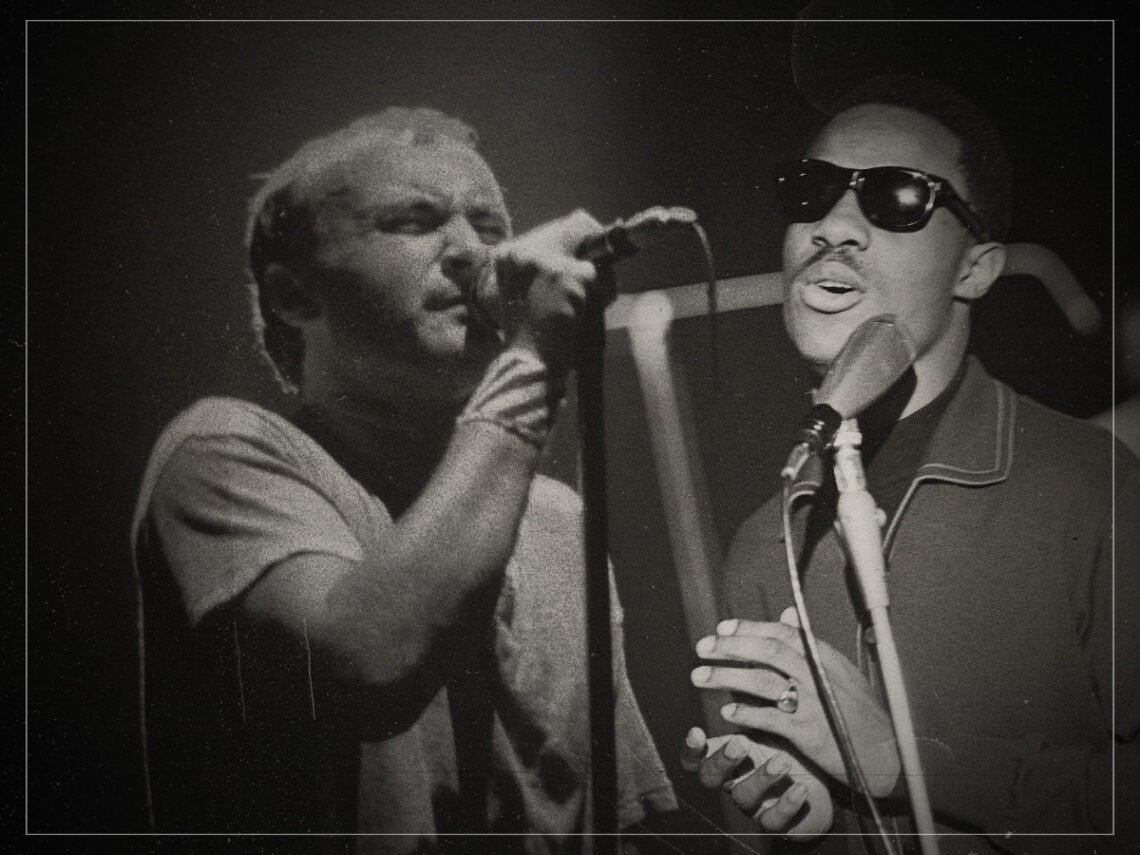
The Stevie Wonder song Phil Collins always resented: “These things aren’t necessarily judged on merit”

Phil Collins was on top of the world back in 1985; an unshakable fixture of the transatlantic pop charts, one of the most recognisable drummers on the planet, and he even performed with his ultimate heroes, Led Zeppelin, during the summer.
At one point, it even looked as though he would add an Academy Award to his 1985 trophy cabinet, but that accolade was ripped away by none other than Stevie Wonder.
Inevitably, Collins was rather miffed about his Oscar loss. The former Genesis drummer was up for ‘Best Original Song’, with his track ‘Against All Odds (Take a Look at Me Now)’ – taken from the equally forgettable film of the same name. In a year that truly captured the neon-hued cheese of mid-1980s pop, some of the other nominees included Ray Parker Jr for ‘Ghostbusters’, and ‘Footloose’ from Footloose.
On the night, though, it was Wonder who took home the little golden statue, with ‘I Just Called to Say I Love You’, from Gene Wilder’s The Woman In Red. While most people would surely agree that Wonder’s songwriting effort – which, in many ways, eclipsed the film it featured in – was the rightful victor. Most people, however, aren’t Phil Collins.
Shortly after his Oscars defeat, the songwriter made the rather flawed decision to be interviewed by Rolling Stone, which invariably focused on his loss. Despite fostering a reputation as the nicest guy in pop music, at least at that time, the drummer became quite irate over the course of the interview, throwing a few bizarre jabs at Stevie Wonder, having clearly not gotten over his loss in California.
“I’m disappointed that these things aren’t necessarily judged on merit,” Collins said of Wonder’s victory. The songwriter went on to explain, “Stevie Wonder is one of my heroes, but I have serious doubts about whether or not that song was actually written for the film.” He also suggested that Wonder was only in the running for victory “because he’s blind, black, lives in LA and does a lot for human rights.”
Let’s take Collins’ odd outburst one claim at a time. For starters, there have been countless Academy Award injustices over the years, but the 1985 award for ‘Best Song’ is not one of them. None of the songs in the running were particularly revolutionary, but Wonder’s was definitely the best of a bad bunch. Whether or not the song was originally written for the film is here or there, but it sounds as though Collins was clutching at straws a little.
Not least when he claimed that Wonder, one of the greatest songwriters of all time, hailed as a genius by both Paul McCartney and Stevie Wonder, was only selected for victory because of the colour of his skin, or his disability. That particular declaration from Collins was not only offensive but incredibly bizarre.
Collins, after all, has routinely cited Stevie Wonder anthems like ‘Uptight (Everything’s Alright)’ among his favourite songs; he is well aware of the extensive and enduring genius of the Motown master, so you would assume that he of all people would understand the pianist’s victory at the Academy Awards.
Admittedly, ‘I Just Called To Say I Love You’ is not one of Wonder’s all-time greatest compositions, but then ‘Against All Odds’ is hardly ‘Sussudio’, either. Nevertheless, in a later interview with David Sheff, he doubled down on his comments, saying that Wonder got “the sympathy vote” back in 1985, suggesting that those original comments weren’t the heat-of-the-moment outburst that he might have claimed.
In spite of it all, Collins did end up winning a ‘Best Original Song’ Oscar some years later, in 1999, for his Tarzan track ‘You’ll Be in My Heart’. So, perhaps his rather harsh view of Stevie Wonder has softened in the years since.
