


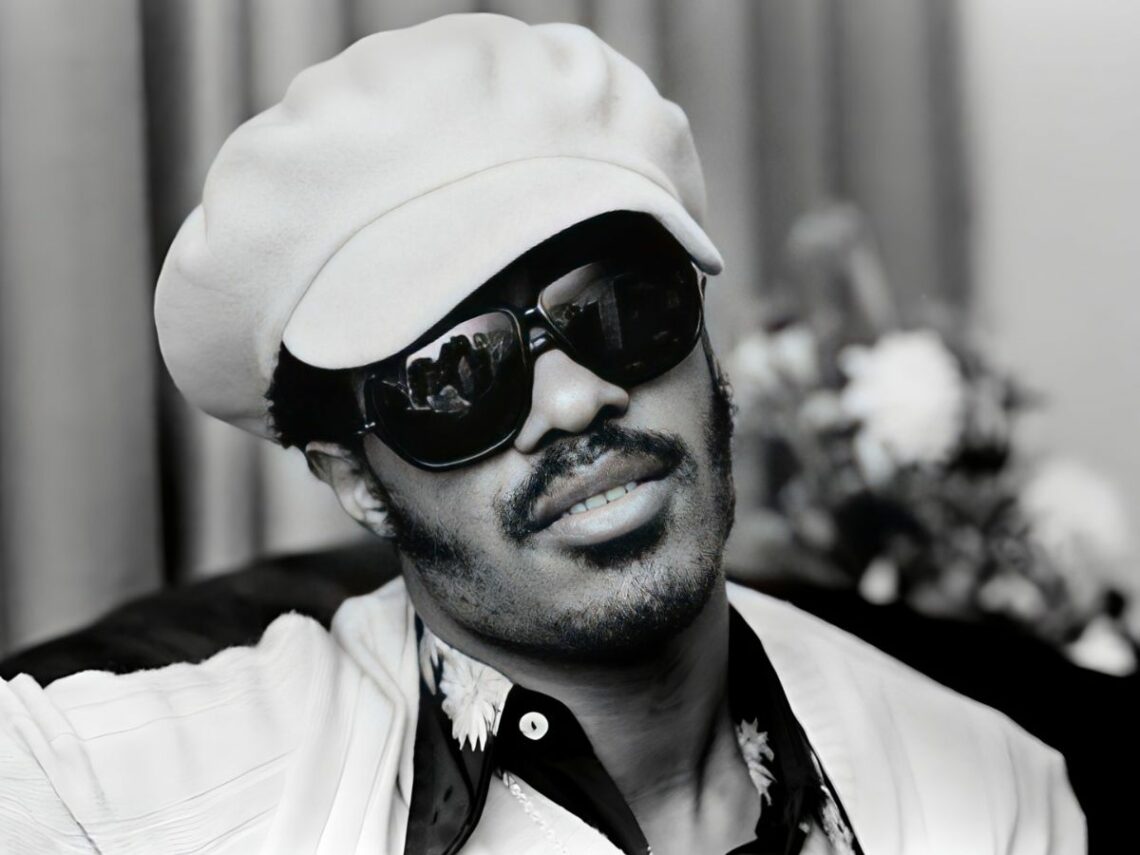
Why Stevie Wonder almost gave away his first number one hit: “You have to do this song!”

Stevie Wonder is on the shortlist when it comes to songwriting virtuosity in the 20th century, but like many prolific geniuses before him, he hasn’t always been quick to identify which of his own works is about to enter the zeitgeist. At times, in fact, he has been almost too willing to give away a new song to another artist just to clear room for the next one, regardless of what his record company or producers might be telling him.
Back in 1972, one case of casual Stevie indifference nearly rewrote rock history as we know it. In a recent interview with Anthony Morelli Music, Wonder’s former producer, Robert Margouleff, discussed the early recording sessions for Talking Book, one of the biggest-selling records of the 1970s. Margouleff had done some work with guitar hero Jeff Beck around this same period and arranged for him to meet with Wonder about appearing on the record. Beck was already a big fan, and the two quickly hit it off. Soon, they had come to a rather interesting collaboration arrangement.
“Stevie said, if you play on my record, I’ll give you a song,” Margouleff recalled. Beck happily agreed and eventually laid down the electric guitar part on the track ‘Lookin’ For Another Pure Love’. Unfortunately, from Margouleff’s perspective, Wonder’s “gift” in exchange for Beck’s guest spot was not the one the crew had bargained for.
“[Stevie] was going to give him ‘Superstition’,” Margouleff said, referring to arguably the single biggest hit of Wonder’s storied career. “We already had a sort of rough mix of [‘Superstition’] in the control room. So the powers that be, including me and [producer] Malcolm [Cecil], said, ‘Steve, you have to do this song! You cannot give this song to anybody. You need to keep that song for yourself.”
Stevie was perhaps a bit taken aback by all the concern. Jeff Beck had been part of that first ‘Superstition’ demo, after all, which had evolved from a simple Beck drumbeat into a Stevie freestyle from which the famous keyboard line had emerged. Since Beck had helped out, it seemed fitting to reward him with the track. By the time Motown CEO Berry Gordy caught wind of the situation, though, Wonder was finally convinced to at least release his own version of ‘Superstition’ before Beck got a shot at it.
In the end, Wonder’s ‘Superstition’ arrived in October of 1972, racing to number one on the US charts and eventually going triple-platinum in the UK. About six months later, Beck’s lone album with the trio Beck, Bogert & Appice hit shelves, featuring Beck’s own guitar-fueled take on the song. Suffice it to say, it did not become the world’s preferred rendition.
Beck’s original deal with Stevie was still made good, however, as Wonder gifted him a different exclusive song, ‘Cause We’ve Ended as Lovers’, which also appeared on the Beck, Bogert & Appice album. Beck made a point of this under the track’s name in liner notes, writing, “thanks to Stevie –-J.B.”
“Stevie used to just write one after another,” Margouleff said. Considering that ‘Superstition’ became Wonder’s first number one hit in nearly a decade, though, we’ll have to assume he was happy to have been talked out of giving that one away.
