


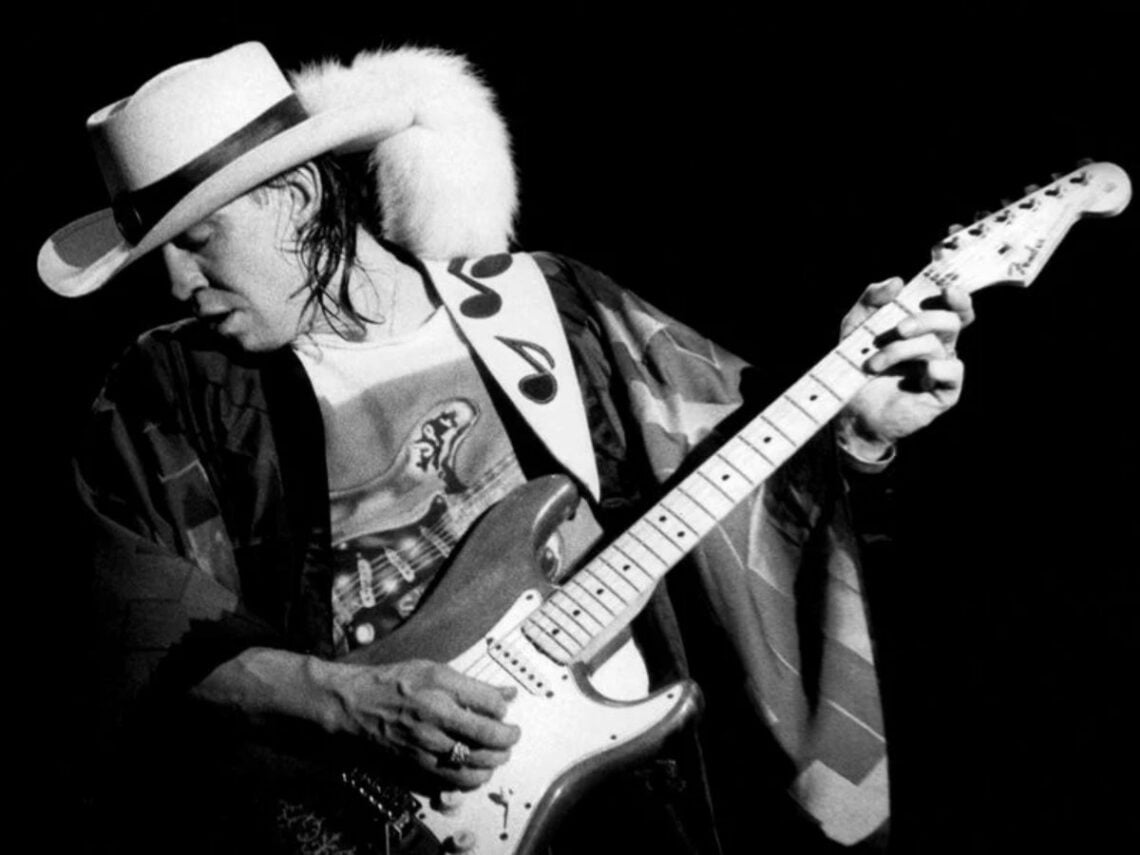
A 357 Magnum versus a rattlesnake: The moment Stevie Ray Vaughan found a venomous reptile in his house

“There was no one better than him on this planet,” Eric Clapton once said, tapping into the overlooked nature of a talent as obvious as Stevie Ray Vaughan. This wasn’t a name that would ever feel natural lumped into the same category as other guitar heroes; Vaughan seemed to occupy his own space, distinctive in the power of appearing effortless, with a charm lurking in the lines of every lick he played.
Vaughan had been playing guitar in local bands since the age of 12, but he always exuded a steady and quiet confidence that many usually build up over time. From the outset, this was someone who would explode into a force, learning from the best names like Muddy Waters and Jimi Hendrix before branching off into his own brand of sheer excellence.
He was dedicated and committed, which always works well in the early years when you’re finding your footing and learning what type of musician you want to be, but Vaughan didn’t take long to become electrifying. During the 1980s, Vaughan caught the attention of legends, including David Bowie, who saw his performance at the Montreaux Jazz Festival and decided he was the man to enhance his 1983 opus Let’s Dance.
Other revered guitarists, like Clapton, admired Vaughan because he seemed to achieve the one thing many spend years trying to perfect: establishing the intersection between authentic blues tradition and innovative rock aspects, often with what seemed to be little effort at the same time. As Clapton once reflected: “The worst thing for me was that Stevie Ray had been sober for three years and was at his peak.”
What made Vaughan even more endearing was that his big personality didn’t eclipse his talent, like how he often navigated interviews with barely-believable anecdotes or half-baked fragments of inspiration behind some of the greatest music of all time. During one conversation, he revealed he once had a near-death experience when reaching into his drawer for some paper but accidentally stumbled upon something completely different.
“I was reaching for a piece of paper, not a snake,” he said, a little too candidly. When the interviewer suggested it was five-and-a-half foot, he replied, “at least,” before revealing it was a copperhead rattler—one of the deadliest venomous snakes you could ever come across. “We shot him at least four times with a 357 Magnum,” he continued, adding, “he got mad. He stood up, [hissed], then split and went back under my house.”
Whether this actually happened as dramatically as Vaughan tells it or not, it’s undeniable that there is something quite endearing about the way he recalls anecdotes, almost as if he’s told the story time and time again, each time with added embellishments. Like his guitar playing, his stories feel precise and intricate with a hint of danger, with an overt seriousness and authenticity that renders any superficiality obsolete.
