


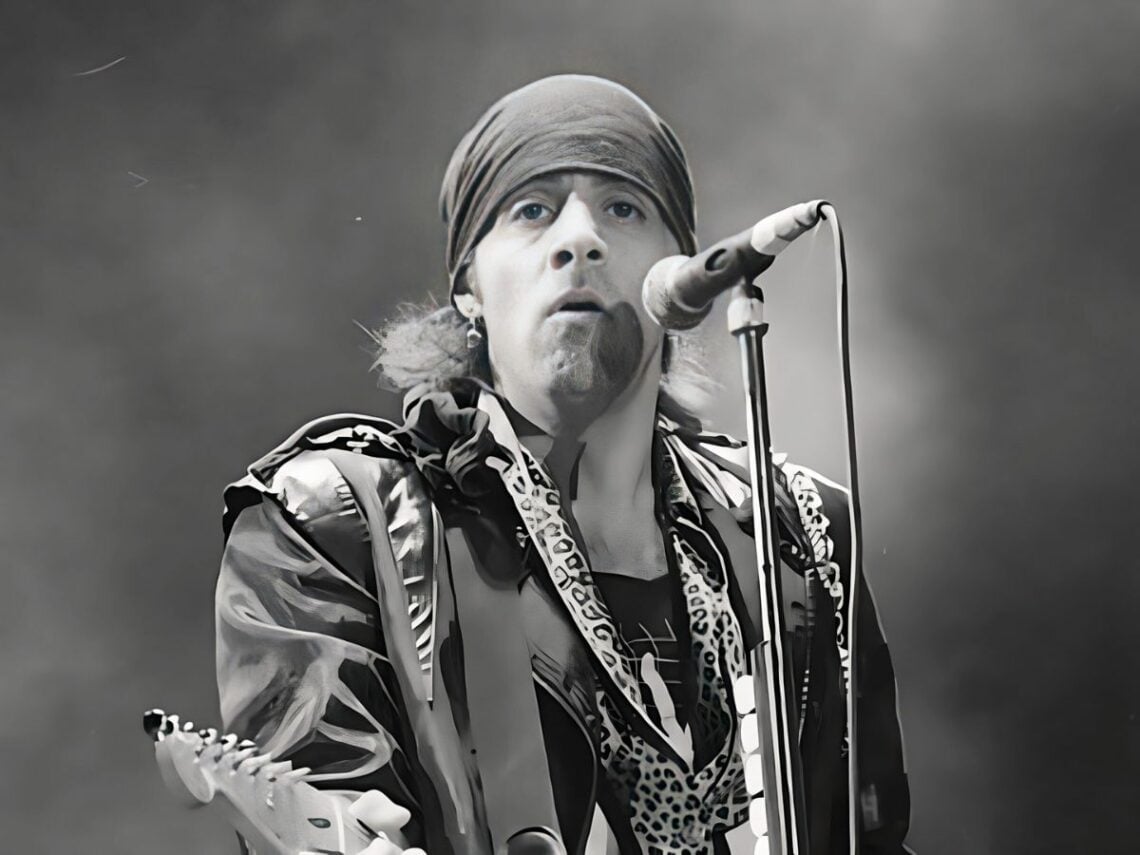
“All at the same high intensity”: Steven Van Zandt on the last time Eric Clapton was perfect

Perfection is important to Steven Van Zandt. In the recent Bruce Springsteen documentary Road Diary, this is clear, as he comments on how he likes to check that members of the band are doing okay and insists on rehearsing songs until they sound perfect. There is nothing to this attitude other than the fact that he loves music and believes it should exist in its best form.
This is the attitude of the entire E Street Band. Whenever you catch one of their live performances, it becomes evident that the band is devoted to the music they play for the fans. Bruce Springsteen is often called the best live performer in the world, and the work that his band puts in contributes massively to this.
This affinity for musical perfection was instilled in the band from the early days, as they needed to draw in a crowd without actually releasing any music. “You have to understand that you lived and died by your ability to perform,” said Springsteen, “You had no records. To draw 1000-2000 people with no album, which is what we did in the late ‘60s, you had to have a thrilling live show.”
Of course, perfection manifests in multiple ways in music. The live show can play a huge part but recorded music, and an artist’s ability to write mind-bending records are equally essential. For Van Zandt, that perfection came in the form of Eric Clapton, who he often refers to as one of the most important guitar players ever to pick up a six-string.
“Eric Clapton is the most important and influential guitar player that has ever lived, is still living or ever will live,” he said, “Do yourself a favour, and don’t debate on this.” Van Zandt said that Clapton “Introduced the essence of black electric blues: the power and vocabulary of Buddy Guy, Hubert Sumlin and the three kings—B.B, Albert and Freddie—to create an attack that defined the fundamentals of rock and roll lead guitar.”
Clapton has had a long and successful career, writing exceptional music that continued to challenge him as a songwriter, singer, and guitarist. It’s interesting that even though Van Zandt thinks he’s one of the best guitarists ever, he can also remember the moment that Clapton stopped making perfect music and instead looked for longevity.
“’Layla’ was, for me, the last time everything – the singing, songwriting and guitar playing – were all at the same high-intensity level,” he said, “It’s Clapton’s most original interpretation of the blues because the hellhounds on his trail had a face: unrequited love.”
Van Zandt said that Clapton’s move after ‘Layla’ was the intention, that he wanted to take a step back and enjoy a long career making music rather than just a brief stint in music. This didn’t mean that his music became bad; rather, it slipped slightly under the mark of perfect.
“He had seven years of the most extraordinary, historic guitar playing ever – and 40 years of doing good work,” he concluded. “Being the best has got to wear you out. So he pulled back, like Dylan and Lennon did. The sprint is cool – the marathon is better. Clapton has followed in the footsteps of his mentors: He’s become a journeyman.”
