


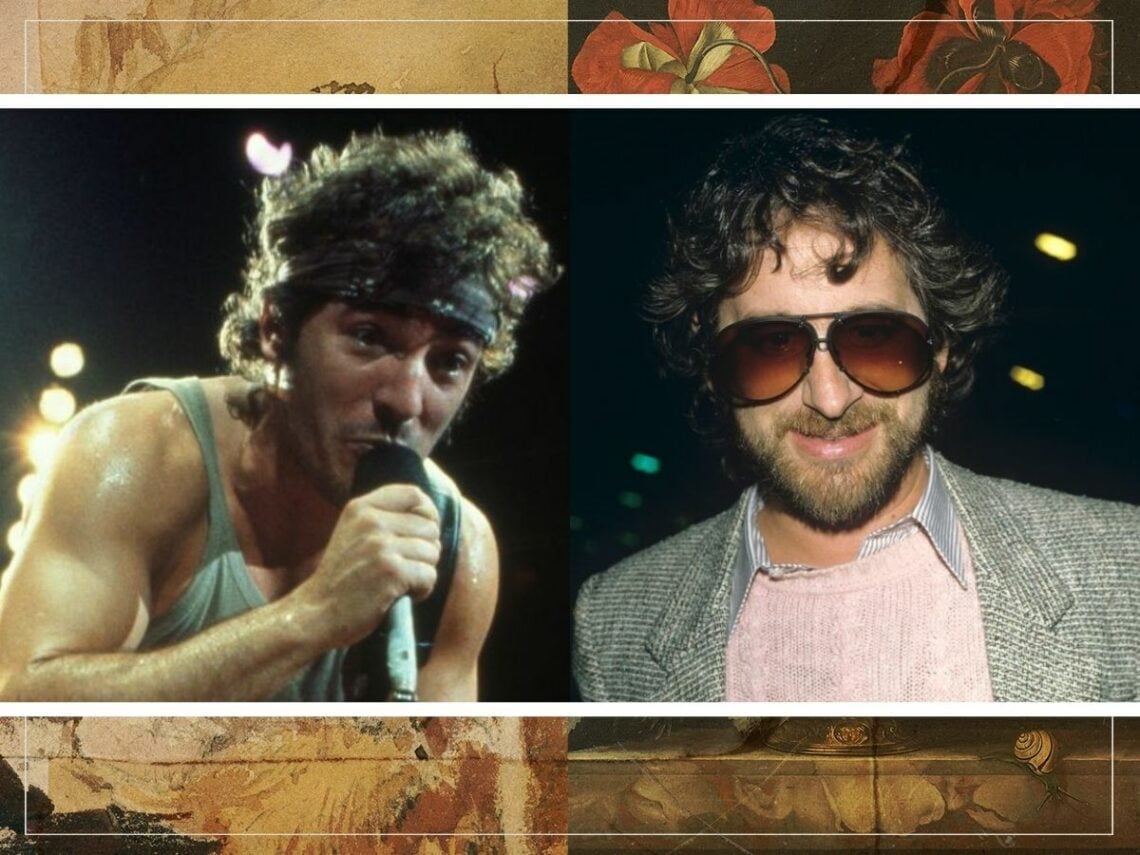
“A tremendous influence”: Steven Spielberg’s favourite Bruce Springsteen song

For someone like Steven Spielberg, music is as essential to the cinematic narrative as a drumkit was to John Bonham—without it, film lacks its emotional core, and characters lose their depth and rhythm in the story. In that respect, many of Spielberg’s films emit a visceral aura where the mere mention of the title can easily evoke sounds, soundtracks, and sonic ideas, like Jurassic Park‘s overwhelming sense of awe or E.T.‘s innocent orchestration.
When Spielberg entered the scene, using music as a narrative tool wasn’t entirely groundbreaking—many filmmakers before him, such as DW Griffith, Fritz Lang with his German Expressionism, and the legendary Alfred Hitchcock, had already pioneered this fusion. However, Spielberg took this convergence to a new level. Rather than using music as a mere backdrop, he wove it into the very fabric of his films, heightening its emotional resonance and solidifying its connection to key characters, scenes, and moments. His approach gave music a more immersive, integral role in storytelling.
Later in his career, his outings became more personally involved, with projects like The Fabelmans providing a semi-biographical account of his childhood and subsequent rise to fame. In the film, music is more connected with specific notions of memory and nostalgia, with longtime collaborator John Williams instead creating the score in a more delicate manner than their previous works, resulting in subtle, contemplative moments of reflection.
Many of Spielberg’s own musical favourites reflect his feelings towards cinematic immersion, including Gene Pitney’s ‘The Man Who Shot Liberty Valance’, which is the same title as the film starring John Wayne, released the same year in 1962. However, some of his influences are far less obvious and do not always relate to the purpose of music in film. That said, many do emit a certain cinematic quality, and the ones that don’t share the same broader narrative context as many of Spielberg’s more career-defining moves.
As a huge fan of The Beatles, the memories attached to some of their songs prove Spielberg views his previous escapades through a somewhat Hollywood-esque lens of nostalgia and grandeur. “I was a freshman in college, and there was a girl I liked a lot,” he recalled, discussing ‘Michelle’ during an episode of BBC’s Desert Island Disks. “She would never ever, ever let me kiss her,” he added.
“‘Michelle’ came on. I think we heard it for the first time together on the radio, and the melody is just heart-achingly beautiful. I look over at her, and she’s got tears in her eyes, and just before the song is over, she jumps over on my side of the car and starts kissing me.”
In the build-up to introducing Bruce Springsteen’s ‘The Ghost of Tom Joad’, there’s something poignant about the director prefacing with a sentiment about hope being a better emotion than despair. In a single line that could warrant endless study, he passionately revealed: “Bruce’s music has been a tremendous influence on my career, my life, [and] my relationships.”
On ‘The Ghost of Tom Joad’, he added: “It’s one of my favourite songs that Springsteen has ever, ever written. We share a love of [John] Steinbeck, and he certainly was able to encapsulate and translate Steinbeck so well in a single song.”
Like Spielberg, Springsteen has enjoyed a longtime mesmerisation with Steinbeck, channelling this into the writer’s protagonist in 1939’s The Grapes of Wrath. Focusing on the cultural context within the novel, Springsteen’s song captures the various struggles and disillusionment with migrating to the American West, utilising melody and lyricism to recount the story in a similar manner to Spielberg’s penchant for doing precisely the same thing.
Beyond this particular song, Spielberg no doubt became endeared to Springsteen due to his inherent understanding of building stories out from their emotional core, associating sounds and notes with emotions and ideas in a cinematic sense but also in ways that directly pull from cultural and historical contexts. In that respect, both have mastered the art of musical and narrative convergence, with movies and songs that will forever emit a timeless quality on these two facets alone.
