


‘The Fabelmans’ Review: Steven Spielberg delivers a masterpiece

You’ve got to give it to him; Steven Spielberg knows how to make a movie. Initially, the idea of a director making a film about his childhood passion for making films struck me as self-indulgent, blinkered and lazy. I couldn’t have been more wrong. The Fabelmans, Spielberg’s coming-of-age drama about one young boy’s love of movies, had me from hello and left me – in classic Spielbergian style – in a state of quiet euphoria.
What I’d failed to realise going in is that I’ve been primed for this movie my whole life. Spielberg’s films have been an essential part of the cultural lexicon for so long that my dad and I get the same boyish thrill from Jaws. He was about to go to university by the time the first Indiana Jones came out in 1981, but that didn’t stop us from taking the same morbid delight in watching the flesh melt from the faces of those greedy Nazi officers in Raiders of The Lost Ark.
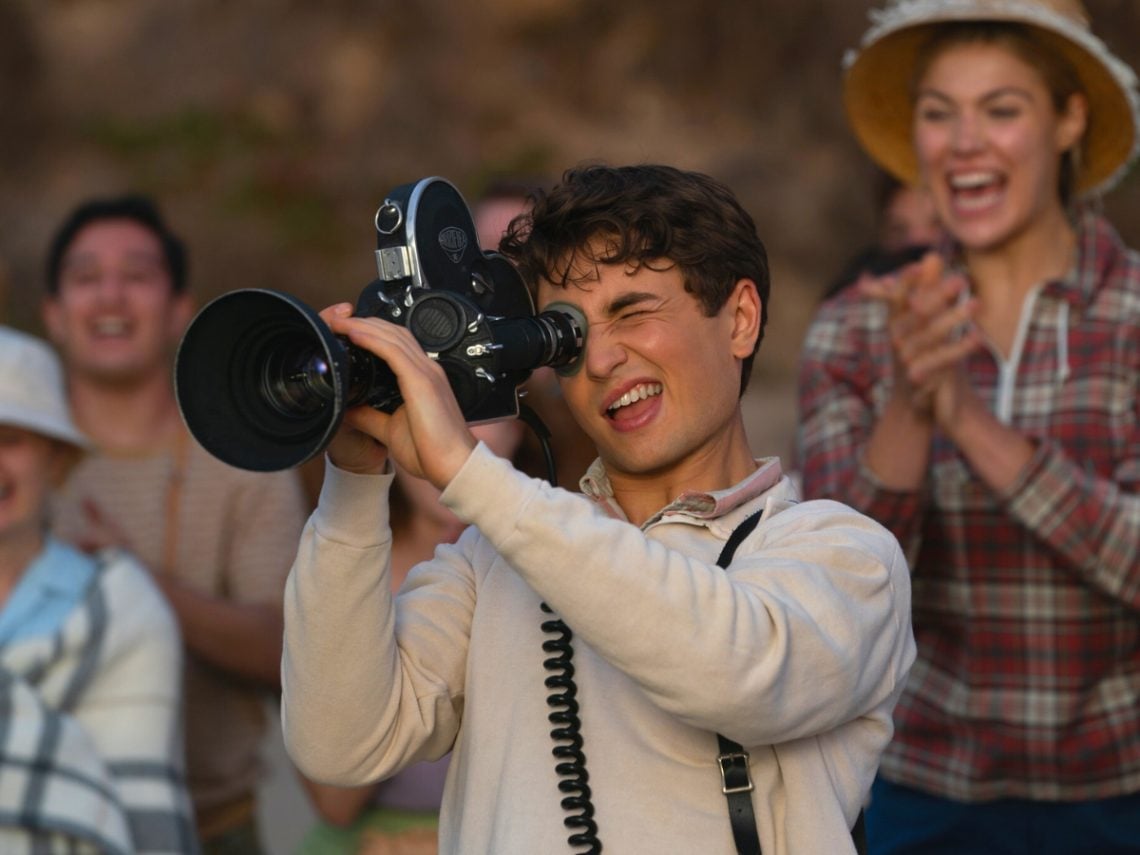
Cinema was a binding force in Spielberg’s own family. The Fabelmans opens with a young Sammy being taken to see his first movie by his parents – played by Paul Dano and the transcendent Michelle Williams. On the drive home, Sammy stares out of the window glassy-eyed, clearly traumatised by the whole experience. After ruining his new train set in an effort to recreate the film’s train crash scene, his parents decide to give him an 8mm camera so that he can film the crash over and over without needing to destroy his toys. “He needs to see the trains crash,” his mother says, spotting her son’s desire to control a fundamentally chaotic world before he has.
Sammy’s mother stands in stark contrast to his father: a highly logical computing engineer making great leaps in the industry. Initially, this dynamic seems to have provided Sammy and his siblings with the perfect parents, but the cracks soon begin to show. Again, his camera holds the key: revealing a terrible secret hidden between the frames of one of his home movies.
As family life becomes more complicated and the family is uprooted, we see Sam developing his style as a filmmaker, offering Spielberg the chance to reference some of his most revered films. After watching Stage Coach, for example, he decides to make a western highly reminiscent of Indiana Jones. Later, when he’s basically a big ball of male hormones, he directs an embryonic version of Saving Private Ryan with the help of his friends, working with his actors to unearth the same emotional weight that would come to define the 1998 picture.
This is the beauty of The Fabelmans. It’s a memoir, a family drama, a high school comedy and a celebration of cinema all in one. It’s also likely to be one of Spielberg’s final films, making this his potential swan song. It would be a brilliant note to end on. Of course, it may mark the end of something else: a cinematic era dominated by “great men” making great works of art. That The Fabelmans focuses on one boy’s struggle to achieve artistic success is indicative of the industry Spielberg inherited and subsequently maintained.
Of course, today’s diversity of directorial talent would imply such an industry no longer exists. The Fabelmans’ America changes countless times over, with disposable paper dining sets giving way to wooden tables and porcelain. Amid all this change, there is one constant: art. The Fabelmans leaves us wondering why certain things endure when all else has fallen away.
