


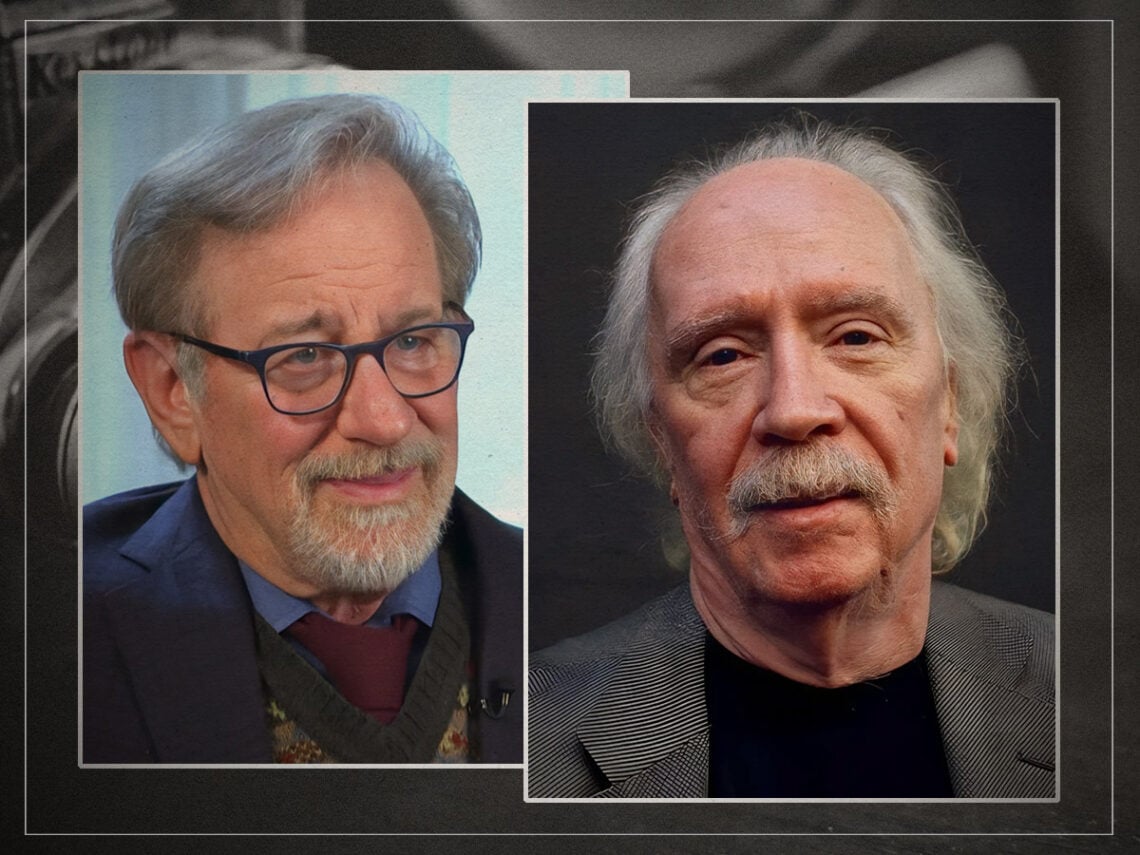
The Steven Spielberg classic rejected in favour of a John Carpenter flop: “Goes to show how wrong you can be”

In 1979, Columbia Pictures optioned a science-fiction script by Bruce A Evans and Raynold Gideon at Michael Douglas’ insistence. He became an executive producer on the project, which would then spend five years in development at the studio before being brought to the screen by horror icon John Carpenter. Somewhere along the way, though, Columbia also optioned another sci-fi script that it wound up abandoning in favour of Carpenter’s movie — only to see that rejected script become literally the highest-grossing movie ever made at a rival studio.
When Evans and Gideon’s script was optioned, they were tasked with completing a rewrite, but their work wasn’t to Douglas or Columbia’s satisfaction. So, in 1981, the studio enlisted scribe Dean Reisner to polish up this tale of a widowed earthling falling in love with a non-corporeal alien who resides within the cloned body of her dead husband. Amazingly, Reisner would then go on an odyssey of seven different rewrites with seven different directors who attached themselves to the project, including Mark Rydell (On Golden Pond), John Badham (Saturday Night Fever), and Adrian Lyne (Fatal Attraction).
While all this was going on, though, Columbia was also working on Steven Spielberg’s Night Skies, which was originally conceived as a sequel to Close Encounters of the Third Kind. Over the years, though, this story of malevolent aliens attacking a family in their farmhouse metamorphosed into something aimed much more at a family audience. It all boiled down to this: Spielberg realised he didn’t want to make a scary alien movie, and instead wanted to make a film about a friendly space traveller.
This change didn’t sit well with Columbia, though, and the studio got cold feet about Night Skies. In February 1981, Columbia cut a deal with Universal’s Sid Sheinberg to sell him the project for the princely sum of the $1million it had already paid out in development and a 5% cut of any profits Universal would eventually make with the film. This seemed like a good idea at the time, as Columbia’s president, Frank Price, reportedly had no desire to make “a wimpy Walt Disney movie.” The deal even allowed them to get their investment back, plus the promise of some future funds if Universal actually got the project off the ground.
To the horror of everyone at Columbia, though, Night Skies eventually became E.T. the Extra-Terrestrial. When it was released in 1982, it was a genuine cultural phenomenon and quickly became the biggest movie in the history of Hollywood. While this meant Columbia received a small portion of that windfall, it also meant it had let a film slip through its fingers that grossed a mind-boggling $797million.
In 1985, Reisner spoke about Columbia dropping the ball. “They made the decision on the grounds that E.T. was more or less for kids, more Disney-like, whereas Starman was an E.T. for grown-ups,” he mused. With a sly smile, he sarcastically added, “Goes to show how wrong you can be in this business.”
While Columbia’s reasoning did make sense, it vastly underestimated Spielberg’s project’s potential and even more vastly overestimated how Starman would fare. It was also left in an invidious position when directors and people at the studio began to worry that the projects were too similar, even though they were aimed at different audiences. Reisner was told to make Starman “different from ET, but keep it the same,” and it ended up being “a ‘getting to know you on the run’ kind of picture, like The 39 Steps and The Defiant Ones, only now it was about a girl and an alien.”
Ultimately, Starman arrived two years after ET, and only made $28.7 million on a reported budget of $24 million. While Jeff Bridges was nominated for an Academy Award and the movie spawned a short-lived TV spinoff, it was hardly the bonanza ET had been for Universal. Perhaps this was simply a case of backing the wrong horse – or the wrong benevolent alien.
