


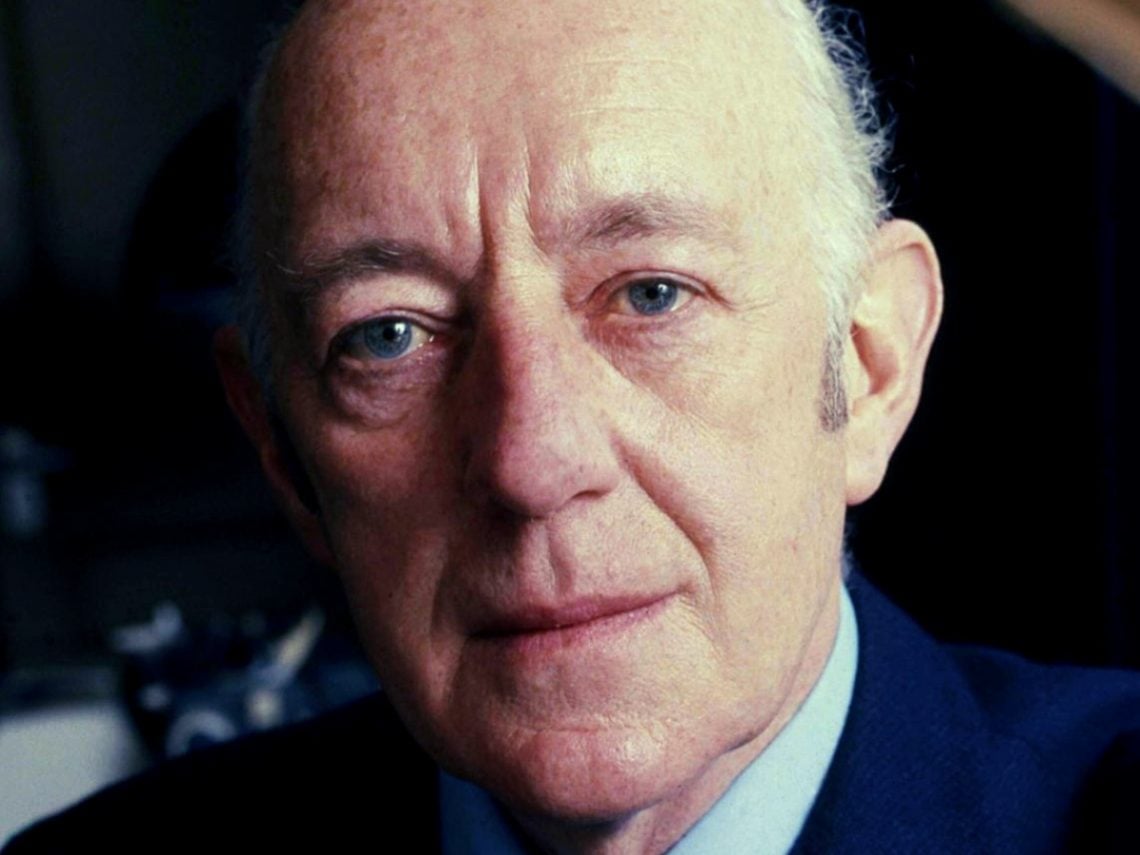
The reason Alec Guinness hated his role on ‘Star Wars’: “I regret having embarked on the film”

Alec Guinness was a star who harks back to a bygone era. Alongside John Gielgud and Laurence Olivier, he was part of a masterful set of Shakespearean performers who transposed their experience from the stage onto the screen, refining the audience’s tastes. This set a precedent for the likes of Ian McKellen and Derek Jacobi to emerge in the future and bring a measured essence to proceedings. Perhaps it isn’t all that surprising that Star Wars wasn’t to his taste, despite being one of its most beloved heroes.
The position of Obi-Wan Kenobi in the Star Wars universe is a hallowed one. Before being given an understanding of his earlier years through the prequel episodes, when Guinness took on the role of Obi-Wan, it was as the esteemed elder statesman of the Jedi rebellion. It meant the veteran actor was expertly placed to deliver a set of speeches rich with the kind of gravitas that one easily gains from treading the boards of the West End.
Starting his career on the stage allowed Guinness to develop the dexterity that would see him become one of the greatest character actors from the late 1940s onwards. Famously, he made his name in a handful of the timeless ‘Ealing comedies’, including 1949’s Kind Hearts and Coronets, 1951’s The Lavender Hill Mob and the influential 1955 title The Ladykillers.
Outside of these projects, Guinness also worked with director David Lean on six occasions, with each of their collaborative efforts serving to crystallise their respective standings in cinema history. Together, they worked on 1946’s Great Expectations, 1948’s Oliver Twist, 1957’s The Bridge on the River Kwai, 1962’s Lawrence of Arabia, 1965’s Doctor Zhivago and 1984’s A Passage to India.
Although Guinness committed to various iconic roles in his time, none were as impactful on popular culture as his portrayal of the aged Obi-Wan Kenobi in George Lucas’ original Star Wars film, 1977’s A New Hope. Instilling the character with his Shakespearean command of the audience and his natural serenity, Obi-Wan became one of the most beloved characters ever seen in cinema.
Co-star Harrison Ford, who has also questioned the films himself, later said of Guinness’ brilliance: “It was, for me, fascinating to watch Alec Guinness. He was always prepared, always professional, always very kind to the other actors. He had a very clear head about how to serve the story.”
Despite Guinness’ close link to Star Wars, he wasn’t a fan of the film and expressed great regret at taking the role. He reportedly said during production: “Apart from the money, I regret having embarked on the film. I like them well enough, but it’s not an acting job, the dialogue—which is lamentable—keeps being changed and only slightly improved, and I find myself old and out of touch with the young.”
Strangely, the actor would then profess his widespread fame from the role both surprised and annoyed him. In his autobiography, A Positively Final Appearance: A Journal, he reflected on an instance where his disdain for the film manifested. He recalled an autograph-seeking fan boasting that he had seen Star Wars more than 100 times. In response to this, the actor agreed to give his autograph on one condition: he promised never to watch the film again.
It’s not entirely unusual for an actor to dislike their most profitable movie. The chances are that when a movie is aimed at the mainstream, the artists involved will naturally find it somewhat distasteful. Star Wars might well be one of the biggest franchises of all time, but it didn’t necessarily leave all of its stars happy with their work.
