


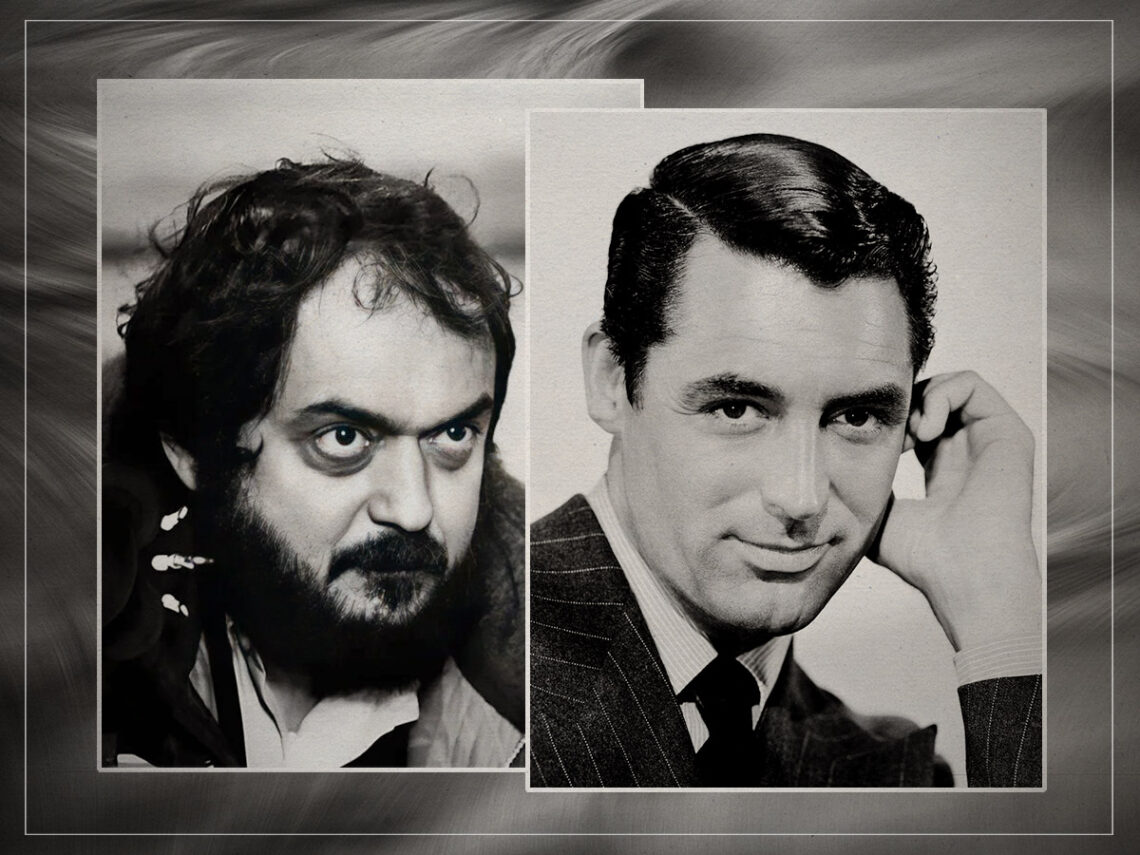
The Stanley Kubrick movie Cary Grant refused to star in: “I don’t want to play in that sort of film”

As one of ‘Golden Age’ Hollywood’s biggest and most popular stars, Cary Grant inevitably worked with many of the period’s foremost directors. However, he had the chance to collaborate with a filmmaker who helped define the next generation of auteurs, only to turn them down flat.
Having made movies with Frank Capra, Howard Hawks, Joseph L Mankiewicz, George Cukor, Leo McCarey, George Stevens, and Alfred Hitchcock, to name just a few, Grant was familiar with the creative masterminds behind a cavalcade of the industry’s finest features.
With Paths of Glory, Spartacus, 2001: A Space Odyssey, A Clockwork Orange, and Full Metal Jacket among his filmography, Kubrick deserves his place among the pantheon of all-time greats. On paper, there even seemed to be an element of fate surrounding his proposed team-up with Grant.
The former made his directorial debut on 1952’s Paths of Glory, which was released the same year Grant decided to take a step back from the business to reset his career after a string of disappointing pictures. The actor would make several of his best movies after his return, during which time Kubrick continued ascending up the ladder.
Kubrick adapted Vladimir Nabokov’s novel Lolita for his first film after the four-time Academy Award-winning epic Spartacus, and there was controversy from the start due to the source material’s risque content. It was officially announced as the filmmaker’s next project after Marlon Brando booted him from One-Eyed Jacks, while Grant was fresh off the success of Hitchcock’s North by Northwest.
Although Grant had made a concerted effort to inject his established screen persona with shades of grey to distance himself from the suave and debonair archetype that had defined him for decades, playing a professor who developed an infatuation and obsession with a teenage girl was a step too far.
“The producers indeed contacted me, but I refused their offer,” Grant confirmed when asked by Ruth Waterbury if he’d been approached for Lolita. “I don’t want to play in that sort of film. Plots like this may exist in literature but not on the screen. Besides, I would not be able to get into the skin of that character. There are some limits that an actor can not get over.”
James Mason ended up playing the part, but only after he’d turned it down, too. The actor was said to be Kubrick’s first choice for Humbert Humbert from the beginning, but he was already committed to performing on Broadway. Laurence Olivier also said no before Kubrick got his man when Mason ultimately backed out of the play he was supposed to be starring in, opening the door for him to headline Lolita.
It would have been a drastic change of pace for Grant to play the character, but as much as he sought to challenge the audience’s perception of him in the latter stages of his filmography, there were some bridges he refused to cross.
