


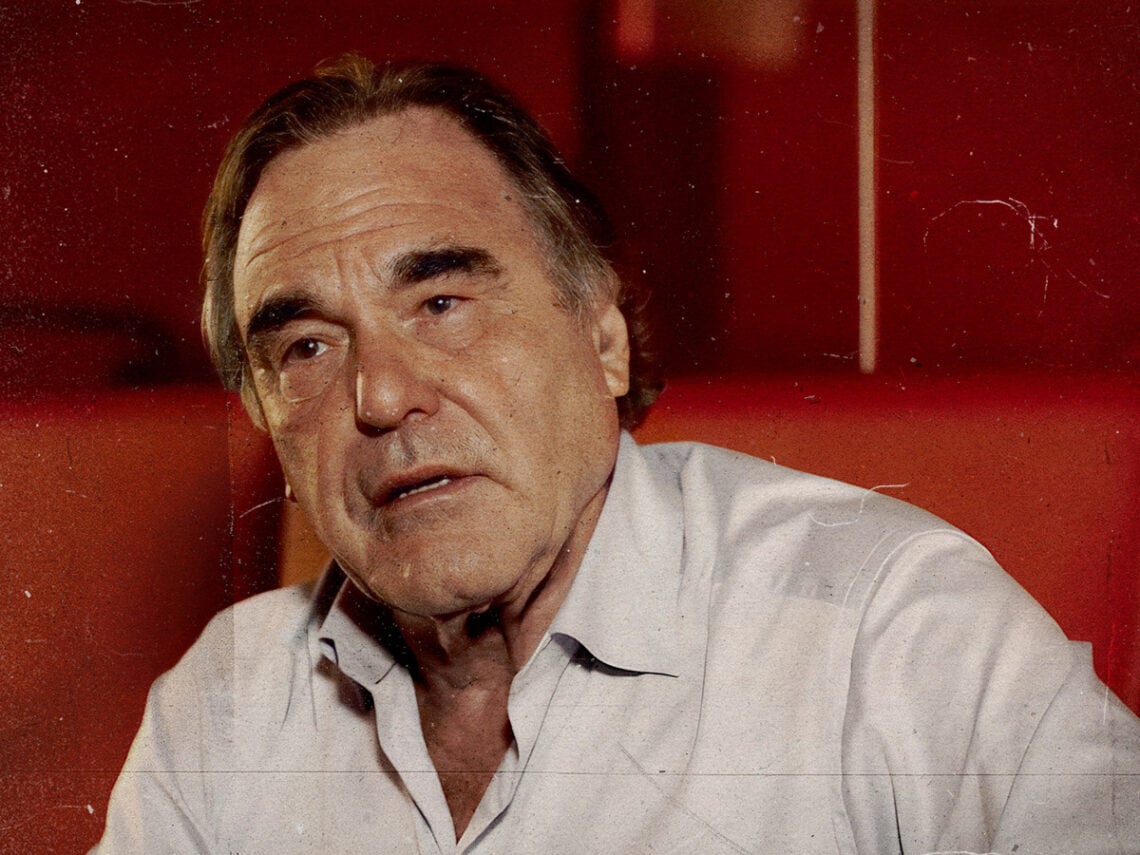
“He crumbled”: The Stanley Kubrick career move that Oliver Stone hated

Throughout his career as a filmmaker, whether intended or otherwise, Oliver Stone, admired as he undoubtedly his, has often courted controversy. The Platoon, Wall Street and JFK director has frequently been criticised for his depiction of women in his films, although the contentious nature of Stone’s works do not end there.
Perhaps one of the most controversial films belonging to Stone is his 1994 romantic crime action movie Natural Born Killers, in which Woody Harrelson and Juliette Lewis play a serial killing couple who are subsequently glorified by the mass media. Based on a story by Quentin Tarantino, Natural Born Killers had a serious impact on the world, but for all the wrong reasons.
Stone was the target of widespread criticism in the years following the release of his 1994 effort, especially considering the fact that several murders or “copycat crimes” occurred that bore a striking resemblance to those in the film, including the 1997 Heath High School shooting and the Columbine High School massacre.
However, both Stone and Woody Harrelson have been resistant of accepting the suggestion that Natural Born Killers was indeed responsible for inspiring such notorious crimes. Stone himself spoke of his defiance and defence of his film, especially in the light of the way that Stanley Kubrick dealt with the criticism of A Clockwork Orange.
The 1971 effort based on Anthony Burgess’ novel of the same name focuses on a young anti-social delinquent who engages in extreme violent behaviour and who undergoes psychological conditioning when he is apprehended by the authorities. Even though Kubrick’s film commentated on the nature of juvenile delinquency and the ethical considerations of state control and psychology, A Clockwork Orange was criticised.
In a similar manner to Natural Born Killers, some felt that Kubrick’s 1971 dystopian film had inspired a series of copycat crimes and promoted violence in the youth. However, where Stone was adamant that his film was just a fictional work and ought to be free from any such criticism, Kubrick was devastated by the reception of A Clockwork Orange and set about getting it banned from the cinemas himself.
In an interview with The Guardian, Stone once spoke of Kubrick’s decision, noting, “I think Kubrick was wrong to do that. If it wasn’t an admission of guilt, it was at least an admission of embarrassment.” Indeed, Kubrick was mortified by the criticism that had been aimed at him, and A Clockwork Orange was not available to be shown in cinemas for many decades.
“I’m a big fan of Kubrick, but he was a paranoid man,” Stone added. “He reacted to the hysteria of the mob. He crumbled when he should have stood up and defended his work.” At the time of A Clockwork Orange’s release, Kubrick had been living in England but quickly found that he was the frequent target of the tabloid press, who levied claims against him that he wanted to turn London into a city overrun by violence.
Where Kubrick crumbled in the eyes of Stone, the Natural Born Killers director refused to admit that he had overstepped the mark when it came to his 1994 romantic crime film. According to the filmmaker, he had questioned the violence in his work and “felt terrible” for a short while, but upon examination, felt that he had done little wrong, as he felt Kubrick hadn’t also.
