


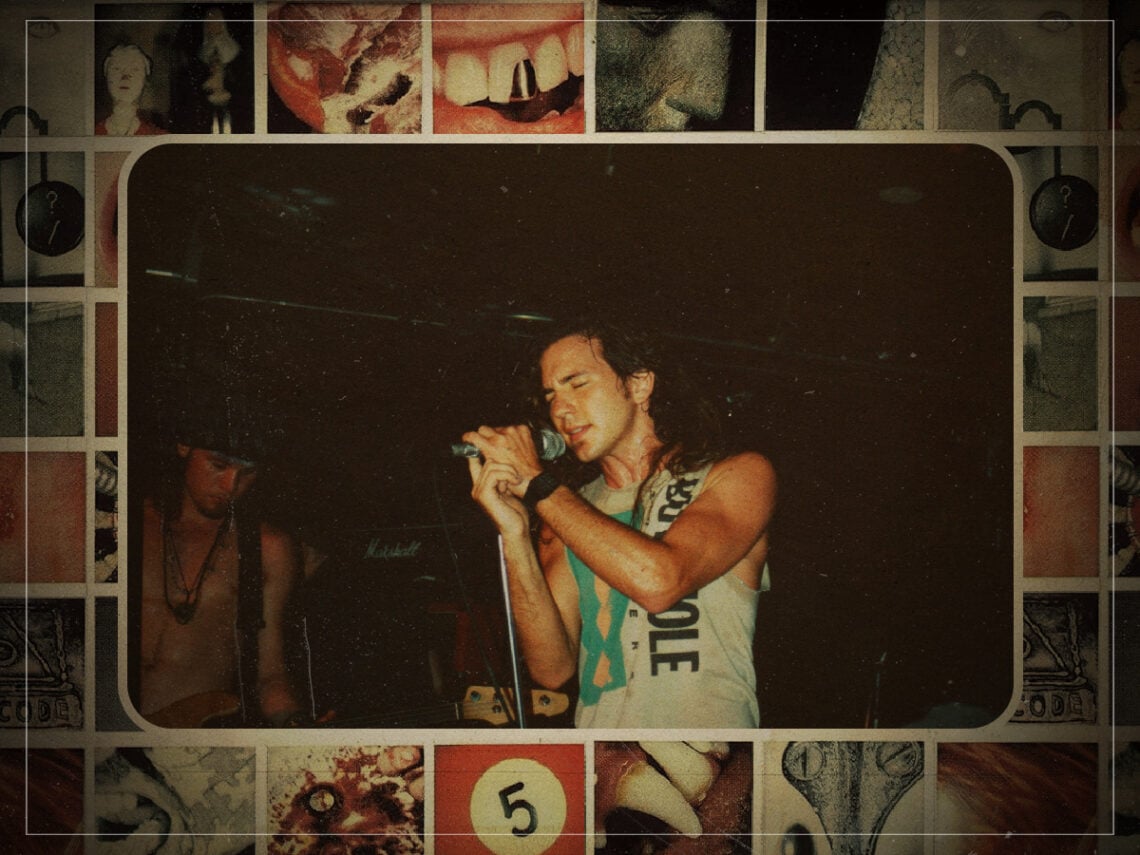
The stalker who crashed her car into Eddie Vedder’s house and how it derailed Pearl Jam’s unstoppable rise

Try as they might, even the alternative explosion of the early 1990s clashed with the dark side of pop, a tension Eddie Vedder found himself right at the centre of.
The sad, disturbing, and often frightening obsessions of celebrity stalkers were only supposed to happen to the rock and pop heavyweights of music’s A-listers, the terrible price of fame befalling Madonna, Björk, and most tragically, John Lennon, all suffering the rage of a fan’s delusional rage. Such idolisation just didn’t happen to guys in Washington’s working-class logging city of Seattle.
But the music world’s attention on Seattle was enough to give its underground punk community whiplash in 1991. Not that such mainstream eyes on the rock fringes were a complete surprise. Anybody connected to the rich and vibrant alternative subterranean bubbling away across the previous decade knew that major labels began to spot the commercial potential for a new generation of bands world’s apart from the spandex hair metal still buffooning on MTV.
Yet, Nevermind’s success indeed surprised everybody, no less than Nirvana’s frontman, who hadn’t set out to knock Michael Jackson off the Billboard 200 top spot. Following the momentum set by Sonic Youth’s signing to DGC, Alice in Chains and Soundgarden both joined Columbia Records and A&M’s respective rosters, and Pearl Jam courted Epic’s attention for their Ten debut, released a fortnight before ‘Smells Like Teen Spirit’ struck the charts.
Injected with Nevermind’s pop accelerant, the grunge cohort found themselves thrust to the dizzying peaks of rock fame. Such a celebrity status hit Vedder hard. A US number two album and the resulting intense flurry of press attention quickly dumped a leaden weight on the musical success he’d been chasing since his days as a night clerk at a gas station only a few years earlier. Such a profile brought a steady stream of fan letters, initially responded to in good faith and appreciation, before the mountain of messages became too much to handle.
“One of the reasons you’re protecting yourself is because you’ve been forthcoming with your emotions,” Vedder told The Guardian in 2009. “So you have to build a wall. And now people are driving into the wall. That’s what fucks with your head. I felt like my brain was a whore and I was getting mindfucked.”
This was a literal statement. The fan attention was beginning to alarm Vedder and his then-wife, Beth Liebling, with some Pearl Jam diehards even turning up to their house. While the exact dates have never been revealed, it’s known that sometime around 1995-’96, an obsessed fan who believed Vedder was Jesus Christ and had fathered her two children by raping her drove her car at 50mph into his protective wall, a barrier that saved his life.
It was the final straw. While Pearl Jam had already suspended music videos and obliged every press request, a further retreat away from fame’s spotlight saw Vedder eschew overt accessibility in their sound and a swift detour away from the anthemic arena assault that had won them their fame for 1996’s No Code’s embrace of art-rock baladry and stripped-down garage thumpers. The terrifying car crash spun Pearl Jam’s trajectory away from the rockstar road, a path Vedder always held a diffident relationship with, anyhow.
He’d pour his dice with fame’s dark trappings on No Code’s ‘Lukin’, a furious pummeller spat directly at the stalker who upended his life with such violent, dangerous obsession.
