


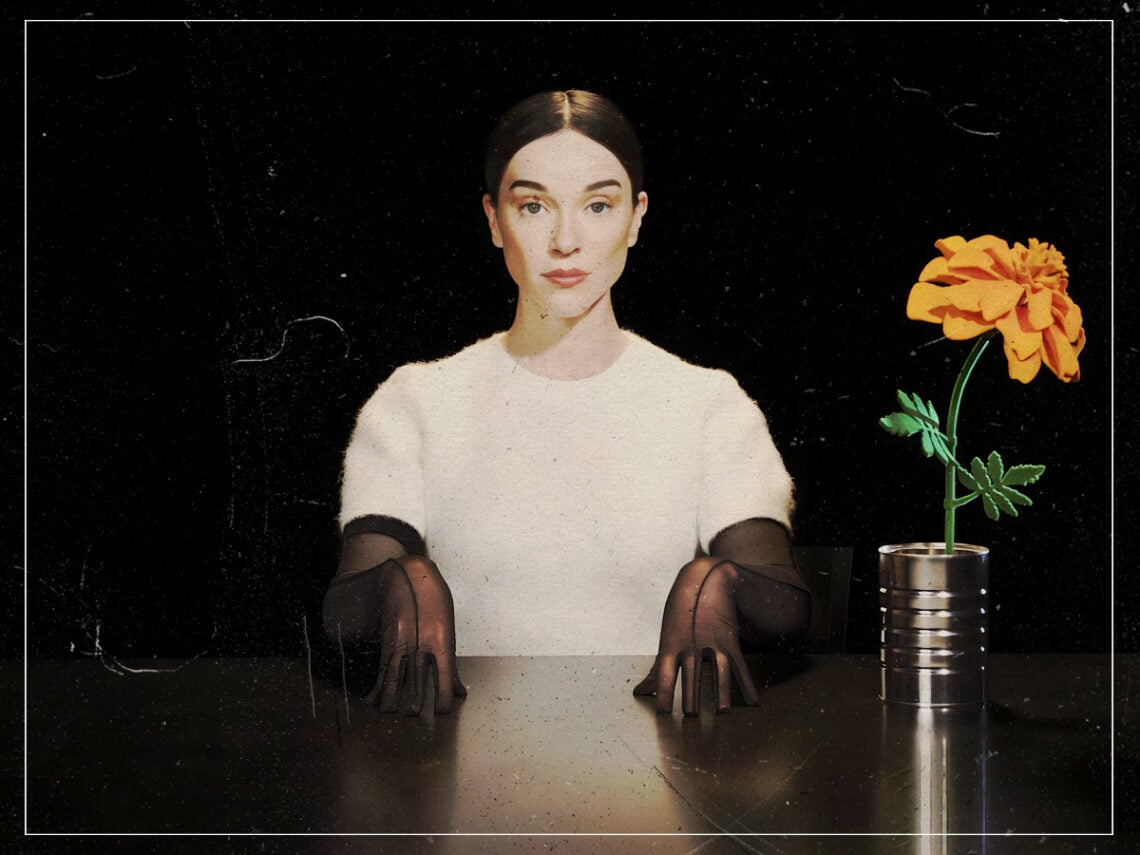
“A total genius”: St Vincent discusses the guitarist who she learnt most from

In the world of St Vincent, there is no room for trepidation. As someone who built their vision on the foundations of people like David Bowie, fearlessness has always been her mainstay, and it doesn’t take too much to stumble across this in her artistry. Take All Born Screaming, for instance; aside from the boldness of the title alone, it is also a venture into realms “darker and harder and more close to the bone”.
St Vincent, whose real name is Anne Erin Clark, addressed the darker components of life long before her seventh album, but with each iteration, she ventures closer to reflecting the true eclecticism of her world. Since day one, the singer has been shoehorned into categories like “experimental” and “art rock”, but her infinite dedication to expanding her world renders this somewhat restrictive.
On Bowie, for instance, Clark first became drawn to the fact that his music “takes me someplace else” and “reminds me of things that matter, instead of pure escapism”. Interestingly, her interest in macabre complexities likely explains her fixation with ‘Always Crashing In The Same Car’, a dark venture into the idea of constantly making the same, self-destructive mistakes over and over.
As a guitarist, Clark’s manifesto is exactly the same. Pioneering the so-called “art rock” format, her approach borrows from several genres, utilising sound and intricacy to create emotion in ways others can’t easily replicate. A better explanation of this would be her appreciation for Mark Ribot and Andy Gill, two guitarists she once described as “people who can make a guitar sound like it is being strangled or really make it sing, sometimes both in the same breath.”
However, one of Clark’s guitar-playing favourites sits a little closer to home, peering in the form of her uncle, Tuck Andress. As one-half of the famous Tuck & Patti duo, Andress helped to revolutionise the rhythmic essence of jazz, adding innovative textures and unusual layers to music that many would source in the years that followed. As a relative of Andress’, Clark cites the guitarist not only as an early influence but a “genius” who can make the instrument sound like multiple people are playing at once.
“Tuck’s my uncle and his influence on me is immense,” she told Guitar Player, continuing, “I flatter myself to think that there is an actual genetic through-line to our playing – I mean, we’re obviously related and there are all manner of micro-movements that we might share.”
She added: “Tuck’s a total genius and he can make an instrument sound like ten people playing. The level of skill and discipline it took for him to become a one-man guitar symphony is staggering. I’ve never seen anybody play like he can play. He’s the eighth wonder of the world.”
Despite Clark’s more overt rock leanings, Andress’ influence can be heard in the many ways she filters unconventional techniques into her playing. Despite establishing a distinctive sound on her own, her uncle’s prowess runs deep in her DNA, namely in her sophistication and ability to fuse various genres with a more delicate, finger-picking approach. She also seems to possess a certain level of quiet confidence, the sensitive kind that Andress always had, making her the perfect mirror of historical talent.
