


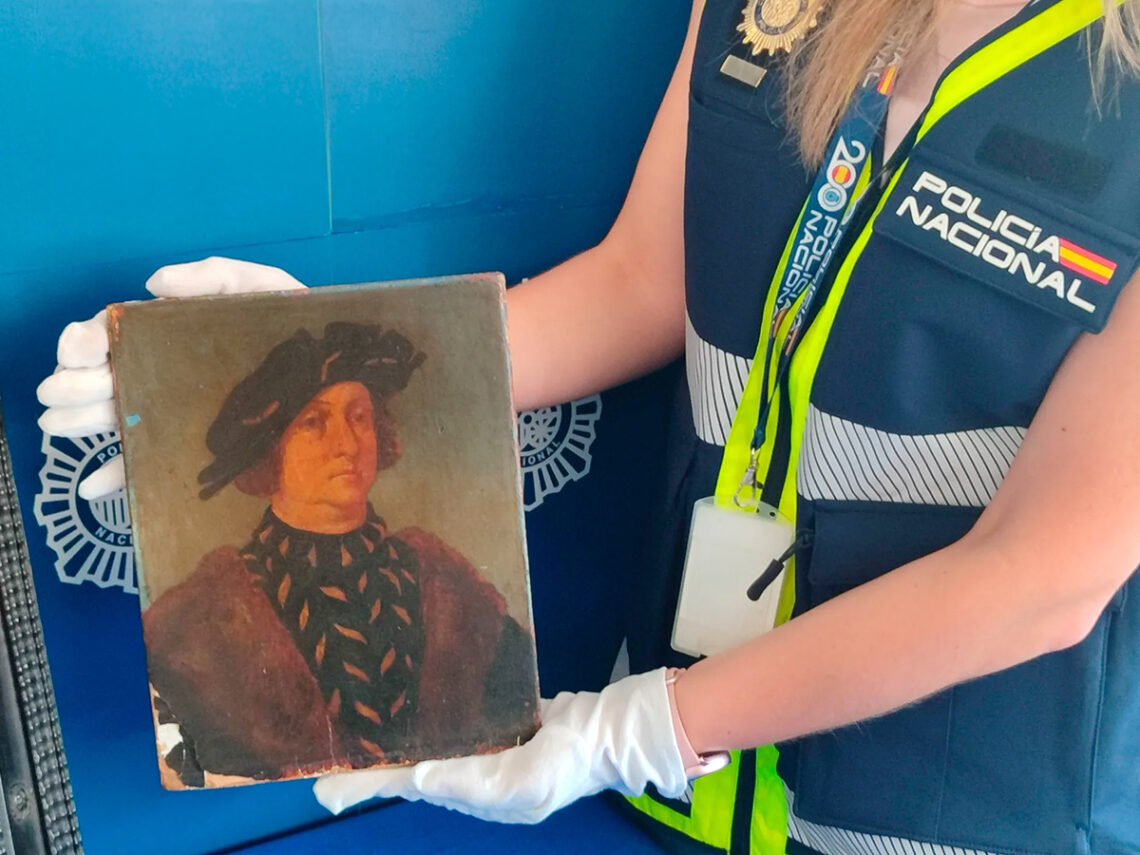
Spanish man arrested over attempted sale of fake Leonardo da Vinci painting

A Spanish man has been arrested in Madrid following an attempted sale of a fake Leonardo da Vinci painting.
While paintings and artworks are constantly duplicated and sold worldwide as prints or replicas, this attempted sale was planning to go through at over a million dollars as the men behind the plot claimed the painting was authentic.
The artwork in question was purported to have been a da Vinci piece. However, art historians and experts have concluded that this is not the case. “The experts’ report concluded that the work was a copy of the Milanese portraits painted around the end of the 15th century and the beginning of the 16th century,” Spanish authorities have said in statement.
Although the painting might legitimately be old, the authorities believe it certainly doesn’t date back to the 1400 or 1500s when Da Vinci was working. “The painting was probably painted, with fraudulent intent, at the beginning of the 20th century,” the statement said. “As such, its value is between €3,000 and €5,000 ($3,200 and $5,400) and the painting can categorically be ruled out as a being by Leonardo or any other Italian artist of the time.”
With those findings, it does still make the image relatively pricey for a forgery and still old enough to be considered somewhat classic. However, the attempted sale was happening under clear false pretences as the men involved were representing it as the real deal.
The foiling of the plan all came down to paperwork as an expired document fostered suspicion from French customs agents. This arrest comes two years after those agents in Modane, near the Italian border, first confiscated the artwork. The man had presented them with an expired export license with led to the agents questioning him further.
The authorities derailed his plan to head to Milan to sell the faux artwork for around €1.3 million. This prompted a call to Spain’s Policía Nacional in 2022. After the artwork was recovered, the investigation into its origins and creation was launched with the help of the Museo Nacional del Prado in Madrid who analysed the piece, finding it’s original creation story.
Once the experts found that this was not in fact an original Da Vinci, the man was charged with smuggling and was arrested. At this stage, there’s no word on where the faux painting has ended up, but luckily it hasn’t ended up in the hands of a buyer who would have been €1.3 million poorer with a forgery hanging on their wall.
