


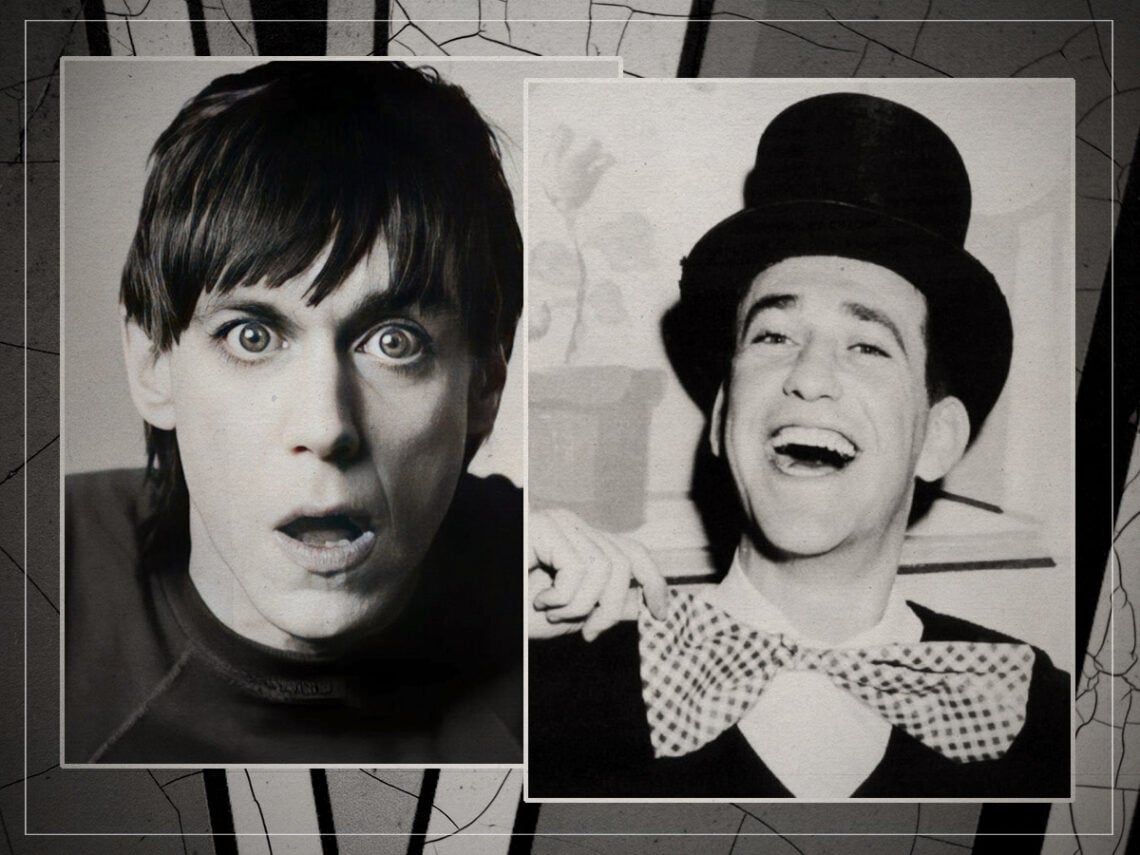
Soupy Sales: The kids TV show host who shaped Iggy Pop

A frontman as enigmatic and energetic as Iggy Pop comes along once in a generation. Since his early days as a Michigan garage rocker with The Stooges, Pop has influenced virtually every punk and alternative rock artist in his wake, with his amphetamine-fueled shirtless antics proving just as relatable to every successive generation of music fans. Nevertheless, the origins of this otherworldly performer are much closer to home than you might expect. During his early days, the singer took his cues from the world of children’s television.
It is difficult to imagine Iggy Pop as a child. If you have listened to his music or seen him perform live, you could very easily assume that the frontman emerged from the womb, shirtless with leathery skin, shouting about ‘Raw Power’ and his ‘Lust for Life’. In reality, Pop – born James Osterberg Jr – lived a fairly conventional adolescence in Ypsilanti, Michigan. His existence during the late 1950s and early 1960s was illustrated by preppy sweaters and high school lunches rather than the sweat-soaked skin and visceral proto-punk he would come to embody.
As is the case with any American child of the 20th century, a core element of Pop’s childhood was television, and back in the 1950s, television options were pretty limited. In and around the Detroit area, from 1953 onwards, a regular feature of children’s television was Lunch with Soupy Sales, which ran for over a decade. So, Pop spent much of his childhood glued to the gogglebox, watching the antics of this slapstick performer.
Lunch with Soupy Sales, later renamed simply The Soupy Sales Show, centred around Sales as a comedy performer. In the show, the North Carolina-born comedian created largely improvisational skits, usually ending with Sales getting a cream pie to the face—it was a different time. Notably, Sales used to instruct his viewers to keep their fan letters to a maximum of 25 words.
While this might seem like the tactic of somebody who became fed up with being inundated with letters, it reflects Pop’s later songwriting style. From his work with The Stooges, even into his later solo material, Pop was never a writer to become too drowned in complex lyricism, keeping things short, sharp and to the point. Sure, it might be a little tenuous to suggest that the entirety of Pop’s approach to songwriting is derived from his childhood experiences watching Soupy Sales, but the strange connections do not stop there.
During his television heyday, Sales was married to Barbara Fox, and the pair had two sons, Tony and Hunt Sales. Rather than following in their father’s footsteps, spending a lifetime taking pies to the face, both sons devoted their lives to rock and roll music. Notably, the pair formed the rhythm section for Todd Rundgren during the early 1970s, becoming sought-after for their bass and drum stylings.
Before too long, the pair crossed paths with one Iggy Pop. At the time, Pop was working on the early framework of his solo career, having disbanded The Stooges in 1971. Amassing personnel for 1977’s Lust for Life, his second solo record, Pop called upon the Sales brothers to appear on the record. In fact, the pair stayed in Pop’s group for quite some time before forming one-half of Tin Machine in 1988.
Whether or not Iggy Pop deliberately held on to the 25-word manifesto of Soupy Sales while ad-libbing lines for Lust for Life, the proto-punk icon has undeniable connections to the cult television star. Two icons of mid-century Michigan, the pair make for endearing – if unexpected – bedfellows.
