


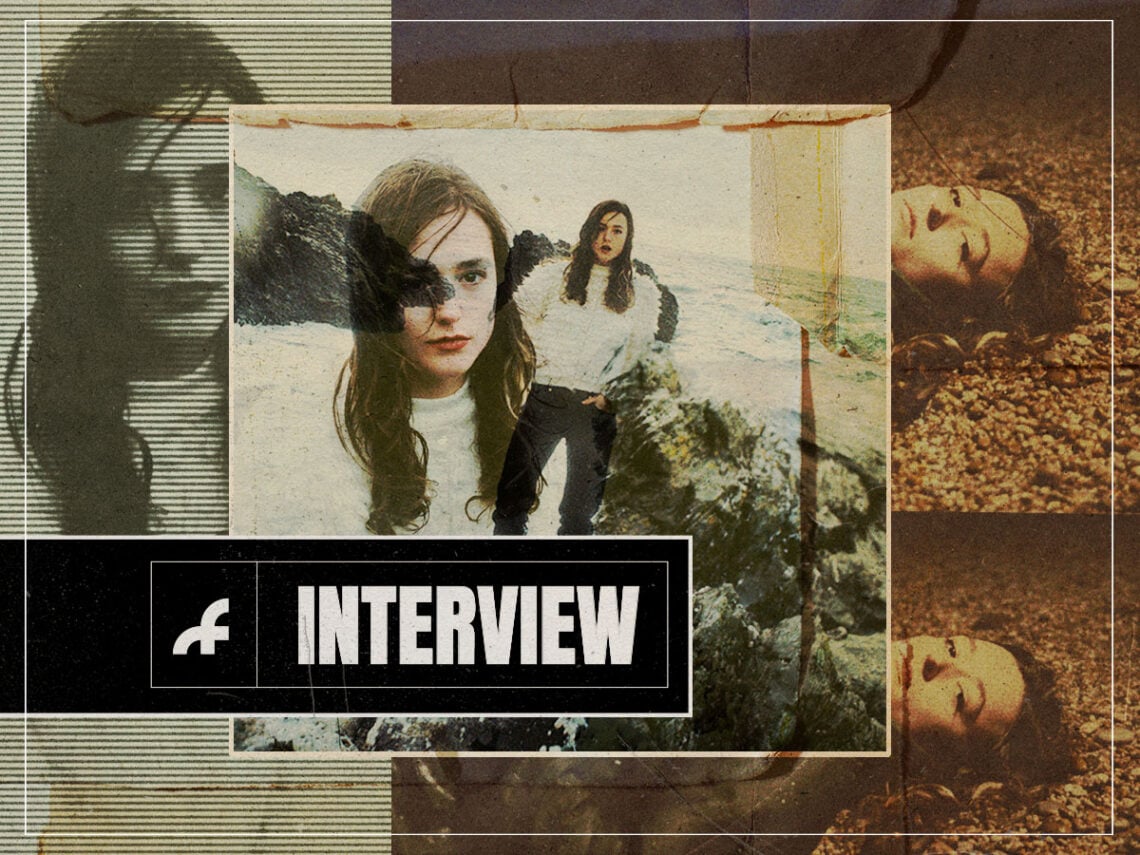
‘You can’t say that’: Sophie May on ‘Tiny Dictator’ and the isolating stigma of OCD

“So disturbing”, “This stuff needs to stay in your head” or simply, “What the fuck?” Those were the types of comments that Sophie May’s social media was flooded with as she started teasing her new track, ‘Tiny Dictator’. But she gets it. It’s a jarring listen. Within the first few lines, May talks about thinking of her parents during sex and wondering if she’s a paedophile. But jarring is exactly what the inside of her brain sounds like when her mental health is bad, and her Pure OCD intrusive thoughts get loud.
The topic of mental illness is one that’s been covered in music again and again. Sadness, especially, has always been a cornerstone of artistry, as some of the best songs in the world are born from dark places. But when it comes to OCD, where that dark place isn’t tears and angst but is often being berated by your own brain or getting trapped in tick-like obsessive cycles, people struggle with accepting something they can’t romanticise as easily.
“I always kind of think anxiety and depression in the media are sometimes quite sexy. A lot of being sad is quite sexy, but then with intrusive thoughts, it’s not,” she said of the stigma OCD still faces. “We encourage people to talk when they feel alone, but as soon as you try to talk about OCD, people are like ‘Nope, not that.’” If you need evidence of that, Sophie’s comments prove it. As the song wanders through the horrible labyrinth of her mind, laying out the obsessive thoughts that pop into her head as she struggles with the disorder, it’s clear that people still aren’t comfortable with the less glamorous or comfortably understandable side of mental health awareness.
But that’s precisely why Sophie felt like she had to give words to it and finally not mince them. On her 2023 EP, Worst Thoughts In The World, she tried for the first time. “I think ‘Worst Thoughts In The World’ was my way in,” she revealed, “But I did feel as I was writing it that this is definitely a palatable song.” The song has a similar air to ‘Tiny Dictator’ as she hands her pen over to her thoughts, singing, “Awful dreams, and I can’t make ’em stop / Kissing my brother and my best friend’s mom,” but it’s in no way as extreme. It didn’t feel like the itch had been scratched or that she’d honoured the reality of her experience.
“I was still so tormented by this ongoing disorder, and it felt like I was ignoring this big elephant in the room,” she said, adding, “‘Worst Thoughts in The World’ was the starter, ‘Tiny Dictator’ is the main course.”

The decision to write out her intrusive thoughts is one that opens up the whole minefield debate of how OCD should be handled, an issue that certainly adds to the stigma surrounding it. To some, talking about or acknowledging intrusive thoughts gives them power. Some people think that the only way to approach the disorder is to try and ignore it, however this has definitely led to the culture of silence and lack of understanding that surrounds it. In a period where her obsessions were worsening, Sophie hit a point where she couldn’t and didn’t want to live by that. “I kind of thought, I’m already feeling bad if I do write this song, and if I don’t write this song, I’m still gonna feel awful,” she explained. “Writing songs is one of the few things that makes me feel that even with OCD, and so I think when I was writing, it actually felt like a sigh of relief.”
Turning her OCD into a made-up “Tiny Dictator” and painting him out as this evil little villain made it feel easier. “I think separating it from yourself is really important,” she said, “sometimes laughing or making fun of those thoughts that often make you feel so bad or so guilty is therapeutic.”
But for a song and a process that helped her so much, the reaction was mixed and wild in a way that really only proved why the song was so necessary. The thing with OCD, unlike the known emotions of sadness tied to depression or worry tied to anxiety, is that the thoughts and feelings surrounding it aren’t quite as relatable. The very nature of intrusive thoughts is that it makes you feel totally alienated or ashamed as if you’re the only person in the world feeling these things. There’s also a clear lack of understanding from much of the general public who would see someone with OCD talking about their fears of cheating on someone or attacking someone or any of the things Sophie vocalises and see it as a kind of admission of guilt.
“I think it just takes the tiniest bit of research,” Sophie said. “You can go onto the NHS website, and it literally says there’s no correlation to people with intrusive thoughts and actually acting on those thoughts.”
When it came to deciding to share the song and keep in all the words and phrases that people reacted to, Sophie noted, “Ultimately, I came to the conclusion that it’s going to do more good than bad. And if a couple of people are like, ‘You know what, I don’t get it.’ That’s fine. I think ultimately, if it upset that many people, it’s obviously something that needs to be talked about more.”
But even if no one goes and googles or learns about Pure OCD after the release, the flip side of her comment section was reward enough. “Thanks for making those with OCD who feel unheard finally feel heard. You’re beautiful and not the only person who struggles with this. Thank you for bringing us all together,” one person commented, amongst hoards of others sharing their gratitude that someone finally put their all-too-often isolating experience into art.
