


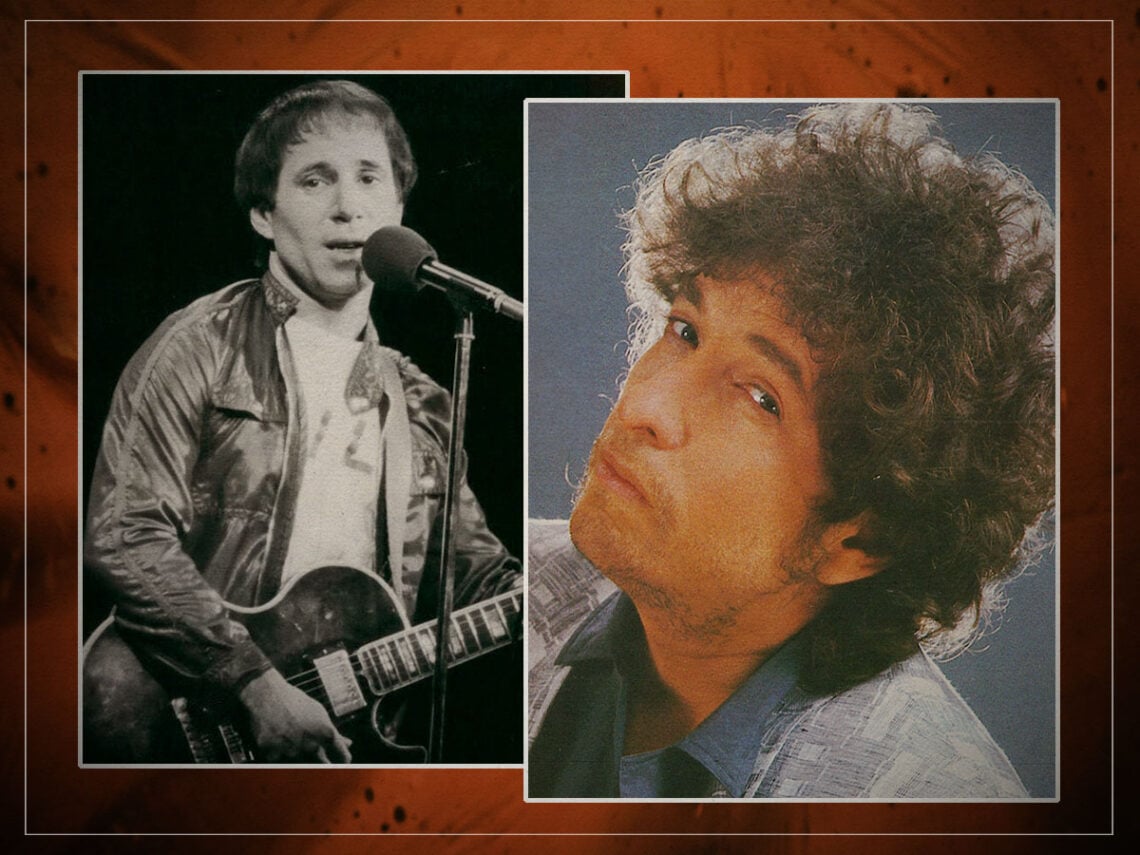
The songwriter Bob Dylan and Paul Simon both claimed was the best of the 1960s

It was a different time and a different place. An age when Bob Dylan could chuckle at an inopportune moment during a Simon & Garfunkel show in a hushed, underground basement, cutting the air like a ringtone at The Globe, and a vital rivalry could flourish from it.
The chuckle I’m referring to is far from proverbial. Dylan’s misplaced giggling genuinely occurred at Gerde’s Folk City in Greenwich Village. As Simon & Garfunkel stunned the crowd into silence with a spiritual moment, the original vagabond burst out laughing. While Robert Shelton insisted that the awkward guffaw was merely a case of bad timing, that did little to ameliorate the blow it dealt to the buddies on stage, who had a harder time believing the snicker’s backstory.
Shelton described it as “an encounter typical of New York’s paranoia and instant rivalries”. Yet, these rivalries were also a vital ingredient of what made the 1960s such a cesspit of creative brilliance. And they seemed to escape the city of New York, too. Bubbling beneath the revolutionary ways of the counterculture scene was an unfathomable collaborative spirit.
Beyond the giggling, the mind boggles even at the idea that Dylan could simply be stood in some dimly lit corner in the shadowy 40×80-foot bowls of Gerde’s, along with as few as 100 or so other people, listening to one of his leading peers who are now also etched into the annals of history. But then that’s also true of Dylan just casually bumping into The Beatles at the Delmonico Hotel and offering them a spliff.
Both of these incidents had an irrevocable impact on pop culture. Perhaps the abrasive laughter that made things awkward for a little while between Dylan and Simon prompted both parties to silence the other with their latest batch of masterpieces. Likewise, with a toke from his “icon”, maybe Paul McCartney was inspired to emancipate his own pop songs from the shackles of convention.
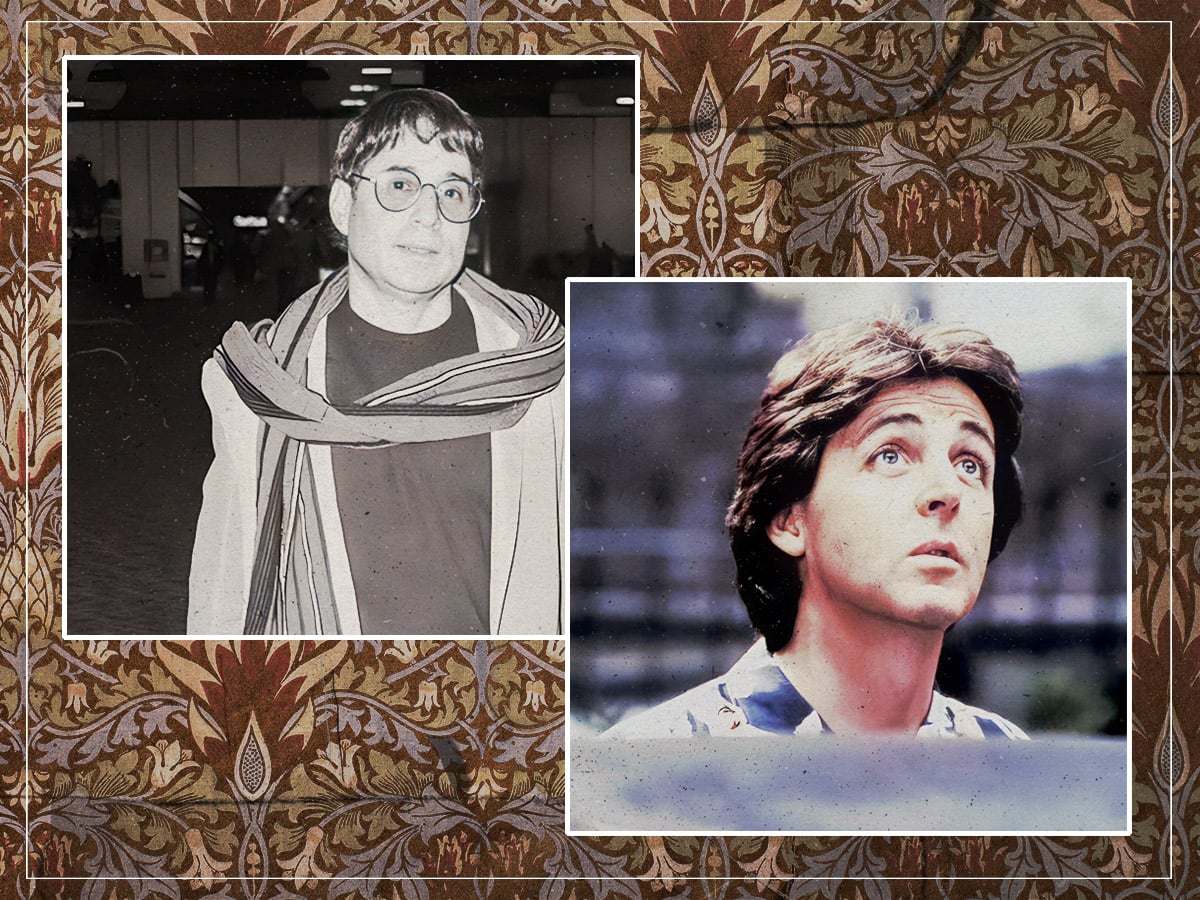
Either way, both Dylan and Simon were equally awed by what McCartney threw up at every turn. When Simon was asked to list the greatest songwriters of all time, the only name from the modern era who made the top tier was the former Beatle.
“I’d put it at [George] Gershwin,” Simon said of the uppermost level, “[Irving] Berlin and Hank Williams. I’d probably put Paul McCartney in there, too. Then I’d have Richard Rodgers and Lorenz Hart.” Notably, he put Dylan, John Lennon, and himself in the league below.
Similarly, when asked to reflect on his peers, Dylan also proclaimed, “[McCartney is] about the only one that I am in awe of.” While he might have also adored Stevie Wonder, Leonard Cohen, and even Simon himself, to name but a few, what set McCartney apart in Dylan’s eyes was his rarified ability to “do it all”.
“He’s got the gift for melody; he’s got the rhythm,” Dylan continued. “He can play any instrument. He can scream and shout as good as anybody, and he can sing the ballad as good as anybody, you know so… And his melodies are, you know, effortless.” In other words, he is a musical craftsman who has conquered the trade and is able to use it to his own command.
This multifaceted nature is something that Simon bemoaned in himself. “Dylan, everything he sings has two meanings,” Simon said. “He’s telling you the truth and making fun of you at the same time. I sound sincere every time.” Well, there are moments when McCartney sounds sincere, moments when he sounds wry, moments when he sounds like a heavy metal singer, moments when he sounds like Bach, mo…
There are countless moments of countless kinds in McCartney’s discography, so much so that we can almost take them for granted. The idea that he was a “granny shit” melodicist in the Fab Four has proven so pervasive that we can often look at Macca with the undermining understanding that he’s an expert going about his merry way as opposed to an artiste touched by something ineffable and searching for meaning.
Dylan’s brilliance is unmistakably mystical. Simon’s feels painstakingly observed. Whereas, McCartney’s magic often arrives sporting an affable smile, which has led the more cynical musos for generations to mistake effortlessness for simplicity and freewheeling fun for flimsiness. The square sum is that while McCartney is undoubtedly beloved, we can often forget what Dylan and Simon first heard in retrospect.
Take ‘Yesterday’, for instance: it’s the most covered song of all time and the most heard Beatles song in the 20th century. That ubiquity undercuts its majesty when it should do just the opposite. Perhaps it has been overplayed at present, but any erosion caused by that prevalence will be long-forgotten in another 100 years’ time, when it unquestionably will remain part of the pop canon.
It has achieved this through its transcendence. It stood out as uniquely resonant and perfectly realised in the ‘60s, and if you can perform the impossible mental gymnastics of trying to hear it for the first time again over half a century later, then the wallop of deeply human recognition in ‘Yesterday’ will wash over you once more.
And that’s the same chap who, only a few years later, belted out ‘Golden Slumbers’ as though he was trying to clear the clouds hanging over Kansas, crafted a cornerstone of indie with Ram, and even looked back on his days before it all began in touching style with his 2026 album The Boys of Dungeon Lane, on and on…
“That’s what you have to be in awe,” Dylan concluded. “I’m in awe of him, maybe just because he’s just so damn effortless.” Before delivering the quip, “I mean I just wish he’d quit, you know?” Maybe the fact that he hasn’t quit also explains why Simon and Dylan are still keen creatives too, keeping the buzzing rivalrous spirit of the ‘60s around for just that little bit longer.

Never Miss A Tale
The Far Out Bob Dylan Newsletter
All the latest stories about Bob Dylan from the independent voice of culture.
Straight to your inbox.