


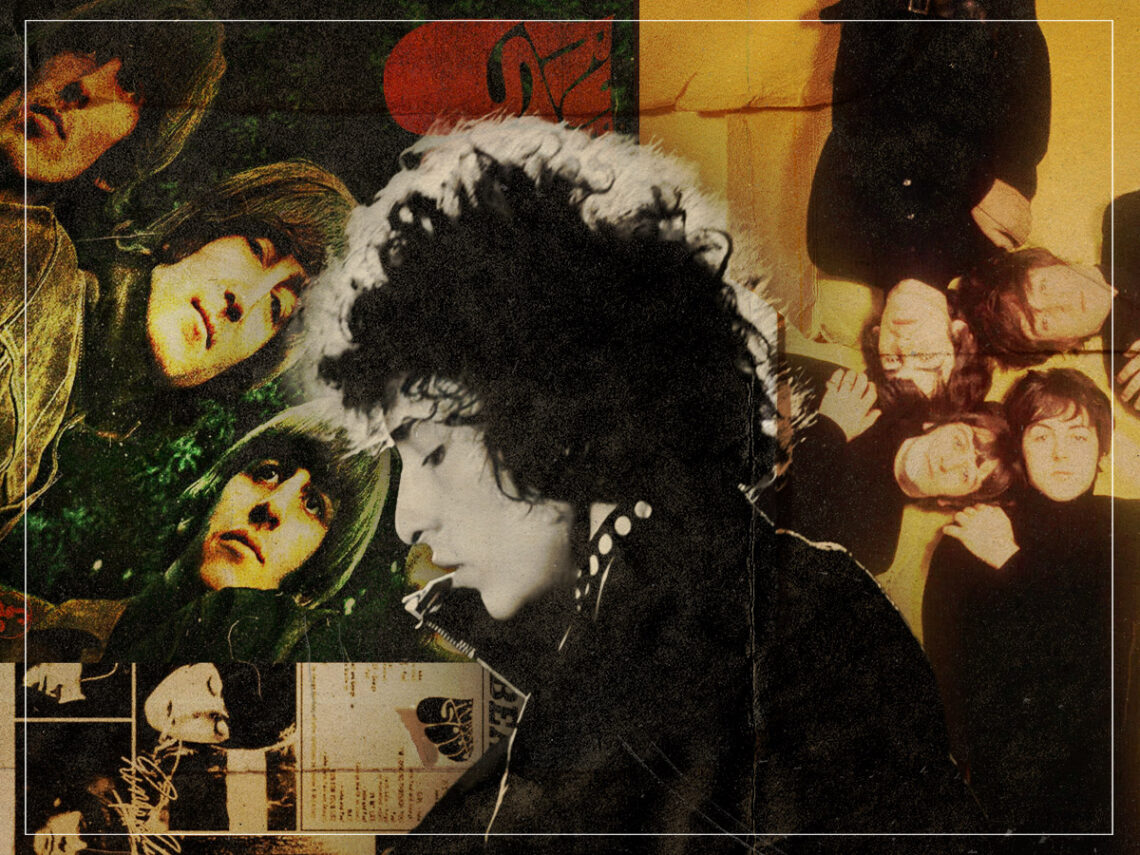
The classic songs Bob Dylan accused of ripping him off: “Shit, that’s me”

“The highest purpose of art is to inspire. What else can you do? What else can you do for anyone but inspire them?” — Bob Dylan.
Bob Dylan is the salt of modern music. A wild array of dishes might have followed his Promethean leap towards a more poetic pinnacle for pop, but each one of them has had at least a little pinch of his influence by virtue of the fresh flavour he brought the world. As Neil Young said, “I’ll never be Bob Dylan. He’s the master.”
According to the original vagabond himself, not being Bob Dylan hasn’t stopped many folks from trying. From the very get-go, his influence ran rampant. Joni Mitchell might have since bashed him, essentially labelling him as a super callous, fraudulent mystic hexed by halitosis, but she also freely admits that he liberated the dated songwriting notions of Greenwich Village and launched the folk scene towards a more timely outlook.
The Beatles also dabbled in smoking green upon his command and bolstered their back catalogue with greater depth and funkiness following the influence of The Freewheelin’ Bob Dylan and a few opportune tokes. His electric leap forward also gave Simon and Garfunkel a second chance after Tom Wilson applied the same ‘Like a Rolling Stone’ treatment to their floundering ‘Sound of Silence’ and saved them from the ash heap.
For the most part, Dylan was pleased to see his work influence the world, but he drew the line when that inspiration became imitation. In the years since he broke onto the scene, he wasn’t shy of calling out a few of the biggest bands and artists around of straight-up ripping him off. Often, the artists held their hands up as being caught bang to right to be fair to Dylan.
That was very much the case when it came to John Lennon. “What is this? It’s me, Bob. (John’s) doing me,” the folk star said of ‘Norweigan Wood’. And Lennon himself would even admit that he was in his feet-finding stage of professional songwriting, explaining, “That’s me in my Dylan period again. I am like a chameleon… influenced by whatever is going on. If Elvis can do it, I can do it. If the Everly Brothers can do it, me and Paul can. Same with Dylan.”
But Dylan’s disdain for tracks styling his style didn’t stop with ‘Norwegian Wood’ or even with his 1960s pomp; people were still picking up on the ways of his works in the ’70s. “The only time it bothered me that someone sounded like me was when I was living in Phoenix, Arizona, in about ’72, and the big song at the time was ‘Heart of Gold’,” the singer told Spin. “I used to hate it when it came on the radio. I always liked Neil Young, but it bothered me every time I listened to ‘Heart of Gold’. I think it was up at number one for a long time, and I’d say, ‘Shit, that’s me. If it sounds like me, it should as well be me.’”
There were even songs that he didn’t have to accuse of ripping him off—they went the other way and straight-up parodied him. Or at least that was the case with ‘A Simple Desultory Philippic’. In this clear divergence in style for Simon and Garfunkel, they added the twists of organ and psychedelic guitar sounds that had entered Dylan’s oeuvre.
However, Simon then takes a look at Dylan’s songwriting style by seemingly mocking his penchant for throwing in obscure lines and listing off literary and pop culture references. In a Dylan-esque vocal affectation, he purrs: “Not the same as you and me, he doesn’t dig poetry / He’s so unhip, when you say Dylan / He thinks you’re talking about Dylan Thomas, whoever he was.” As it happens, Dylan doesn’t seem to have minded this effort.
His gripe wasn’t necessarily with them plagiarising him when it came to these classic tunes, but rather that they had done it badly. After all, Dylan is music’s greatest magpie—a master of snatching timeless victories from the past. “A folk singer is someone with a good memory, basically,” Pete Townshend once explained. “[Bob Dylan] had a wealth of American folk songs and Irish, Scottish folk songs. If you’re an expert folkologist, it is infuriating to be a Dylan fan. You know, someone like Roy Harper is always banging his head against the wall saying that ‘Masters Of War’ was written in Scotland in 1706.’”

Never Miss A Tale
The Far Out Bob Dylan Newsletter
All the latest stories about Bob Dylan from the independent voice of culture.
Straight to your inbox.