


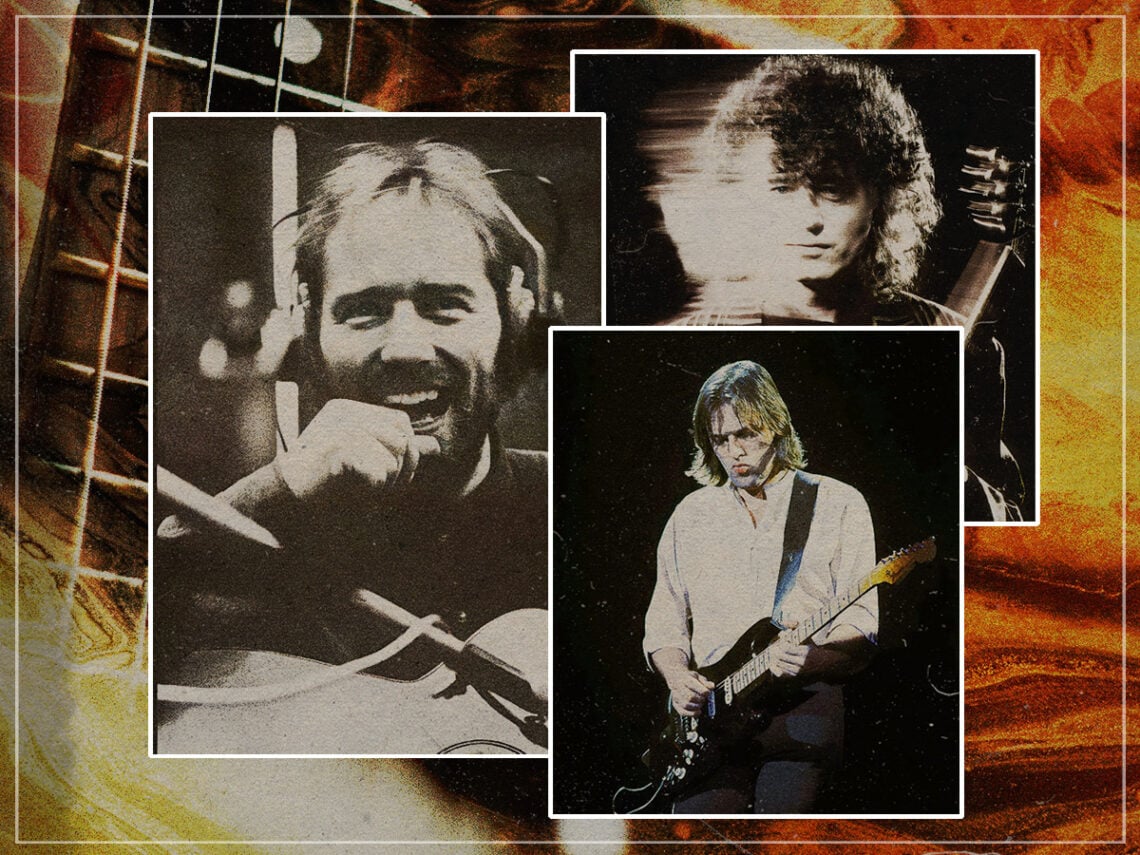
The song that saw Roy Harper, David Gilmour and Jimmy Page combine

The great Roy Harper was one of the most instrumental musicians of the 1960s, instilling a love of folk rock in contemporaries such as Pete Townshend and Ian Anderson, as well as later stars like Kate Bush. Two of the most prominent figures Harper impacted are Pink Floyd figurehead David Gilmour and Led Zeppelin leader Jimmy Page.
As with many of that generation, Harper worked with his disciples and collaborated with Gilmour on several occasions. Notably, the Pink Floyd man started working with Harper on his 1975 album HQ, appearing on the song ‘The Game’, which even boasted the presence of Led Zeppelin bassist and multi-instrumentalist whizz John Paul Jones.
In 1980, the pair would converge again for Harper’s tenth studio album, The Unknown Solider. Gilmour co-wrote half the tracks for the album, with songs such as ‘Playing Games’, ‘You (The Game Part II)’, ‘Old Faces’, ‘Short and Sweet’ and ‘True Story’. Notably, ‘Short and Sweet’ was first released on Gilmour’s celebrated debut solo album in 1978, making Harper’s version a cover.
This partnership between Gilmour and Harper wasn’t so one-sided, though. Famously, after making a tremendous impact on every Pink Floyd member, Harper provided the lead vocals on ‘Have a Cigar’ from 1975’s Wish You Were Here.
Explaining how it came about, Pink Floyd’s Roger Waters told Nick Sedgewick for the Wish You Were Here songbook: “A lot of people think I can’t sing, including me a bit. I’m very unclear about what singing is. I know I find it hard to pitch, and I know the sound of my voice isn’t very good in purely aesthetic terms, and Roy Harper was recording his own album in another EMI studio at the time; he’s a mate, and we thought he could probably do a job on it.”
Harper also provided backing vocals on Gilmour’s second solo album, 1984’s About Face. However, the most fascinating convergence of Harper’s career came in 1985’s Whatever Happened to Jugula? Not only does the album feature collaborations between him and Jimmy Page, but the track ‘Hope’ was co-written by David Gilmour, making it one of the most all-star recordings ever made, featuring the work of three rock legends.
‘Hope’ was written by Gilmour for About Face. He asked The Who’s Pete Townshend to pen the lyrics but felt he couldn’t relate to them. Instead, Townshend used the song ‘White City Fighting’ featuring Gilmour on guitar on the album White City: A Novel. In turn, the Pink Floyd man sent his music to Harper, whose lyrics had the same effect on him. Regardless, Harper used his version, ‘Hope’, on Jugula, which features his 16-year-old son, Nick, playing lead guitar.
Listen to ‘Hope’ below.
