


“The Faces at their best”: The 1972 hit Rod Stewart should’ve had with his old band

Led by Steve Marriott, The Small Faces were among the defining groups of London’s swinging age of paisley and pompadour haircuts in the 1960s.
Pioneering an infectious, adrenaline-fueled rock and roll sound for Britain’s post-war generation, Marriott and company laid the foundations for countless future artists to challenge the status quo of popular music. And they did so in such a gently boozy and breezy fashion that it looked just like mucking around.
This revolutionary period would not last forever, but The Small Faces would witness something of a rebirth following the departure of Marriott, rebranding as The Faces and recruiting Rod Stewart to take on the impossible task of replacing a gifted songwriter and charismatic presence like Marriott.
Many fans of the original incarnation of The Small Faces were left fairly disappointed by this new era, which tended to move away from adolescent, high-energy rock and roll, embracing the most self-indulgent, overblown elements of early 1970s rock.
Nevertheless, the band was certainly successful in launching Rod Stewart’s career, who went on to become a household name in the British rock and pop scene. Songs like ‘Maggie May’ and the horrendously cringeworthy ‘Hot Legs‘ helped establish Rod the Mod as a solo star, but he still took a lot of inspiration from his days with the Faces.
In fact, if you were to take everything Stewart has said onstage and in interviews, it sounds as if the Faces represented the most enjoyable days of his musical career. Even as modern bands like Oasis rose to success during the 1990s, Stewart could not resist the opportunity to take them down a peg, comparing the Manchester band to a rip-off of his 1970s outfit.
Outside of Stewart’s subconscious, though, it must be noted that the success of the Faces was incredibly short-lived. Revered and loved for a fleeting window, they seem to represent the haphazard beauty of the ‘60s in some way when careerism wasn’t a major factor in the creative industries.
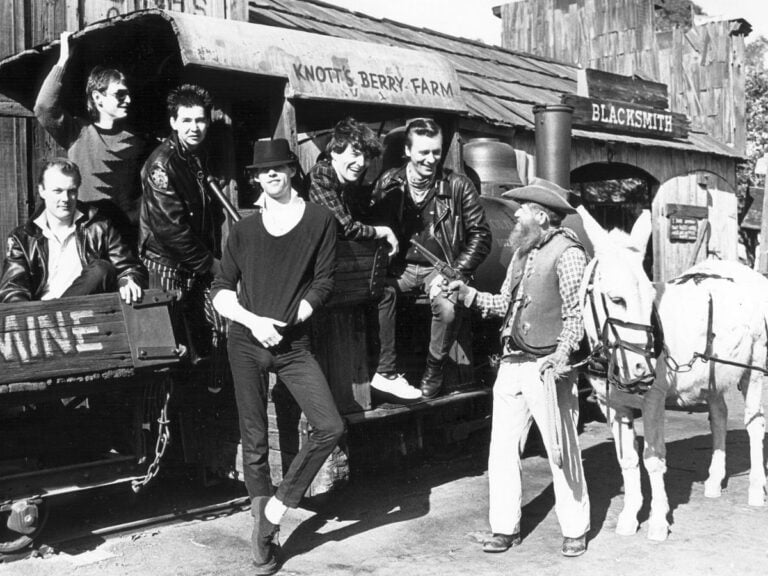
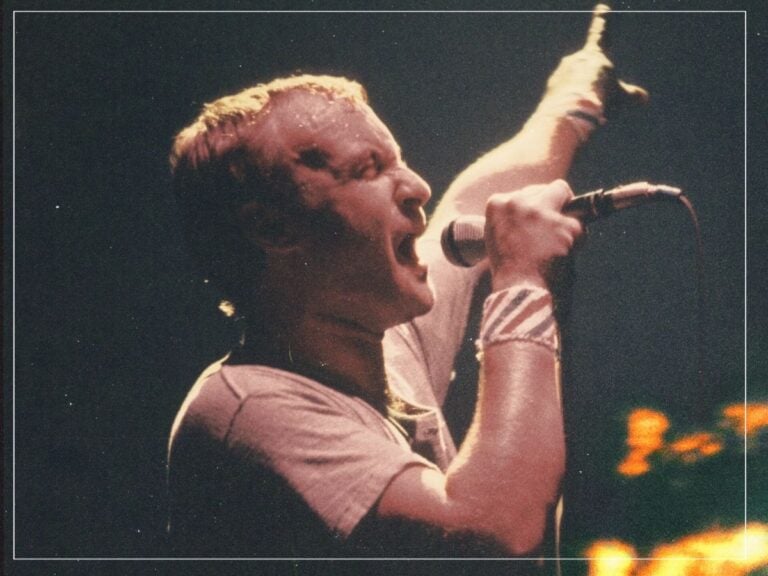

Ultimately, the prevailing reasons for the decline of Stewart’s band were the same reasons that Marriott had disbanded The Small Faces in the first place. The band simply struggled to move on from their original sound and this caused mounting tensions.
Their willingness to update themselves for the changing landscape of the 1970s was commendable, but never really took off. Even to the members themselves, it felt like a mere mutation of their age-old sound. The youthful appeal of the original Faces had been lost, and fans were apprehensive to get on board with this indulgent overproduction.
That might offer some insight as to why Stewart decided to make a go of it on his own as a solo performer. However, during the early days of his solo work, the songwriter was still, technically, a member of the Faces, so he would often recruit the rest of the band to help out with his solo projects.
Essentially, this meant that a large portion of Stewart’s early solo material was, for all intents and purposes, the Faces music under a different name. In many ways, this ironically liberated them to deliver the new sound that they had been looking for all along.
This is particularly true for Stewart’s 1972 track ‘True Blue’. Opening his fourth solo record, Never A Dull Moment, the song itself was written alongside Stewart’s Faces comrade, Ronnie Wood. “Although this appeared on one of my albums,” the songwriter later wrote in his Anthology collection, “this is the Faces at their best.”
Punchy and booze-laden, it captured their old songwriting style, too. “It took 20 minutes to lay down the track and five hours to record the car in the street for the intro,” Stewart continued. “Woody [Ronnie Wood] used an open-tuned guitar.” That punky attitude gave the song its vital early Faces sound, fizzing out of the traps with reckless abandon and lewd charm.
Of course, The Faces would not officially disband until years later, in 1975, but it is certainly a shame that one of their greatest songwriting efforts, ‘True Blue’, never featured on a dedicated Faces album. However, the song did help to boost the early solo career of Rod Stewart, for better or worse, offering a glimpse of what could have been for the Faces in the process.
