


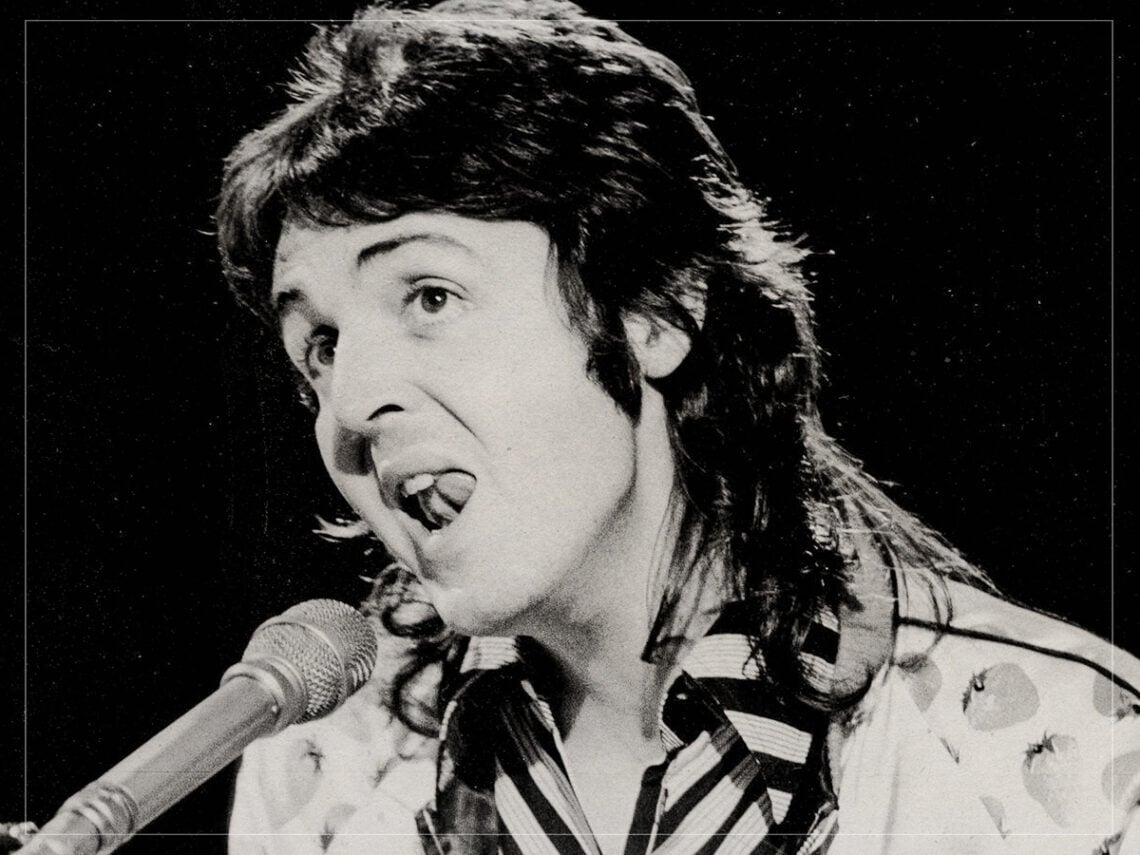
The Beatles song Paul McCartney was sure George Martin would hate: “I was a bit worried”

The entire success of The Beatles could be attributed to the help of George Martin.
That might seem like hyperbole, but the artists were the expression while Martin was the conductor, able to keep the Liverpudlian pop orchestra moving toward their intended target of an unstoppable legacy.
Even though John Lennon and Paul McCartney grew into phenomenal songwriters throughout their careers, it took Martin’s creative ingenuity to turn them into rock legends, often suggesting how to arrange their early songs and communicating their ideas to classical instruments. Although Martin was known to go for the band’s ideas, McCartney thought he wouldn’t like one of their more psychedelic undertakings.
As the band entered 1965, they had already begun expanding what they could do in the studio. Although the band’s madcap comedy Help showcased their playful side onscreen, the Fab Four slowly incorporated their outlandish takes on rock into the studio, making their first compact musical statement on the album Rubber Soul.
At the same time, England was also giving way to more adventurous rock acts looking to follow in The Beatles’ footsteps. As acts like The Rolling Stones were immersing themselves in dangerous sounds reminiscent of blues rock, The Beatles were paying attention right back, making songs indebted to hard rock on tracks like ‘Day Tripper’.
For their next single, ‘Paperback Writer’, the band had fully immersed themselves in psychedelia. Influenced by the various experiments that Lennon had taking acid, the various harmony parts and the acidic guitar riff ushered in a new kind of rock and roll, which would be further explored on the band’s next full-length album, Revolver.
Across every song on the record, the band constantly reinvented themselves, from Lennon crafting folk-acid exercises like ‘I’m Only Sleeping’ to George Harrison’s biting guitar on ‘Taxman’. Although McCartney was known for contributing plaintive ballads to the album, like ‘For No One’ and ‘Eleanor Rigby’, each song paled in comparison to ‘Tomorrow Never Knows’.

With a title taken from one of Ringo Starr’s malapropisms, Lennon would create one of the most psychedelic songs ever, including excerpts from Timothy Leary’s The Psychedelic Experience. While McCartney was interested in the idea of working on the song, he thought that Martin wouldn’t take a liking to it at first.
Considering how much of the song drones on just one chord, Macca worried it would be considered too primitive for Martin, telling Anthology, “We thought it was alright because Indian music is all on one chord. I was a bit worried how he was going to take it. We at least had three chords before. This was just John strumming on C rather earnestly, singing, ‘Turn off your mind, relax and float downstream’”.
Even though Martin had turned in time working with classical instruments, he took to the tune straightaway, with McCartney telling Rolling Stone, “It was a radical departure…He said, ‘Rather interesting, John. Jolly interesting”. From there, the band set about making Lennon’s vision a reality, including Starr’s inventive looped drum part and layers of different backwards effects that could have never been recreated onstage.
“This is one thing I always gave George Martin great credit for,” McCartney once confessed. “He was a slightly older man and we were pretty far out, but he didn’t flinch at all when John played it to him, he just said, ‘Hmmm, I see, yes. Hmm hmm.’ He could have said, ‘Bloody hell, it’s terrible!’ I think George was always intrigued to see what direction we’d gone in, probably in his mind thinking, How can I make this into a record? But by that point he was starting to trust that we must know vaguely what we were doing, but the material was really outside of his realm.”
It was this that made Martin a genuinely incredible conductor. He knew that his instruments were more agile than perhaps his own mind could be. That they could work on different vibrations and resonate more resolutely than he on his own. With this knowledge, he was able to be a part of one of the most impressive songwriting outfits ever.
Although the band had no use for the song on the live stage, ‘Tomorrow Never Knows’ was more of a mission statement than a proper song. After years of being known as the lovable mop-tops, this was the sound of The Beatles taking a quantum leap from traditional rock and roll and never looking back again.

Never Miss A Beat
The Far Out Beatles Newsletter
All the latest stories about The Beatles from the independent voice of culture.
Straight to your inbox.