


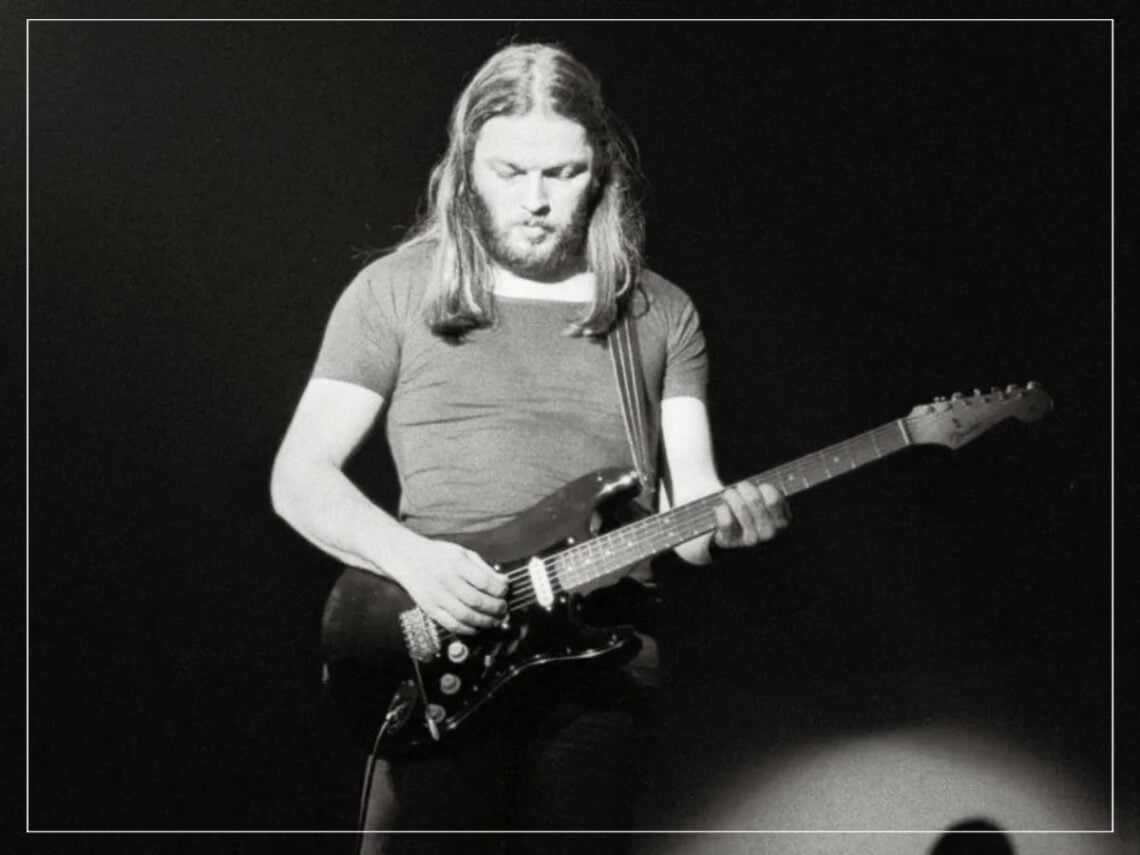
“It was a nightmare”: The only song on Pink Floyd’s 1983 disaster that David Gilmour would save

Over the course of their six-decade spanning career, there’s plenty for Pink Floyd to be proud of.
From their early albums with Syd Barrett to their long-standing incarnation with David Gilmour and Roger Waters at the helm, which spawned classic albums such as The Dark Side of the Moon, Animals and The Wall, there are many highs that made such an incredible impact on the face of rock music. Along the way, they’ve inspired everyone from David Bowie to Nine Inch Nails.
That being said, there are just as many lowlights that the band are happy to dismiss as being misses compared to their usually stellar output. Ummagumma, their first record with Gilmour, isn’t viewed as favourably by fans as some of the albums that followed, and the final few records that were made after Waters’ departure are considered to be duds that saw their quality decline rapidly without such an instrumental figure in the band.
However, the beginning of the decline came with their 1983 album, The Final Cut, which ended up being their final album with Waters, and the only Pink Floyd album not to feature keyboard player Richard Wright. After the release of The Wall, inter-band conflicts began to take hold of studio activity, and disputes between members marred much of the creative process, although many of these conflicts were a case of Waters vs the rest of the group.
Their bassist and chief songwriter had always been a prickly character who was tough to please, but by this point in the band’s career, his attitude had begun to make collaboration far trickier. As a result, nobody was happy with the end result of the record, after which the band entered a four-year hiatus before Wright returned to work alongside Gilmour and drummer Nick Mason on A Momentary Lapse of Reason.

“Rick had gone, and Dave and I were absolutely at loggerheads,” Waters would later recall. That was not a conducive environment for making the great music they were once known for. Gimour would claim that it was rather more conspiratorial than mere loggerheads. “Roger wanted to do all the writing, he wanted to take over the whole thing,” he told Creem in 1988.
Adding, “He would engineer moments to try and ensure that no one else got any writing. Certainly on The Final Cut, he engineered a situation where no one else could do any writing.” The result was a bloody disaster that the whole band would happily dismiss, including Waters to some extent.

When it came to figuring out a suitable tracklist for Echoes: The Best of Pink Floyd in 2001, it’s no surprise that the band were vehemently against the idea of representing The Final Cut too strongly on the record, since there were far greater entries in their catalogue that deserved to be celebrated much more. That being said, there was still a need to showcase at least one song from this miserable period on the album rather than pretending it didn’t exist at all, and so the band had to come to some form of compromise.
Speaking to Mojo around the release of the compilation, Gilmour made his views on including a track from the record explicitly clear, and even suggested that if things weren’t democratically agreed upon by himself, Wright and Mason, The Final Cut wouldn’t have been represented at all. “I don’t think six tracks from The Final Cut is what people want,” the guitarist joked.
“Having said that, among the songs that all three of us voted for was ‘The Fletcher Memorial Home’,” he added, favouring the most measured studio moment amid the chaos.Elaborating further, he said: “It dates from one of the worst periods of my life. It was a nightmare working with Roger at that time, and I’m heavily disinclined to listen to The Final Cut or anything to do with it. But it’s a great song.”
They might not have wanted to represent it, but at least it gets a solitary nod – unlike Ummagumma.
