


What song was number one the day the Berlin Wall fell in 1989?

The end of a decade is probably the best opportunity to undergo major change, whether that’s culturally or with regards to historical societal shifts, and the end of the 1980s probably endured one of the most significant changes in modern history.
The Cold War had shaped geopolitical relations between the United States and the Soviet Union for almost half a century, after the partition of Germany into the Western and Eastern Blocs in 1947, and aimed to assert two opposing political ideologies in the aftermath of the Second World War.
As a result of this tense dynamic between the world’s superpowers, plenty of major events took place during the period, including the Space Race that saw Apollo 11 land on the moon, the proxy wars in Korea and Vietnam, and a battle with each side’s respective attempts to succeed in an ideological power struggle between communism and the Western fear of its spread.
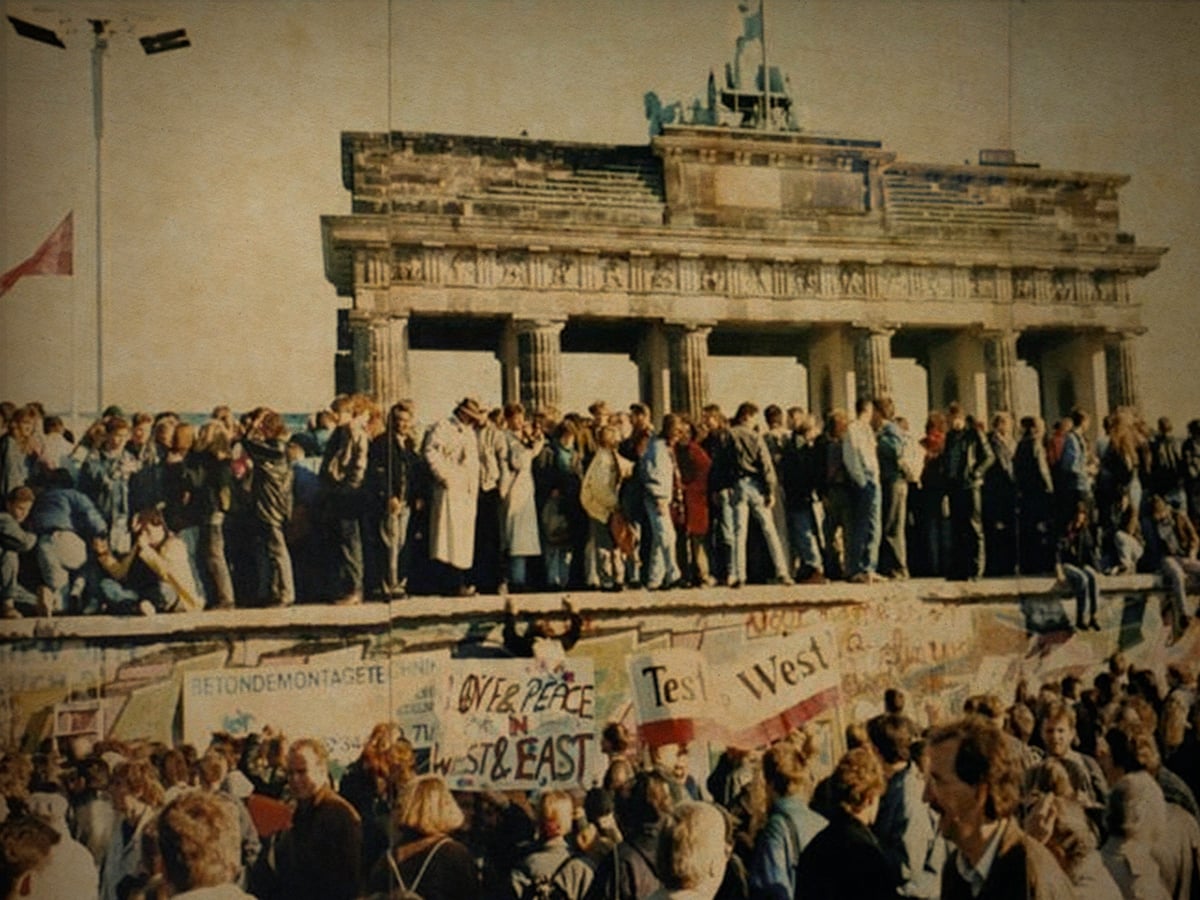
The fall of the Berlin Wall, a literal separation of the two opposing sides in the modern-day German capital, marked a massive change in the trajectory of this ongoing conflict when it occurred on November 9th 1989, and essentially sped up the end of the Cold War and eventual dissolution of the Soviet Union.
Culturally speaking, there also appeared to be something of a union between the UK, US and German charts at the time of the wall’s collapse, and while the songs that topped each respective chart were different, they were representative of where popular culture was heading.
Which songs topped the chart when the Berlin Wall fell?
It was clear that a significant shift towards electronic sounds and technological advancements that had been emerging over the course of the latter half of the 1980s was finally going to overtake organic production, with all of the three songs topping each nation’s respective charts being worthy of categorisation as electronic pop of sorts.
In a move that feels typical of the UK’s love of novelty, cartoon rabbit-fronted act Jive Bunny and the Mastermixers registered their second number one in their home country with ‘That’s What I Like’, a megamix of rock and roll songs pieced together by father and son duo Andy and John Pickles. Many of the songs included in this primitive mashup had already been hits in the UK before, with the likes of Jerry Lee Lewis’ ‘Great Balls of Fire’ and Eddie Cochran’s ‘Summertime Blues’ being included alongside the theme to Hawaii Five-O.

In a much safer bet for the US, Swedish pop duo Roxette were sat at the top of the charts during this momentous point in history, arguably summing up the mood of the occasion with a much more impassioned display rather than a throwaway slice of fun. Roxette had previously topped the US chart earlier in 1989 with ‘The Look’, proving that the opposite side of the Atlantic was a much better place for power ballads to perform at the highest level.
However, in Germany itself, the number one song at the time of the fall of the Berlin Wall was Kaoma’s ‘Lambada’, a French-Brazilian reinterpretation of the 1986 song ‘Chorando Se Foi’ by Márcia Ferreira. Perhaps not recognisable by name, the song has been sampled, remixed and interpolated as a dance hit on multiple occasions, but this iteration takes far more from Brazilian samba styles than it does Western pop and trance. It may be a bizarre song to signify the end of a partitioned city, but evidently, the Germans loved it.
