


“Last forever”: The 1964 song Johnny Marr wishes he had written

One fateful day on tour with The Smiths in New York, Johnny Marr took a trip to a guitar store. Inside the naffly named We Buy Guitars, a red 1959 Gibson 355 shone like a beacon.
In his eyes, it was lighting up the whole of 48th Street like an axe-shaped flare. In all likelihood, it had been hung there gathering more dust than a dung beetle with a cleaning job in Dracula’s castle. But not to Marr. To the tremolo master, it was magical.
It was snapped up by the mystic ‘Seymour’ from Sire Records, who had bought Brian Jones a guitar in a 48th Street shop a couple of decades before. He handed it over to Marr like a torch, and they headed back to the hotel. Soon enough, he really did think it was magic.
As Marr writes in his memoir, “When I got to my room, I took my new 355 out of its old, beat-up case, and with the very first thing I played, I wrote our next single ‘Heaven Knows I’m Miserable Now’, then the B-side ‘Girl Afraid’. That’s what happens with some instruments. They already have music inside them.”
In truth, it was Marr who already had music inside him. Long before he even knew getting to New York was possible, he was buzzing around Manchester with tunes in his head, knocking on his mate Morrissey’s door, asking to borrow a guitar double-quick so that he could get a melody down before he forgot it. True story.
He was always inspired by the sounds and sights around him, melding the music of Stooges and the rock borne from 48th street guitars that moved him with the maudlin poetry of Wythenshawe’s streets to create something entirely unique.
He wasn’t alone on this front. The frontrunners for capturing unerring Britishness while drawing inspiration from the roar of American rock ‘n’ roll were – and perhaps still are – The Kinks. They harnessed the brooding energy of Link Wray and mellowed it with the badinage and bliss of an English cricket pitch, or else twisted it to the tone of nights out in pubs in Soho.

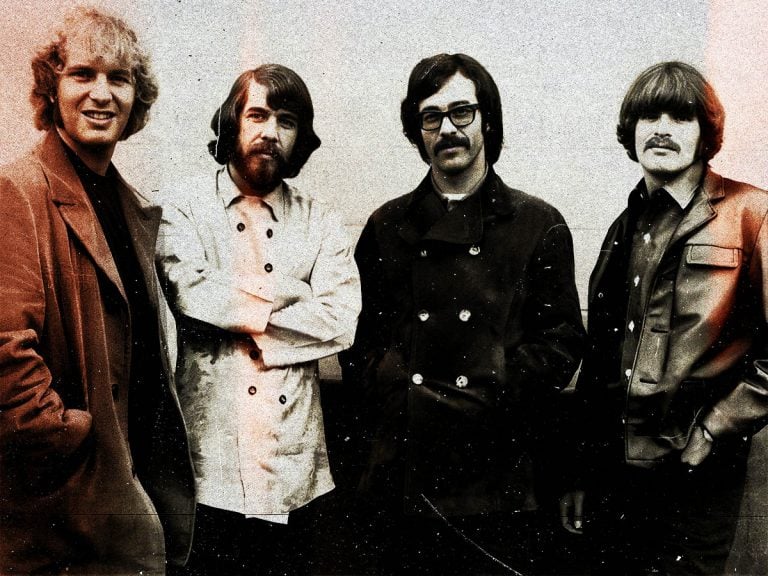
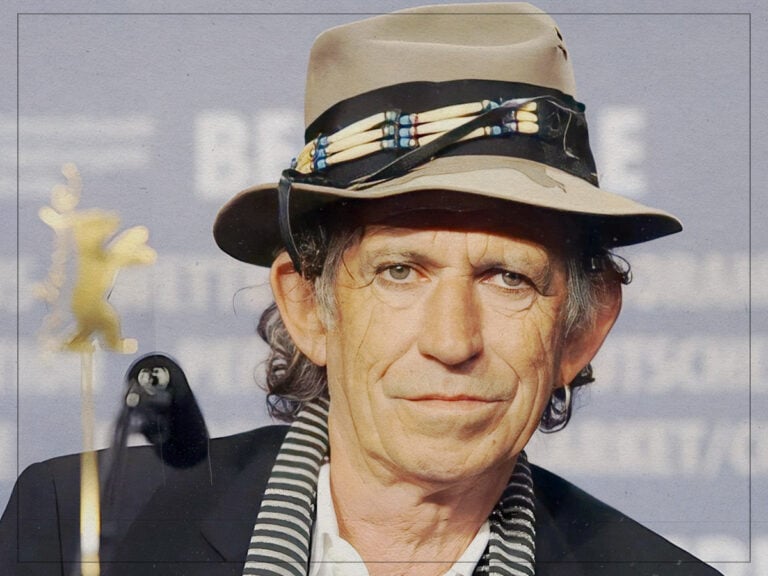
The latter is captured electrically on ‘All Day And All Of The Night’. Now, there’s a riff. It sounds years ahead of its time. In fact, it’s utterly timeless. It couldn’t have been written by anyone else. And yet, it is so much a part of the British musical canon that you barely consider it as something that was written at all at this point. Each and every single one of those superlatives could apply to Marr’s work with The Smiths, too.
So, it comes as no surprise that he told Fred Perry that it’s the track he wishes he had written. That’s not the only time he’s heaped praise upon the brooding gem, either. As he told Guitar Player in the 1990s, he always saw a kinship with the band behind the anthem. “We were against synthesizers.”
They were also against “the Conservative government, groups with names like Orchestral Manoeuvres In The Dark, the English monarchy, cock-rock guitar solos, and the American music scene at the time,“ he explained. “We stood for the Englishness of the Kinks.” In some ways, you could argue that they, therefore, stood for artistic integrity, capturing lived experiences rather than American parodies.
The Kinks were central to Marr for this. They inspired his songwriting outlook in many ways. “I tend to like singing, wait for it, for want of a better term, rock and roll,“ he told Vulture. “I like singing kind of upbeat rock songs. I’m not really into being a crooner too much.” It was the angular singularity of Ray Davies that appealed more than the polished tones of Ol Blue Eyes.
Adding, “The singers that I like – or the things that I aspire to, rather – are people like Ray Davies from the Kinks.” He’s got a voice that matches the riff of ‘All Day And All Of The Night’. The guitar part is built from a blunt, insistent movement that never quite resolves its tension, while Ray Davies sings with the same clipped urgency, pushing against the beat rather than floating above it.
These touchstones unite the pair. There’s a sincerity and naturalistic flow to them both, but an edge, too. They are performers and rock stars yet distant and dreamy, like Bert Jansch, curled up in his bedroom, gazing at the ceiling, while covering Chuck Berry and thinking about playing The Fillmore. They’re weekend rockstars, in the most complimentary way.
You put all that together in amber, and you have something like ‘All Day And All Of The Night’. Well over half a century on from its release, it remains a song full of yearning, gusto, invention and attitude, all in equal and opposing measure. Much like The Smiths, that swirl of mixed-up emotion is still attracting youngsters to the guitar music genre to this day.
Again, much like The Smiths, once you’re a fan of the song, it never truly leaves you. To borrow one of its blunt lyrics, “I believe that you and me last forever”. Or at least I reckon Marr feels that way about it.
