


The song that made Jane Birkin fall in love with Serge Gainsbourg

It seems unlikely that a song for one woman would result in the love of another. But that was the case with Serge Gainsbourg’s ‘Initials B.B.’, the opening single of an album devoted to his affair with Brigette Bardot.
Jane Birkin didn’t care for Gainsbourg when they first met on the set of Pierre Grimblat’s Slogan in 1968. He wasn’t particularly interested in her either. She first heard ‘Initials B.B.’ later that year, noticing a peculiar parallel between his pain and her own. He references the Spanish town Alméria in the song, the city where Bardot met Sean Connery, solidifying her breakup with Gainsbourg.
After she arrived in Alméria, he never saw her again. Birkin herself was in Alméria when she heard the news that her then-husband John Barry had run off with a friend of hers. After reconnecting at a dinner party held in celebration of Slogan’s release – which they quickly ditched for a night of drunken dancing at a club – their relationship began.
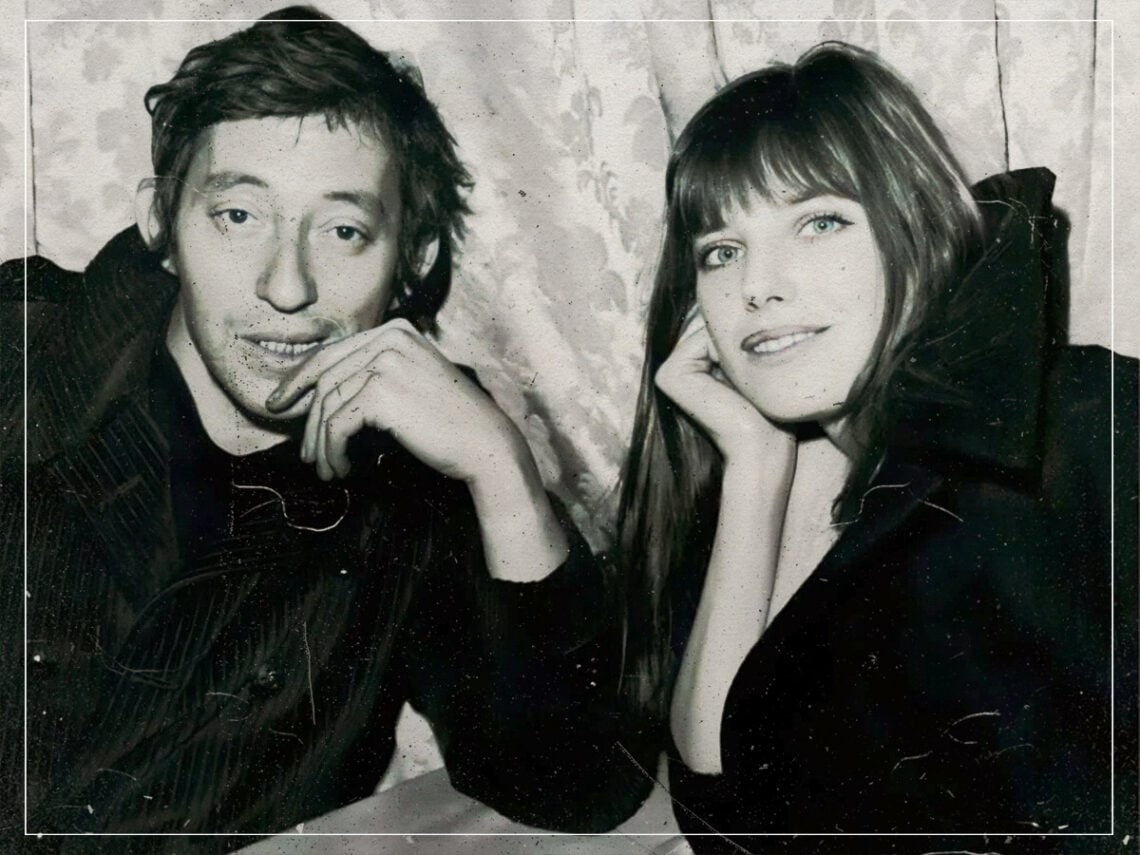
It was kismet, a song signifying the end of two relationships opening the door for another. Their romance was quickly cemented as one of the greatest in French pop history. They were the perfect example of bohemian life in the 1960s: an eccentric artist and English rose in deep, all-consuming love marked by a shared free spirit and artistry.
From ‘Initials B.B.’, Gainsbourg and Birkin’s love can be further traced through music. They recorded their collaborative album in 1969; it was Birkin’s first, aptly titled Jane Birkin/Serge Gainsbourg. It featured ‘Je T’Aime’, an explicitly sexual, breathy duet that Gainsbourg originally wrote for Bardot. Birkin took the part intended for his ex; her moans serve as the song’s backing vocals. The track sparked enormous controversy, and their sexual chemistry was entirely palpable on it.
In 1970, they made another hedonist duet, ‘La décadense’, renowned for its simultaneous evocation of pleasure and melancholy. For Gainsbourg’s 1976 film Je t’aime moi non plus, he wrote a song to be performed by Birkin’s character. She offered a fragility to the ‘Ballade de Johnny-Jane’, which traverses something more complex in its lyrics. It’s considered both a love letter and lament for the character and (speculatively), by extension, for Birkin. A couple of years later, their ‘Ex-fan des Sixties’ pointed to the fading of the decade they helped define and the bittersweetness of its loss.
Their relationship ultimately ended because of Gainsbourg’s alcoholism and violence, which continually worsened. In 1983, he wrote ‘Baby Alone in Babylone’ as a gesture of regret. Birkin ended up recording the song herself on an album of the same name that was entirely written by Gainsbourg. This was demonstrative of the weight of their artistic connection, which long outlasted their romance. This sentiment was furthered in 1990’s Amours des feintes, one of the last albums he wrote for Birkin.
That love was carried by Birkin, even decades after his passing. She held his memory dear; the songs that immortalised their relationship remained among her favourites even decades after his death – including and maybe especially ‘Initials B.B.’. “The lyrics brought us together”, she concluded.
