


The Rolling Stones song that Frank Zappa called “one of the finest things in British rock”

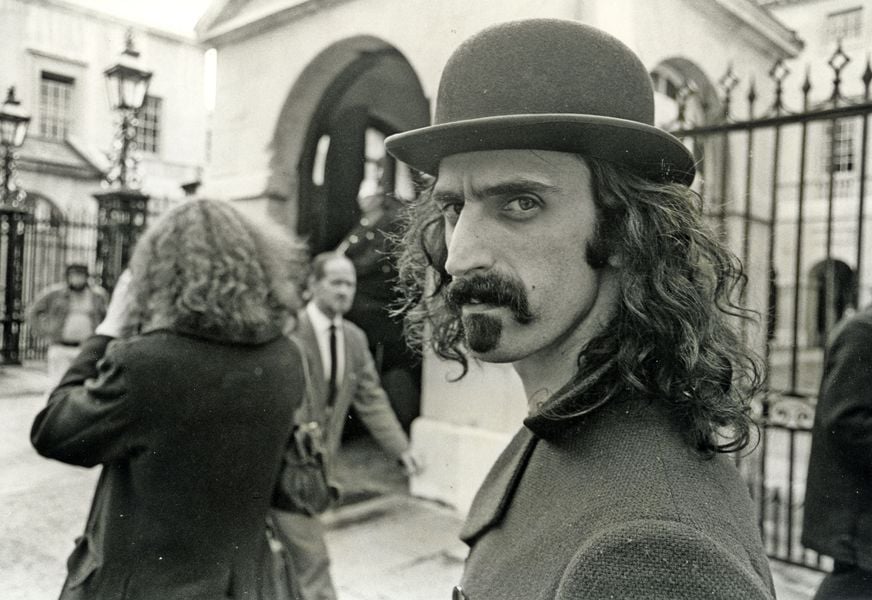
In 1980, Frank Zappa arrived at Broadcasting House to record a special edition of BBC Radio 1’s beloved music slot Star Special, in which musicians were invited to play some of their favourite records. Zappa’s slot saw him spin records by the likes of Black Sabbath, Captain Beefheart, and the composer Edgard Varèse, who had once been the teacher of revered avant-gardist John Cage. The rocker had something insightful to say about each and every song, but there was one he gushed over in particular: a beloved single by The Rolling Stones.
The Rolling Stones released ‘Paint It Black’ on their 1966 album Aftermath. The track, seemingly written from the viewpoint of a deeply depressed cynic, introduced Stones fans to the darker side of Mick Jagger’s songwriting. With its various allusions to funerary paraphernalia such as hearses and flowers, ‘Paint It Black’ was perhaps the closest the Stones ever got to evoking the gothic melancholia of Edgar Allen Poe.
While Jagger’s lyrics seem to stand in contrast to the pervasive optimism of the day, The Stones’ eastern-tinged arrangments lend a distinctly psychedelic feel to the recording. For Zappa, it was an absolute masterpiece. Introducing ‘Paint It Black’ to BBC listeners, the guitar virtuoso said: “You know what’s really good about that record? Is the way the bass part is there ‘n’ then where he’s going ‘wooom, wooom’ like that, that’s really exhilarating; it’s probably one of the finest things that’s ever happened in British Rock? Don’t you think?”
High praise indeed. The track is certainly well ahead of its time, introducing Stones fans to new sonic pastures through its employment of Indian instrumentation. Paradoxically, it was actually in Fiji that the Stones began playing around with Sitars, not India. Brian Jones, the group’s charismatic guitarist, was the first to really take to the instrument. In the studio, he and Keith Richards found that the malleability of its strings lent exactly the kind of atmosphere they’d been reaching for. A couple of overdubs were subsequently recorded, and the rest is history. Zappa would go on to highlight Jones’ role in the making of the record during his broadcast, adding that Brian Jones took to the sitar as if he’d been born to play it.
Today, ‘Paint It Black’ encapsulates the brilliance of The Rolling Stones during one of their most creative and pioneering periods. It may well have been the product of acid-tinged over-indulgence, but, hell, what are hallucinogens for if not to make bloody great music?
You can revisit the era-defining single below.
