


How Sofia Coppola paid homage to ‘In the Mood for Love’ with ‘Lost in Translation’

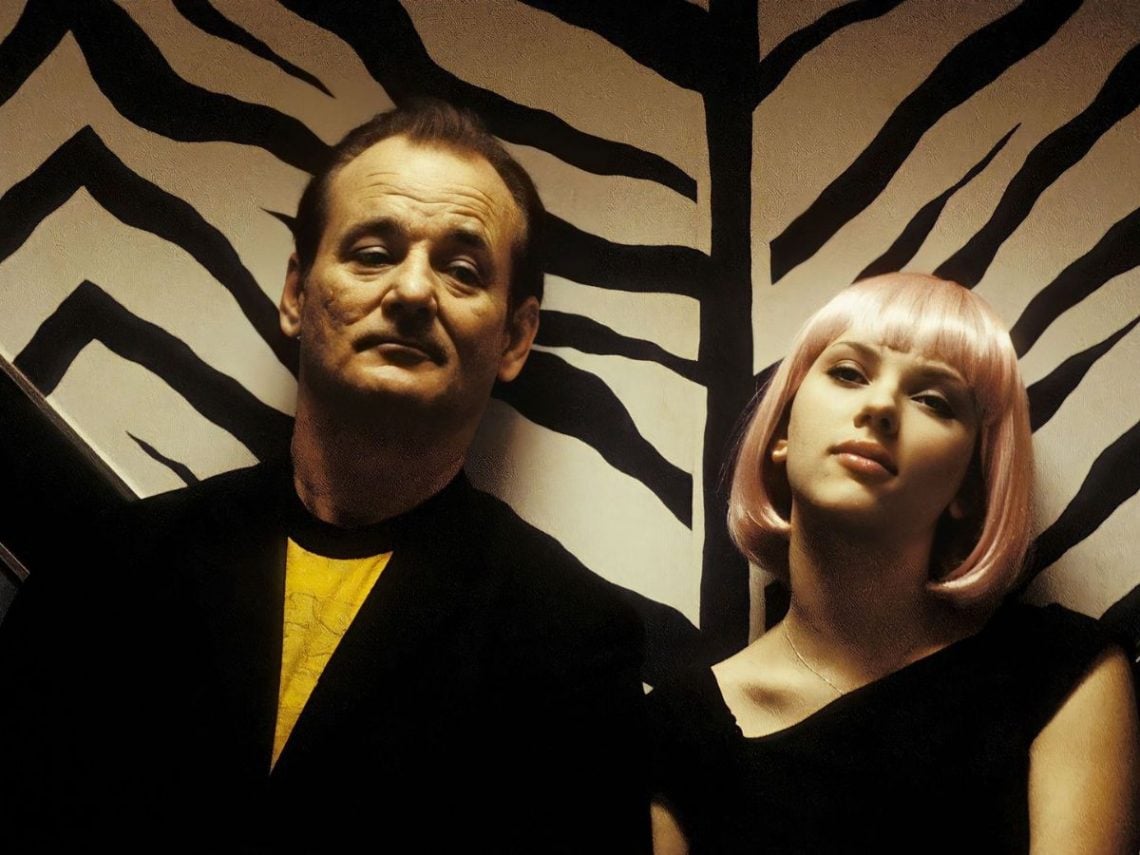
Though some might argue otherwise, it’s rather clear that Sofia Coppola’s most significant contribution to the cinematic medium remains her 2003 romantic comedy-drama Lost in Translation starring Bill Murray and Scarlett Johansson, which focuses on a fading American actor who has a midlife crisis when filming an advertisement in Tokyo.
Bob Harris meets and befriends a young woman by the name of Charlotte, who is similarly engaged in a period of isolation, melancholy and self-reflection, and the two find a kinship in one another that occasionally teeters on the border of romance. Lost in Translation is a stunning film thematically and aesthetically, with cinematographer Lance Acord capturing the neon backdrop of Toyko for Coppola’s characters to enact their romance against, aided by a brilliant soundtrack comprised of the likes of My Bloody Valentine, The Jesus and Mary Chain and Phoenix.
Coppola was said to have been inspired to make Lost in Translation when she was in Tokyo to promote her film The Virgin Suicides and wrote a story about two characters meeting at the Park Hyatt in the Japanese capital. However, upon closer examination, there’s certainly a particular piece of Asian cinema that looks to have influenced Coppola’s sophomore effort quite unlike any other: Wong Kar-wai’s 2000 romantic drama In the Mood for Love.
Widely considered one of the greatest movies ever made, In the Mood for Love sees Tony Leung and Maggie Cheung play a man and a woman whose respective partners have an affair with one another, leaving them to pick up the pieces while slowly developing romantic feelings for the other. As with Lost in Translation, Wong’s film is a stunning reflection on loneliness and desire with mesmerising visuals and a carefully constructed soundtrack to boot.
Coppola, who had personally referred to Wong when she collected the Academy Award for ‘Best Original Screenplay’ for Lost in Translation, undoubtedly pays respectful homage to In the Mood for Love throughout her second feature film. Both movies poignantly capture the theme of isolation and loneliness amid the highly urbanised environments of Hong Kong and Tokyo, where the hustle and bustle of daily life is counterposed with the eternal stillness of depression and heartache.
Most importantly, perhaps the most important facet of both Wong and Coppola’s respective films is the actual relationship between the two protagonists and their momentary connection as a result of sheer circumstance. Just as Mr Chow and Mrs Chan find a kinship in one another through their heartache, Bob and Charlotte discover a shared sense of melancholy in one another. However, both directors resist letting their romantic dramas bubble over into sexuality and restrain their characters’ attachment from approaching actual certainty.
Beyond the thematic and narrative similarities of the films, though, it’s plain to see that Coppola had the aesthetic prowess of In the Mood for Love when she made Lost in Translation. There’s a magnificent attention to detail when it comes to Coppola’s film with its vibrant colours and carefully thought-out costumes, just as there is in Wong’s, where a dreamlike quality lends even more emotive resonance to an already touching narrative.
Music is also essential to both films, with Wong using repetitive motifs to hammer home his romantic themes and Coppola employing shoegaze and dream pop numbers to create an air of unreality in her story, much like the kind that her characters themselves experience. Longing and nostalgia run amok in both movies, highlighting the painful quality of longing for the arms of another.
Coppola resists making any direct reference to Wong’s films in Lost in Translation, but it was clear that she held it in the deepest respect and that it undoubtedly influenced her creative thought at the time. By crafting a shared sensibility with Wong and exploring the very same themes, Lost in Translation and In the Mood for Love might just serve as companion pieces to one another. Or, at the very least, they are two of the best romantic dramas ever made.
