


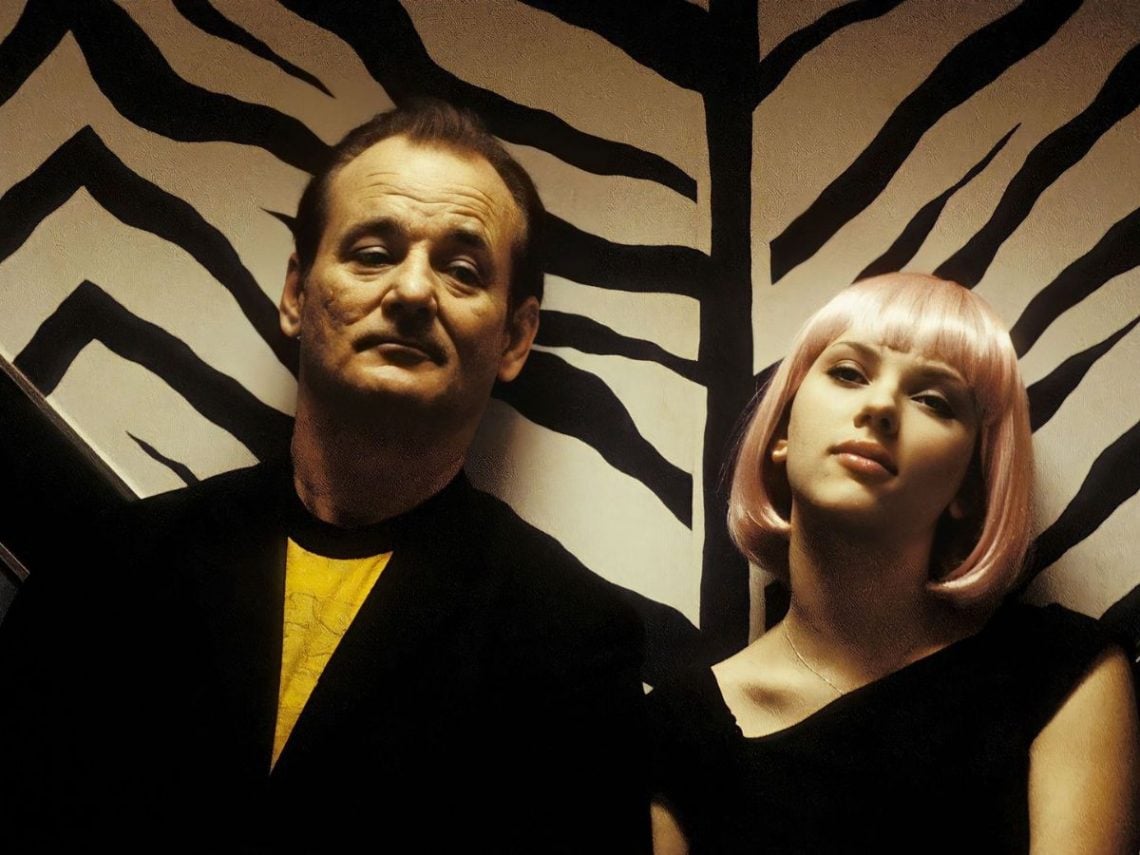
Sofia Coppola – ‘Lost in Translation’

Released in a time where visual excess and blockbusters dominate the cinematic landscape, Sofia Coppola‘s Lost in Translation emerges as an evocative masterpiece that intertwines humour, romance, and pathos in Tokyo’s dazzling cityscape. While this isn’t Coppola’s maiden voyage into filmmaking, the film reaffirms her undeniable prowess in crafting cinema.
The story is centred around two Americans: Bob, masterfully portrayed by Bill Murray, and Charlotte, brought to life by the incredibly talented Scarlett Johansson. Bob, an ageing movie star, is in Tokyo to shoot a whisky commercial, a pursuit he’s not particularly proud of, yet offers him an escape from a seemingly crumbling marriage and a stalled career.
Charlotte, on the other hand, is a young philosophy graduate from Yale, accompanying her photographer husband on his assignment in the Japanese capital. Coppola artfully captures the loneliness and alienation of both characters, juxtaposed against Tokyo’s energetic nights and neon-bathed streets. The famed city, with its pulsating energy, becomes a silent third protagonist, mirroring the characters’ internal voyages and ever-present detachment.
Murray’s performance in the film is genuinely spectacular. He effortlessly glides between sardonic humour and profound melancholy, delivering what might be his finest act to date. A particularly humorous segment sees Bob shooting the commercial, battling linguistic barriers and an impassioned Japanese director. Yet, it’s Murray’s ability to bring forth Bob’s vulnerabilities in subtle facial expressions and vocal shifts that leave a lasting impression. Johansson is equally captivating. At a young age, she showcases an artistic maturity that sets her apart from her contemporaries. She’s not just the disillusioned wife; she’s a woman in existential limbo, grappling with her own identity amidst the towering skyscrapers and cultural dissonance.
The film, rather than driving towards an inevitable romantic conclusion, elegantly dances around the nuances of human connection. Bob and Charlotte’s encounters are filled with delightful escapades, from karaoke sessions to mutual confidences. They find solace in shared alienation and form a bond that transcends traditional labels, and their relationship becomes a transient beacon of hope in a land that remains persistently unfamiliar. When it comes time for their final goodbye, the result is a heart-achingly underplayed moment reminiscent of Brief Encounter.
Sofia Coppola’s evolution as director
Enhanced by the evocative and confidently static cinematography of Lance Acord, Coppola’s direction seamlessly blends the duo’s emotional journey with Tokyo’s vibrant tapestry. The city, with its alluring maze of lights and sounds, becomes a symphony of emotions. The film’s soundtrack, too, complements this visual and emotional tapestry, guiding the audience through the rollercoaster of Bob and Charlotte’s shared experience. With her sophomore feature, Coppola deftly moves away from the more sombre tones of her debut film, The Virgin Suicides, showcasing a comedic flair – it’s her ability to pivot between comedy and introspection that sets this work apart.
While Lost in Translation stands tall as a unique cinematic experience, it becomes even more significant when contextualised within Sofia Coppola’s broader body of work. Coppola’s debut, The Virgin Suicides, though noteworthy, displayed a filmmaker exploring themes with a heavier touch and a sombre palette. It portrayed a distinct narrative, one imbued with melancholy and a dreamlike exploration of suburban despair. However, Coppola demonstrates a refined mastery of her craft with Lost in Translation. Her characters are more vividly drawn, and the narrative pacing is both more fluid and confident.
The interplay between characters, so central to this film, is sharper and more nuanced than anything we’ve either of the two leads before. The scenes breathe, the dialogue sizzles, and the emotional beats hit right at the heart. The growth in Coppola’s directorial style and the finesse she handles intricate themes suggest a profound maturation of her cinematic vision. The leap from The Virgin Suicides to Lost in Translation isn’t just about a change in tone; it’s about an artist coming into her own, fully realising the vast expanse of her potential.
Essentially, this film is more than just a tale of two lost souls in a foreign land. It’s a poetic exploration of human connection, loneliness, and the transient nature of relationships. Coppola has crafted a film that not only stands out as one of her’s, Murray’s and Johansson’s best but one that lingers long after the credits roll – leaving audiences floating, much like its protagonists, in a contemplative haze.
