


So, what are Radiohead’s politics?

In 2006, while his band was slowly grinding its way through the sessions for what would become the In Rainbows album, Radiohead’s Thom Yorke was a bit preoccupied with his public-facing role as an ambassador and spokesperson for Friends of the Earth, a charity organisation in the midst of a major campaign to get EU nations to lower their carbon emissions.
Part of the reason Friends of the Earth had chosen Yorke for this position in the first place was that the British public, or at least the left-leaning segment of the country, already recognised the singer as a politically conscious, passionate communicator. Sure, he also was quite famous for generally hating the sight of a camera lens in his face or a journalist’s microphone within earshot, but in his actual art, Yorke had become increasingly direct about his political leanings in the 2000s, particularly with the 2003 Radiohead album Hail to the Thief, which included not-so-veiled takedowns of the George W Bush and Tony Blair regimes.
It was Yorke’s disdain for Blair, however, that soon created some obstacles in his work with Friends of the Earth. Specifically, when the charity tried to arrange a meeting between Yorke and the Prime Minister in the spring of ‘06, to discuss their cause in person, Blair’s staff agreed, but the rock star reneged.
“I got so stressed out and so freaked out about it,” Yorke told the NME at the time, “Initially, when it came up, I tried to be pragmatic, but Blair has no environmental credentials as far as I’m concerned. It was like talking to Blair’s spin doctors. It was all getting weird. It was just obvious there was no point in meeting him anyway, and I didn’t want to.”
As a compromise of sorts, Radiohead played a benefit concert for Friends of the Earth’s ‘Big Ask’ campaign later in the year. In the aftermath of the whole uncomfortable non-summit with Blair, though, Yorke felt he’d learned a valuable lesson. “I came out of that whole period just thinking I don’t want to get involved directly,” he said, “It’s poison. I’ll just shout my mouth off from the sidelines”.
That one sentence, unintentionally, encapsulates a lot of what people seem to dislike about the politics of Britain’s most critically lauded band of the past 30 years. Perhaps unfairly expected to be some sort of modern amalgam of the Clash and Pink Floyd, intellectual art schoolers with anti-capitalist middle fingers at the ready, Radiohead have been held to a much higher political standard than most of their contemporaries, and have proven disappointingly reluctant, in some people’s eyes, to stick their necks all the way out.
It’s a slightly odd dynamic, considering that the band emerged in the ‘90s without much indication that they’d be fielding loads of questions about foreign wars or Labour Party leadership. The first two Radiohead records were much more concerned with personal alienation and the bleakness of consumerist culture rather than a clear call-to-arms ’cause’. That changed a little bit with 1997’s OK Computer, when Yorke started reading more Noam Chomsky and infusing his lyrics with ideas about overthrowing the government entirely (“they don’t speak for us”) or play-acting as a thieving politician on the song ‘Electioneering’.
At risk of speaking of the band as a collective hive mind, there was no enthusiastic response from Radiohead after the Labour Party’s return to power that year, either. At that stage, there was already cynical distrust of all major political parties, and certainly by the time Blair joined Bush’s ill-fated charges into Iraq and Afghanistan, any potential ‘Rock the Vote’ campaign aid for Labour was out the window.
Even before the events of 9/11 and the Iraq War, Thom Yorke was quite happy taking shots at George Bush in interviews with the American press, as well, referring to the newly elected US president as reminiscent of Peter Sellers’ idiot character from the film Being There: “The guy who had no real opinions but seemed to be giving people what they wanted. That’s the man we have leading the free world, and you wonder why I worry?”
Yorke told the LA Times that Americans ought to be aware “the rest of the world is laughing at them over electing Bush, or maybe I should say, they would be laughing if it wasn’t so serious. I think the people in Britain will stop laughing if Tony Blair actually agrees to this Star Wars [Strategic Defence Initiative] thing.”
Yorke’s firm positioning against Blair in the 2000s certainly wasn’t coming from a Tory-voting mindset, and Radiohead were generally embraced by the far left during this period for their anti-war stance, support of environmental causes, and calls for the redistribution of the world’s wealth to aid needier countries.

In the following decade, the band were universal in their opposition to Brexit and fairly receptive to Jeremy Corbyn’s more socialist-leaning goals for the Labour Party, but generally, they were still more inclined to slag off the entire idea of the British government as an eternal raw deal. The 2016 song ‘Burn the Witch’, and its accompanying stop-action animated video, were clear criticisms of the anti-immigrant propaganda that was now spreading on social media, and how politicians were just as likely to selfishly fan the flames than stand in the way of potential violence: “Red crosses on wooden doors / And if you float, you burn / Loose talk around tables / Abandon all reason”.
As recently as 2022, when Liz Truss resigned from her role as PM after roughly 12 minutes on the job, Yorke paraphrased himself in a Twitter post, writing, “Bring down this UK government, they do not speak for us, right the fuck now. They have no authority, no mandate, no clue, cats in a bag tearing themselves to pieces while the country suffers in extreme distress. Enough of this shit. Shame on them.”
Common sentiment, though, that might have been, Yorke and his bandmates no longer had a nationwide fanbase in political lockstep with them by this point, so much so that even an anti-Truss statement was met with some claims of hypocrisy from critics. This was, of course, primarily due to the increasing controversy surrounding Radiohead’s position (again, speaking of them unfairly as a unified mind here) on Israel and Palestine.
In 2017, the band came under heavy scrutiny as their world tour in support of the album A Moon Shaped Pool included a concluding stop in Tel Aviv, Israel, at a time when many Western artists were vocally aligning themselves with the Palestine-led BDS Movement (short for Boycott, Divestment, Sanctions), whose calls to action included a live music boycott of Israel. Bands were encouraged to stay away from Israeli cities on their tours, much in the same way that South Africa became an off-limits stop for many artists during the later years of apartheid in the 1980s.
As such, not unlike the blowback Paul Simon experienced for playing shows in South Africa with his Graceland band of African musicians in the mid 1980s, Radiohead’s decision to side-step BDS and book a Tel Aviv gig was considered a political statement in its own right; if not a pro-Israel statement, then certainly a ‘look the other way’ sort of non-engagement with the issue.
The situation, in Radiohead’s case, went deeper than the broader ethical debates around BDS; the counter-arguments that citizens of a country should not be judged or punished based on the indefensible policies of their government. Guitarist Jonny Greenwood was and is married to an Israeli artist, Sharona Katan, a relationship that began in the early 1990s during Radiohead’s first visit to the country. Ever since, along with raising his children in the Jewish faith, Greenwood has routinely collaborated with other musicians from Israel, as well as those from many other countries in the Middle East.
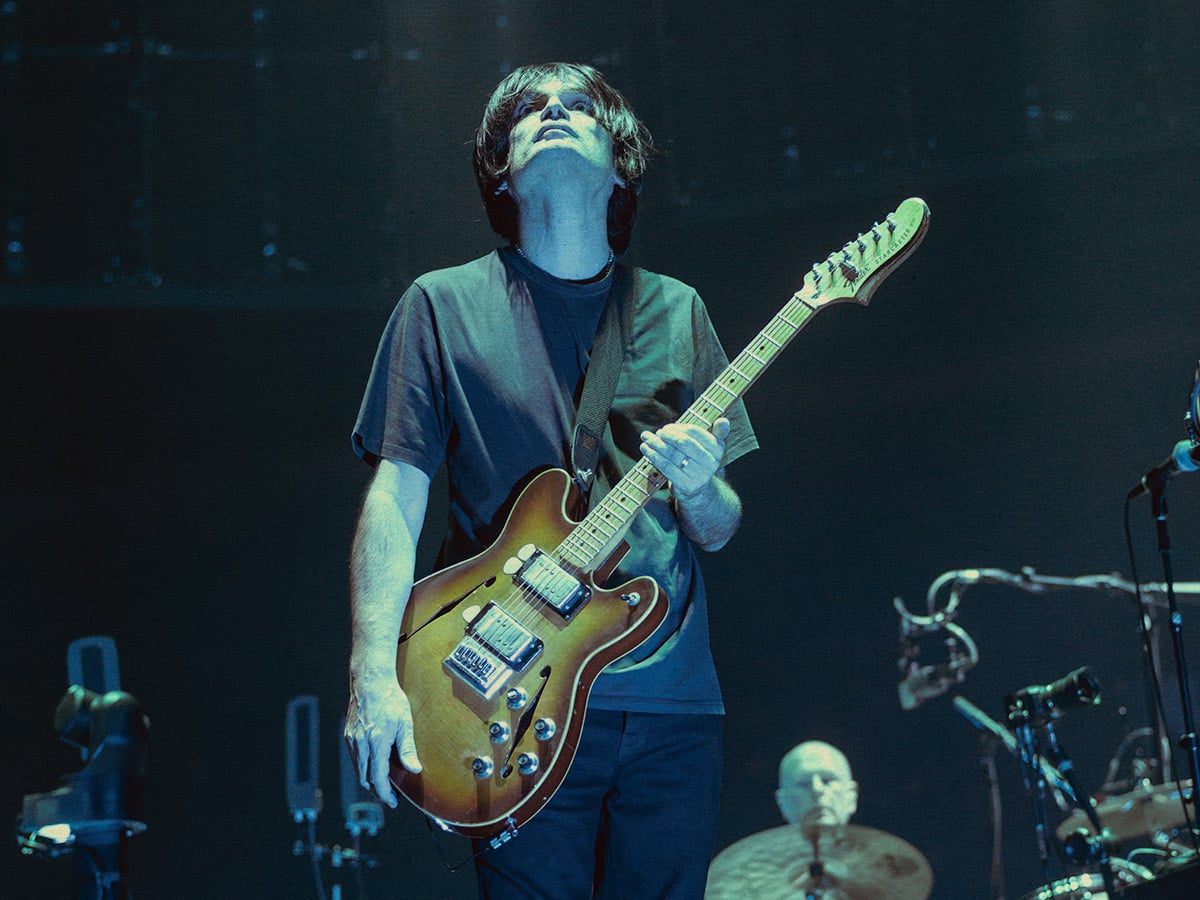
The goodwill behind these projects, much like Simon’s Graceland, encouraged Greenwood to carry on in the face of the backlash, playing at Israeli venues not just with Radiohead, but with his side projects, well into the 2020s. Criticism of these choices, however, has been intense, to say the least, as Katan’s family connections to the Israeli Defence Forces (her nephew died in combat in Gaza) have further positioned Greenwood as an apologist for the regime of Benjamin Netanyahu. The pushback eventually moved to the shores of the UK, where Greenwood was forced to cancel two 2025 dates in England with Israeli musician Dudu Tassa.
Under pressure from fans and many fellow artists, Greenwood tried to defend his choices, explaining to The Times that “music and art should be above and beyond political concerns. I made an album [2023’s Jarak Qaribak] involving Israeli, Iraqi, Egyptian and Syrian musicians. If I’m supposed to stop working with musicians because I dislike their governments, then I wouldn’t work with any of them. The fact is, what defines us as musicians isn’t our nationalities. But that point doesn’t seem to get through.”
It’s no help that we’re living in the attack-dog age of nuance-free analysis, but it’s also true that Radiohead, when challenged to put their 30 years of principled, anti-authoritarian politics to the test, have struggled to meet the moment. Thom Yorke, as the face of the band, has particularly been caught on the back foot during the fallout, sometimes seeming annoyed or dismissive of the protests, but also understandably frustrated that his own views were being simplified and/or presumed. He likely realised that the decision he made back in 2006, to merely “shout my mouth off from the sidelines”, wasn’t always going to work.
Along with navigating the obvious potential tension within the band itself, which hasn’t released a new album in ten years, Yorke has come out much stronger in his own personal opposition to the Israeli government in the past year, calling Netanyahu “an extremist” who “needs to be stopped” and confirming to the Sunday Times that he wouldn’t be performing in Israel again so long as the current regime was in power.
Radiohead are not the only artists who’ve become embroiled in this debate over the BDS movement, but for better or worse, because of the high regard in which they’re held as artists, more like esteemed authors than rock stars, the way they handle the issue going forward could play a considerable role in their legacy.
As of December of 2025, BDS was still actively calling for a boycott of all Radiohead-related shows, Yorke, Greenwood, or otherwise, on account of their “artwashing” and “whitewashing” of genocide.
