


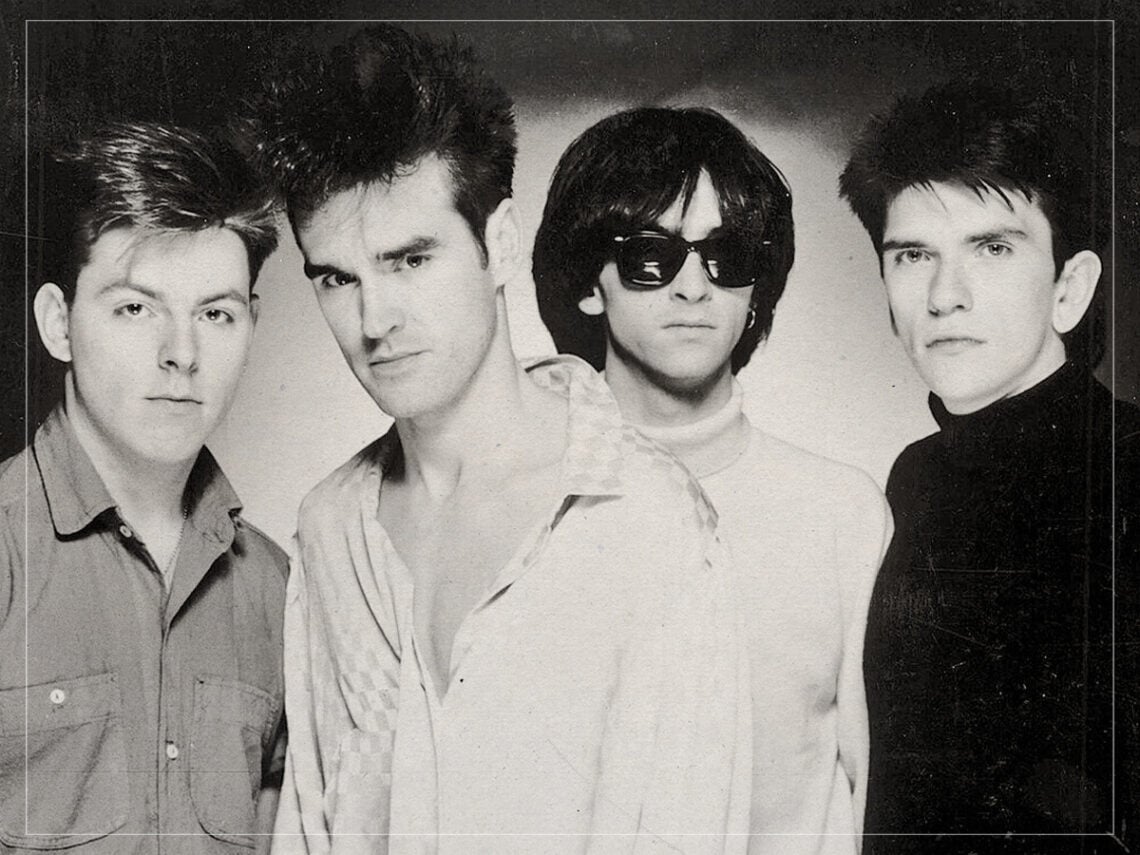
“Only we could play it”: the 1987 song that uniquely defines The Smiths

By 1982, the ardent cultural revolution of the punk years was firmly in the past: the Sex Pistols had gone their separate ways, Captain Sensible was writing novelty records, and many grassroots groups had exchanged their guitars for synthesisers.
At the same time, however, a new revolution was bubbling away, far out of reach of the pop charts. Built on an independent DIY ethos and with a focus entirely on guitar music, this was the dawn of indie, and The Smiths were forerunners in this vibrant new world of independent ethereal rock. Swinging a bunch of gladiolus, in its own way, it was markedly different to what came before.
Formed in Manchester in the wake of the city’s punk revolution, inspired by that fateful Sex Pistols gig at the Lesser Free Trade Hall – which also inspired the formation of Joy Division and The Fall, among various others, including Mick Hucknall – The Smiths took the spirit of punk and forever updated its sound.
The songwriting partnership of Johnny Marr and Morrissey seemed to be a match made in heaven, producing a wealth of groundbreaking anthems that spoke to the outcasts and loners of Britain’s youth, as any moody teenager can testify to. A legion of people identified with them just as guitar music was on the wane, as Noel Gallagher put it when it came to ‘This Charming Man’, “The Smiths were my band. The sound of that guitar intro was incredible. The lyrics are fuckin’ amazing, too.”
Within a few short years, The Smiths were one of the biggest bands in the country, releasing a captivating mix of chart successes and offbeat, often emotional, tracks. Very few bands could boast the heartbreaking helplessness of ‘I Know It’s Over’ on the very same album as satirical jaunts like ‘Frankly Mr Shankly’ or ‘Some Girls Are Bigger Than Others’, but that expansive repertoire is what had made The Smiths so beloved by fans. It would (and will) continue to endear new ones for years to come.
Throughout it all, The Smiths remained indebted to their independent ethos, signing to Rough Trade even when offers from major record labels were there for the taking. Although their sound became endlessly imitated, Morrissey and Marr remained staunchly original in their output, adapting and changing their sound from album to album. Even on their final record, Strangeways, Here We Come, the band were still pushing the envelope of what could be achieved by a guitar band.
By the time the album came out, The Smiths had already disbanded, torn apart by ego battles and dissolution with the direction the band was headed in. Famously, the band’s cover of Cilla Black’s ‘Work Is A Four Letter Word’ played a major role in the breakup, with Marr declaring, “I didn’t form a group to perform Cilla Black songs”. Nevertheless, the break-up was particularly disappointing for fans, particularly given the strength of Strangeways, Here We Come.

Featuring some of the band’s most groundbreaking compositions, the record is as strong a farewell as you could have hoped for from the indie pioneers. Even the band members themselves recognised the brilliance of the album, which contained one of Marr’s favourite Smiths tunes, ‘Unhappy Birthday’. That title alone seems definitively Smithian.
Speaking about the appeal of the often-overlooked song, which sees Morrissey deliver a series of barbed comments towards somebody on their birthday, the guitarist shared, “The music, what’s going on between Andy’s bass and my guitar, is one of the things I still hold up as being unique and no one else has ever done… quite done.”
With its odd darkness, wry winks, and tremolo-heavy feel, Marr concludes, “Only we could play it, and only Morrissey could sing it.” In some ways, ‘Unhappy Birthday’ is, therefore, their overlooked signature tune.
However, the same could be said for the vast majority of The Smith’s work. As a band, they were unlike anything else that had gone before or has been since. Perhaps that is why the band are still afforded such a legendary reputation multiple decades after they went their separate ways; their musical quality and originality have never really waned, and ‘Unhappy Birthday’ is a prime example of that fact.
