


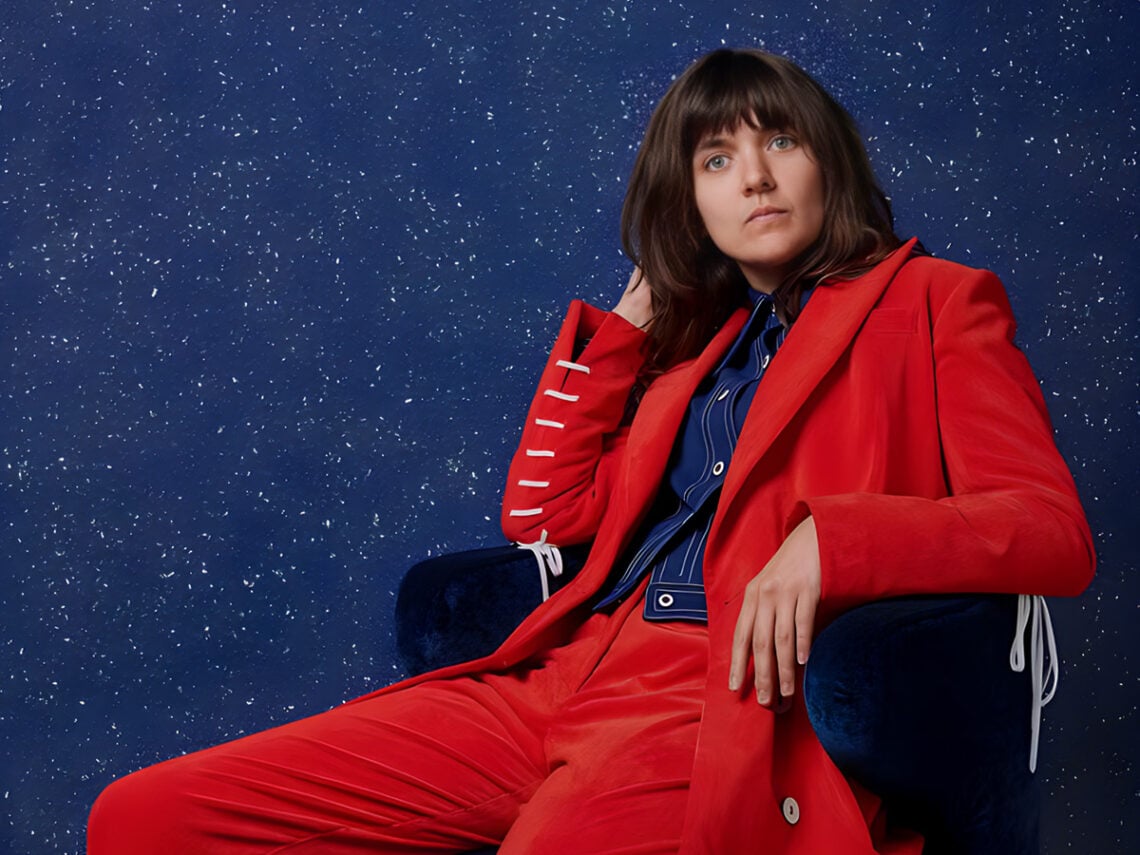
‘Small Poppies’: The Aussie term behind a Courtney Barnett gem

Amongst a field of stunted stems, the tallest flower is the outlier. This silent systemic stab refers to the popular Australian term, “tall poppy syndrome”, an issue which demoralises Australians and New Zealanders with notable public success. Though the term is less known internationally, tall poppy syndrome is touched on during songs such as Courtney Barnett’s ‘Small Poppies’, a track taken from her 2015 debut album Sometimes I Sit and Think, and Sometimes I Just Sit, which introduced her as an indie staple. Naturally, a year later, Barnett was nominated for ‘Best New Artist’ at the 58th annual Grammy Awards.
Echoed just last year by Aussie punk force Amyl and The Sniffers’ vocalist, Amy Taylor, during a 2024 Big Sound Brisbane conference, she touched on tall poppy syndrome, recalling her band being labelled ‘sell-outs’ after success came their way. “I always felt ashamed of things that are doing well,” she confessed, “tall poppy culture in Australia is fucking real. I have a lot of big dreams. I wanna experience all that life can give me, I don’t wanna hold myself back just because other people don’t want me to do something”
Barnett, using her widely recognised deadpan delivery, explores a similar ethos to Taylor’s. Referencing the phenomenon through her track ‘Small Poppies’, the complexities of the lyrics are hidden beneath Barnett’s grit and slack. In conversation with Offkey Magazine, she outlined what the track was about, saying, “Cutting down [successful people], bringing them down to your level. It’s a well-know Australian expression: If someone is doing really well, you tell them they suck to bring them back down to Earth. The song just deals with people having strong opinions about things.”
“I stare at the lawn, it’s Wednesday morning,” she added. “It needs a cut, but I’ll leave it growing all different sizes and all shades of green. Slashing it down just seems kind of mean”. These lyrics from the opening verse refer to the cutting down of others, and, upon reflection, even egalitarianism. You could argue that early democracy in Australia and the reinforcement of social and political equality can be viewed as the paving stones for individuals demanding fairness in present-day society, ironically at the expense of others.
Instead of highlighting success stories from marginalised pockets, they are ridiculed for daring to break the so-called “status quo”, and this idea is only bolstered by the anonymity offered by social media. Barnett’s track reflects a broader cultural issue with scrutiny and diminishing of those who stand out.
Alongside this one, the lead single of the same album, ‘Pedestrian at Best‘, is also a protest against this cultural mindset. The lyrics, “Put me on a pedestal and I’ll only disappoint you/Tell me I’m exceptional, I promise to exploit you”, show with cutting honesty how there really is no winning against this deeply harboured negative attitude. It articulates the heightened emotions of frustration, jealousy and resentment, all of which weave their way through society’s bloodstream.
Barnett is transparent about the effect the ideology has on her and her self-worth, calling herself a “pawn” to be used, viewing herself ultimately as a small piece in a much larger, widespread game of establishing supremacy.
While most of us are familiar with the feelings of impostor syndrome, having it thrust upon creatives, especially one of Barnett’s calibre, when it isn’t even a thought they would have entertained, is just plain cruel, and hopefully, all the artists bringing light to this and others are allowed to blossom.
