


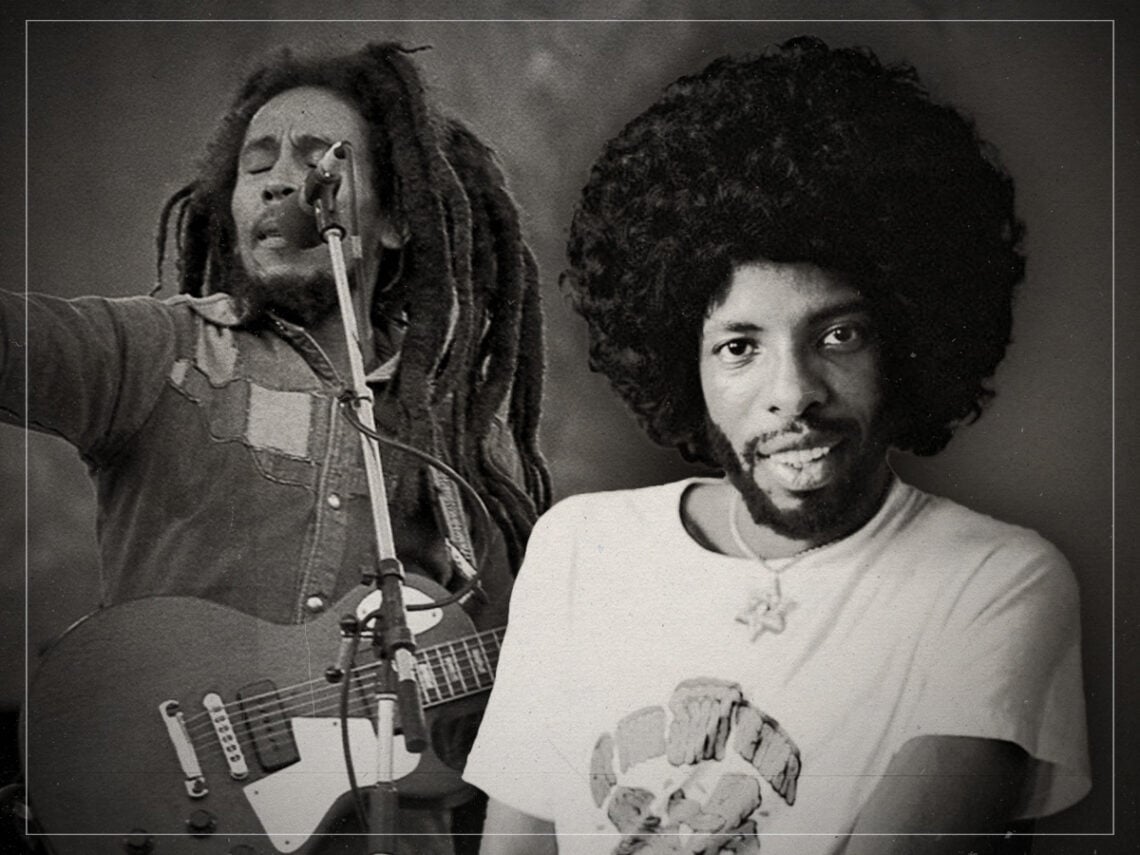
Sabotage or a sacking: Why did Sly and the Family Stone kick Bob Marley off their 1973 tour?

Booking a support band is a tight-rope act. On one hand, you want somebody who is going to warm up the crowd, building the excitement and anticipation for the main event while simultaneously showcasing their own skills.
On the other hand, you don’t want a group that is going to outshine the headliners – a fact that Sly and the Family Stone came to find out the hard way back in 1973.
Sly and the Family Stone had their own reputation for upstaging musical titans, thanks largely to their landmark performance at Woodstock in 1969, during which they outshone the various countercultural goliaths listed much higher on the bill. That performance, in fact, was a key contributing factor in the later domination of the Family Stone throughout the early 1970s, making them a defining act of psychedelic soul, funk, and rock airwaves, as well as bringing much larger crowds to their extensive US tours.
On the flip side of that success, Sly Stone found himself under an increased and otherworldly amount of pressure, both from his audience, his label, and, most bizarrely, the Black Panther Party, who objected to the Family Stone being a mixed-race group. Before too long, the combination of pressure, self-medication via cocaine, and constant touring meant the Family Stone were starting to lose their spark, and following Bob Marley and the Wailers every night didn’t help proceedings.
Stone has recruited the then-up-and-coming outfit The Wailers to support the Family Stone on their 1973 tour of the US, with Marley’s reggae-fueled outfit promoting their latest LP, Catch A Fire. However, that partnership didn’t last very long, with the Wailers booted off the tour only five dates into the run, for reasons that are sketchy at best.
Exactly why Marley’s outfit were sacked from the tour is a topic of some contention. In their native Jamaica, the Wailers had already been stalwarts of the blossoming ska and reggae scene since the 1960s, but the gospel of Bob Marley, or reggae more generally, had yet to properly take root in the United States. When opening for Sly and the Family Stone, then, Bob Marley and the Wailers were virtual unknowns.
It is possible – if unbelievable – that the audiences for the Sly Stone tour simply didn’t react to Marley’s performances. If their task was to warm up the crowd for the hippie-era legends, then they were unsuccessful, failing to gain much of a reaction from the audience and therefore giving the tour manager no option but to look elsewhere. At least, that is one school of thought on the matter.

Another, slightly more believable, possibility is that Sly and the Family Stone found themselves being overshadowed by their support band, and didn’t much like the shoe being on the other foot. There is, after all, hordes of documented evidence of Bob Marley’s undeniable musical genius, and the unparalleled, life-changing quality of his performances circa 1973.
He might not have made it into the mainstream consciousness of the United States at that time, but anybody with enough musical appreciation to go to a Sly and the Family Stone show at that time must surely have recognised the unbridled excellence of the reggae pioneer during those five shows.
Either way, Marley found himself booted off the tour bus after the fifth show, putting an end to what might have been one of the greatest double-bill line-ups of the era. It would be a long while before The Wailers were classed as a supporting act again.
