


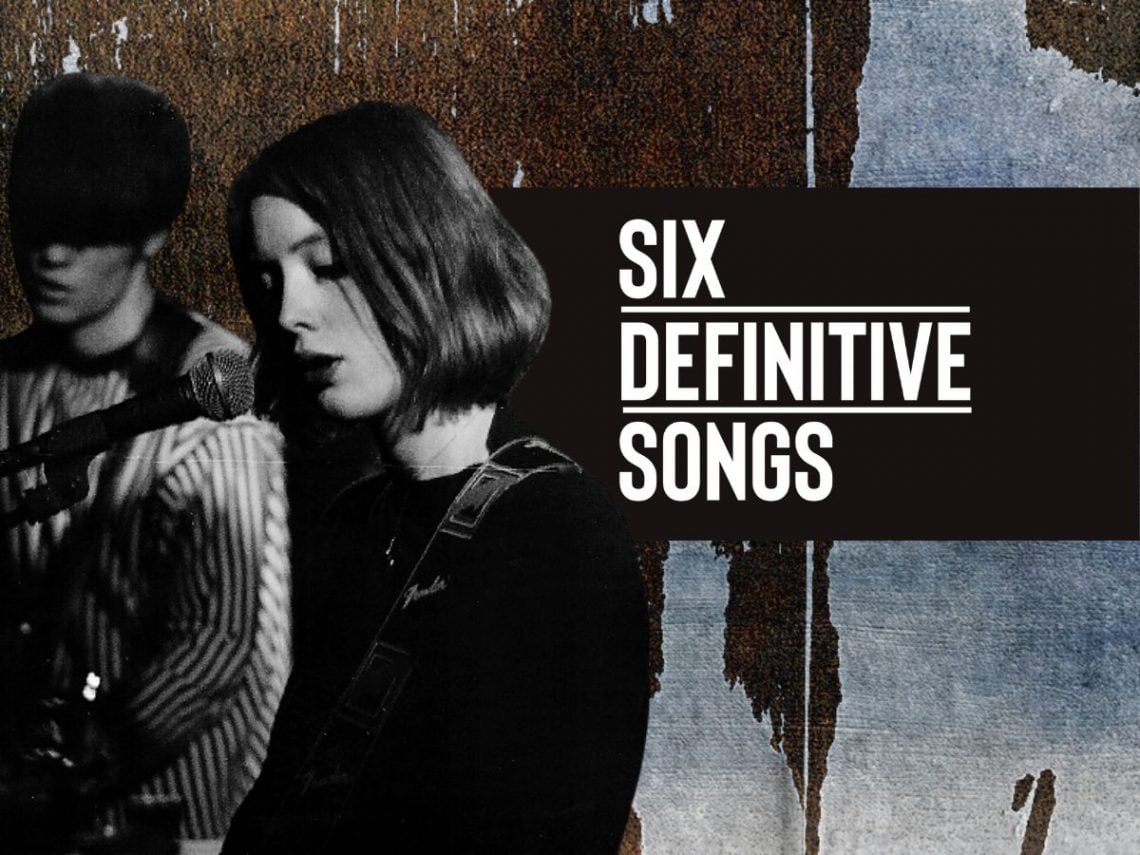
Six Definitive Songs: The ultimate beginner’s guide to Slowdive

Emerging from the shoegaze scene that blossomed in the late 1980s, Slowdive are now recognised as one of the genre’s most notable names alongside the likes of My Bloody Valentine, Ride and Lush. However, the band were not always as revered as they are now. During the 1990s, shoegaze – a genre characterised by ethereal vocals, distorted guitars, feedback, and noise – was overshadowed by the dominance of grunge and Britpop. However, the genre has regained popularity over the past decade, leading bands such as Slowdive to reform and produce new music.
Childhood friends Rachel Goswell and Neil Halstead formed Slowdive as teenagers, going through a few temporary members before settling on their current line-up, which includes Nick Chaplin, Christian Savill and Simon Scott. Naming themselves after the Siouxsie and the Banshees track ‘Slowdive’, the band launched themselves into recording demos and playing live shows. They quickly gained the attention of EMI’s head of A&R. Soon, Slowdive were signed to Creation Records and released their self-titled debut EP in 1990, which recieved glowing praise from critics.
Yet by the time Slowdive had released their debut album, Just For A Day, in 1991, the music press was already turning their back on the shoegaze scene. The album was primarily panned by critics, which inevitably affected the members, who were still only teenagers. In 2009, Scott shared: “[We] couldn’t understand why people were so outraged by our sound that they had to tell the NME or whoever that they wanted us dead”. However, the band continued and released their second album, Souvlaki, in 1992, which has since been recognised as one of the decade’s most seminal outputs. Still, critics were quick to review the album negatively, with Melody Maker labelling it a “soulless void”.
The band’s future was looking more uncertain by the day, only emphasised by their US label SBK pulling their funds mid-way through touring North America. Pygmalion, Slowdive’s third album, was released in 1995, which critics largely ignored. Britpop was in full swing, and Slowdive’s sound couldn’t have been more different. The band were dropped by Creation just after Pygmalion’s release, forcing them to adopt a new identity – Mojave 3.
Luckily, Slowdive reunited in 2014 to play a string of live shows before dropping a new album in 2017 via Dead Oceans. In retrospect, the band’s music has been greatly appreciated, and they have been recognised as one of Britain’s most influential bands from the ’90s. With them finding a new lease of life over the past decade, here is a handy beginner’s guide to Slowdive.
Slowdive’s six definitive songs:
‘Catch the Breeze’ (1991)
First appearing on the Holding Our Breath EP and later featuring on debut album Just For A Day, ‘Catch the Breeze’ topped the UK Indie Chart in 1991. The beautifully melancholic track features (in typical shoegazing style) barely audible lyrics performed by Halsted and Goswell, whose voices work in perfect harmony with each other. Drenched in reverb, the song sounds like a hazy dream, brought together by a prominent bassline.
The track ends with an extended instrumental outro which feels deeply evocative and nostalgic. ‘Catch the Breeze’ is an astounding first single, demonstrating the band’s ability to provoke emotion through instrumentals.
‘Alison’ (1993)
Opening Souvlaki is ‘Alison’, a drug-fuelled dream of an addict that Halstead can’t get off his mind. “I’ll be here in the morning/ ‘Cause I’m just floating/ Your cigarette still burns/ Your messed up world will thrill me,” he sings, as delicate guitars swirl around like a distant memory. ‘Alison’ is one of the band’s most unforgettable tracks, laden with sentimentality and bittersweetness.
The track is laced with echoing guitars, creating a rich and immersive sound. Goswell’s largely obscured backing vocals float between Halstead’s vocals, tying the whole thing together.
‘When The Sun Hits’ (1993)
One of the band’s most sublime releases is, undoubtedly, ‘When The Sun Hits’. For many listeners, the track is a gateway into the band’s music, noted for its captivating guitar chords, which explode into a goosebump-inducing breakdown layered with emotional depth and resonance. The track, written by Halstead, is presumably about Goswell, who he’d recently split from. It beautifully explores the fear of a relationship burning out too quickly.
Despite being one of the band’s most well-known songs, ‘When the Sun Hits’ almost failed to make it on the album. Apparently, Chaplin and Savill “fought like hell” to have the song on the record.
‘Souvlaki Space Station’ (1993)
Another Souvlaki cut – ‘Souvlaki Space Station’ – demonstrates the burgeoning influence of ambient, techno, and drum and bass music on Halstead’s writing. Because Slowdive had based much of their early work on albums such as Low by David Bowie, which Brian Eno produced, the band decided to contact the legendary musician in the hopes that he would also produce Souvlaki. He agreed to collaborate rather than produce and can be heard playing the keyboard on ‘Sing’ and ‘Here She Comes’.
However, Eno’s ambient influence, paired with the sounds of Aphex Twin and dub music, can be heard prominently on ‘Souvlaki Space Station’. The song sends listeners flying across the cosmos, with disorientating guitars whirring across a dark bassline that eventually anchors the track back down to earth.
‘Blue Skied an’ Clear’ (1995)
Although Pygmalion tends to be largely overlooked, even by fans of the band, the album contains some ethereal gems, such as ‘Blue Skied an’ Clear’. Slowdive moved away from their classic shoegaze sound for their third album, moving closer towards ambient and sparse instrumentation. This track is one of the album’s finest, gorgeously layered with subtle textures to create a melting, dream-like atmosphere.
Clocking in at seven minutes, the track is longer than the average Slowdive piece, yet it never drags on. ‘Blue Skied an’ Clear’ remains one of the band’s most criminally underrated tracks, although attentive fans might have heard it in Greg Araki’s 1995 film The Doom Generation.
‘Star Roving’ (2017)
Making their impressive return in 2017, Slowdive dropped the single ‘Star Roving’, which was recieved well. The track feels euphoric and hopeful, with the band’s new beginnings mirrored in the unusually cheery guitar rhythms. Despite the simplicity of the chords, the band create a larger-than-life sound through their use of effects and Halstead’s mesmeric vocal performance.
The song appeared on their fourth album Slowdive, which was regarded as one of the best albums of 2017. When the band announced ‘Star Roving’, they commented, “It feels as fun and as relevant playing together now as it did when we first started,” which is definitely reflected in the track.
