


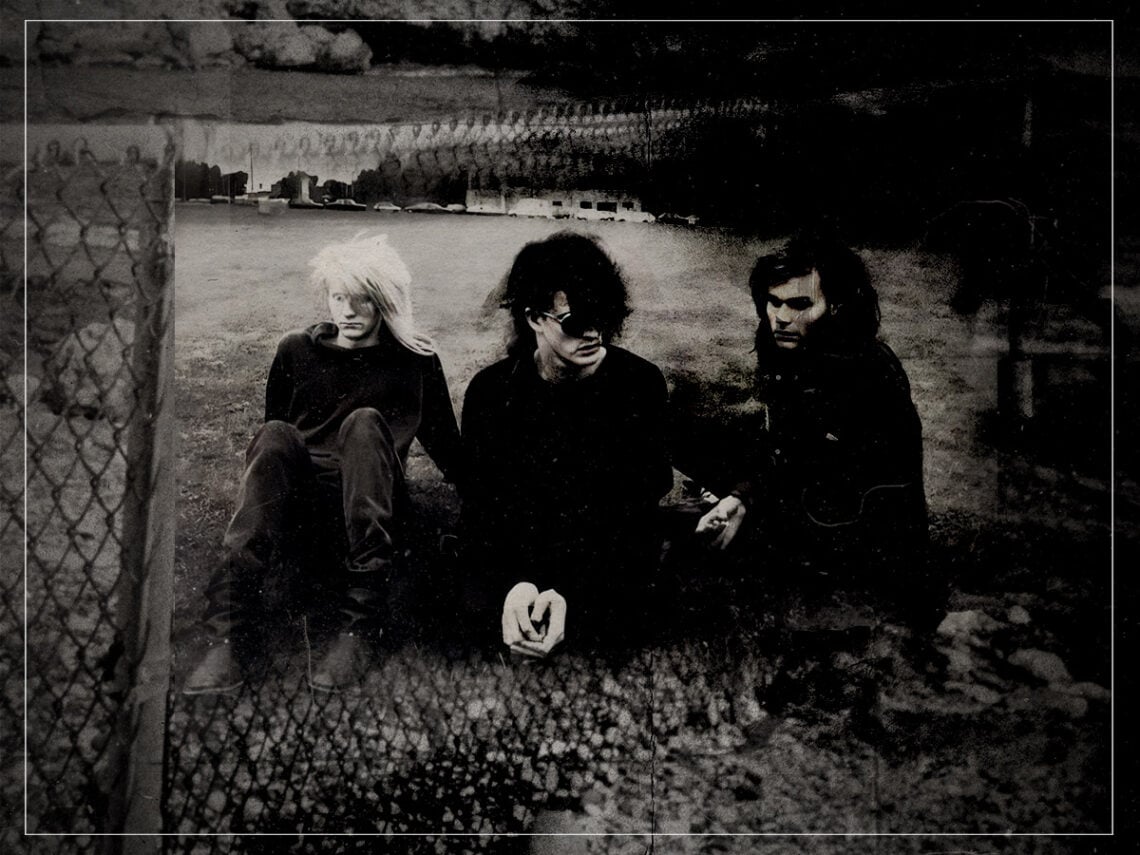
When Skinny Puppy accused the US government of using their music to torture people

As far as we know, the United States government still owes Skinny Puppy $666,000.
That was the amount on the invoice the veteran electro-industrial outfit supposedly sent out (to the Pentagon, we guess?) in 2013 after learning that some of their music had allegedly been used to torture inmates at the infamous Guantanamo Bay prison complex in the early 2000s. Rather than being offended that any of his songs had been deemed torturous to listen to, frontman cEvin Key was rightfully more concerned that his band’s work—regardless of its original intent to “disturb”—had been co-opted by the military without consent.
Key first learned about the so-called “GITMO Playlist” from Terry Holdbrooks, a former guard at the detention camp who’d since become an advocate against the controversial facility after his discharge from the US Army in 2005. As it turned out, Skinny Puppy was just one of many artists whose music had been deployed to cause discomfort or distress among the Guantanamo detainees, most of whom were being held without any criminal charges filed against them.
Along with some other industrial, noise, and metal bands (Nine Inch Nails, Rage Against the Machine, Metallica), the facility was also said to blare songs from the other side of the psychological pain spectrum: Britney Spears, the Bee Gees, David Gray’s ‘Babylon’, and, most famously, the theme song from Barney the Dinosaur.
Though spokesmen from the CIA and the Pentagon denied that music was ever used as a form of torture, there was an acknowledgement that certain songs could be played as a “disincentive” for bad behaviour, which creates more than a little grey area.

As more artists learned about their music supposedly appearing on the GITMO Playlist, the response was (almost) universal outrage. James Hetfield of Metallica and the guy who wrote the Barney theme seemed kind of alright with it at first, but some bands noted for their social consciousness—including Rage, REM, Nine Inch Nails, the Roots, and Pearl Jam—quickly put together a coalition to put a stop to the use of any music for the purpose of torture or interrogations.
Unfortunately, the notoriously closed-door policy at Guantanamo Bay makes it challenging to know how successful the efforts of that coalition ultimately were. As a result, it can be argued that the biggest political statement made in response to the torture playlist was actually Skinny Puppy’s radical attempt to get even.
“We heard that our music was being used in Guantanamo Bay prison camps to musically stun or torture people,” Key told Time in 2014. “We never supported those types of scenarios. Because we make unsettling music, we can see it being used in a weird way. But it doesn’t sit right with us… So we thought it would be a good idea to make an invoice to the US government for musical services.”
Not only did the band grab plenty of headlines with their $666,000 bill to the government, but they also recorded an entire album inspired by the situation, 2013’s Weapon, which also proved to be the final studio LP of Skinny Puppy’s long career. The album, which marked a return to the band’s early form with a faster, looser approach in the studio, also extended the theme of the Guantanamo incident to Key’s wider pessimistic views on humanity.
“I view the human being primarily as a weapon,” he told Vice at the time. “A lot of the things that we’ve created have had disastrous effects on us as a species.”
Sometimes, as in the case of Skinny Puppy’s own music, that disastrous effect was thoroughly unintended, as a piece of challenging art ended up in the wrong hands, weaponised for the wrong reasons.
