


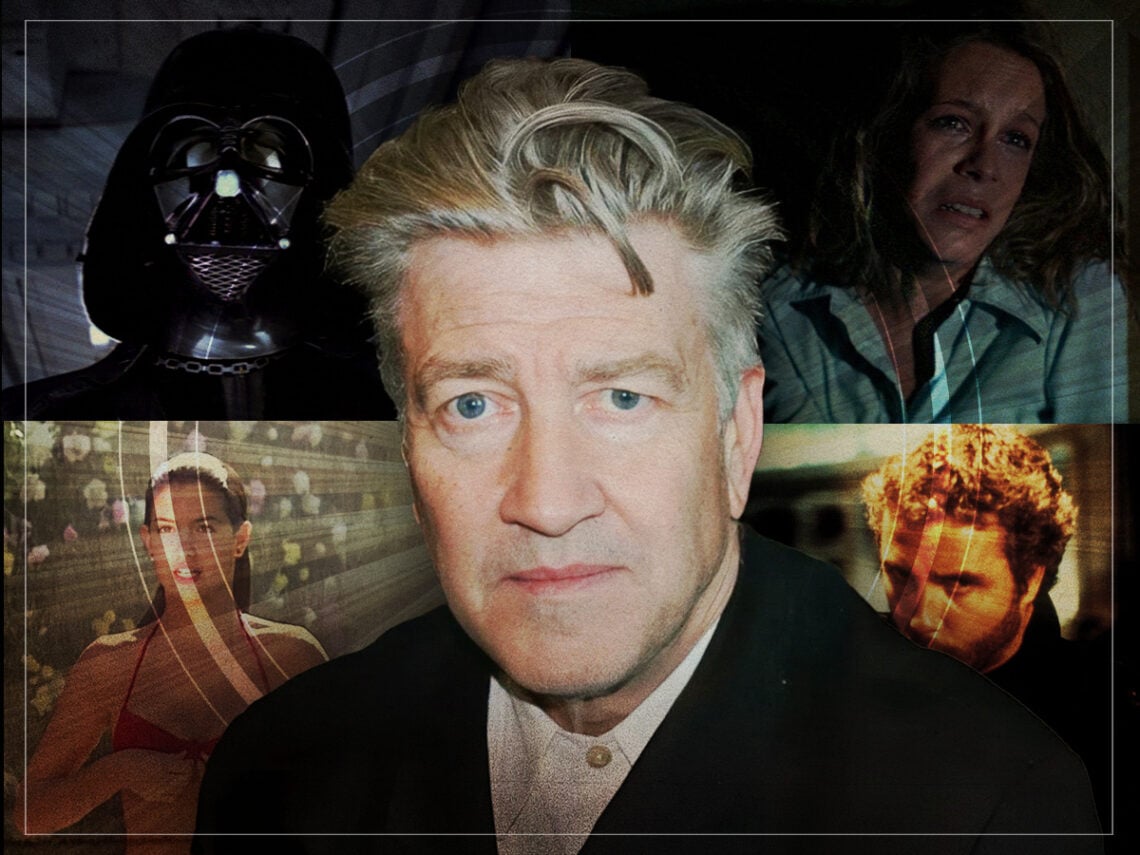
The six classic movies David Lynch almost directed

David Lynch was one of the most distinctive filmmakers in cinema history. Blending dreamlike surreality with small-town America and the darkness at the heart of Hollywood, he created a style all his own. Whether any filmmaker has ever managed to make a movie that can credibly be described as “Lynchian” is up for debate, but there is no question that they will keep trying.
Eraserhead, Blue Velvet, and Mulholland Drive helped redefine the boundaries of the medium, while the television series Twin Peaks demonstrated that Lynch’s brand of imagination resonated with a surprisingly large audience.
There was a curious point in Lynch’s career after the release of 1977 Eraserhead and 1980’s Elephant Man and before 1984’s disastrous Dune that Hollywood offered the director a dizzyingly varied range of projects.
Something about the critically acclaimed body horror of the 1977 film and the depth and compassion of the 1980 film (which earned no fewer than eight Oscar nominations) led producers to believe that the young director was capable of pretty much anything. It was in this liminal period that Lynch was asked to make six movies that ranged from Oscar-nominated biopics to high school comedies.
Movies that David Lynch almost made
Star Wars: Episode VI – Return of the Jedi (1983)
Star Wars might seem like the most corporate franchise of all time, but at one point, George Lucas was a renegade. Following the first Star Wars sequel, The Empire Strikes Back, he wanted to wrestle back creative control following strife with the director, Irvin Kershner. The question was whether he would go in a more action-oriented, crowd-pleasing route or opt for something a little more abstract.
He considered everyone from Steven Spielberg to Peter Weir, but it was Lynch who finally got his blessing. Lucas arranged several one-on-one meetings with the young director, but while Lynch respected him and found the whole experience exciting and gratifying, he had “next door to zero interest.” His sights were set on a passion project called Johnnie Rocket, which never made it off the ground. Ultimately, the directorship went to Welsh director Richard Marquand.

Tender Mercies (1983)
Pulitzer Prize-winning playwright Horton Foote, who had already earned an Oscar for writing the screenplay for To Kill a Mockingbird, authored a script about a country music star who hits rock bottom and descends into alcoholism. When he strikes up a relationship with a young widow and her son, he finds a reason to pull himself out of his downward spiral.
It’s unclear why Lynch was approached to direct the film, but he wrote in his memoir, Room to Dream, that he didn’t think it was a good fit for him. Still, he acknowledged, it “turned out to be a great film.” Australian director Bruce Beresford was the one to helm the movie in the end, and it went on to critical acclaim, earning Foote his second Oscar and Robert Duvall the award for ‘Best Actor.’

Frances (1982)
Another unlikely film that Lynch was asked to direct was the largely fictionalised biopic of 1940s actor Frances Farmer. It was actually a more logical move than it seemed from the outside, as it would have reteamed him with his Elephant Man producers, Jonathan Sanger and Mel Brooks. Lynch was interested in the project. The script focused on Farmer’s alleged harrowing stint in a psychiatric ward and provided plenty of opportunities for him to explore his innovative visual style while focusing on a tragically misunderstood figure.
However, he ultimately passed on the proposal. Graeme Clifford went on to direct the film, with Jessica Lange as the star. It earned two Oscar nominations, one for Lange and one for supporting actor Kim Stanley.

Fast Times at Ridgemont High (1982)
Easily the most bizarre film that Lynch was asked to direct was Fast Times at Ridgemont High, a high school slacker comedy that made Sean Penn a star for his laid-back portrayal of a pot-smoking California surfer. Written by the future Almost Famous director Cameron Crowe, the script bore no similarities to any of Lynch’s work.
You might assume that Lynch passed on the script as soon as he was offered it, but he went into trouble by meeting with the young screenwriter twice. “He had a very wry smile on his face as I sat talking to him,” Crowe remembered in a 2017 Variety retrospective. “He went and read it. We met again. He was very, very sweet about it, but slightly perplexed we thought of him.” He was equally kind about turning it down, simply saying that it was a really nice story but “not really the kind of thing that I do.” He wished Crowe luck, got into a white VW bug, and drove away.

Manhunter (1986)
Lynch was close to being the first director to bring Thomas Harris’ fictional cannibalistic serial killer Hannibal Lecter to the screen. Manhunter was an adaptation of the 1981 thriller novel Red Dragon, and producer Richard N Roth wanted Lynch to direct it. The filmmaker later told Rolling Stone that he had been involved with it for a while but then “got sick of it.” It had nothing to do with creative differences; it was the subject matter. “I was going into a world that was going to be, for me, real violent, and completely degenerate,” he said. “One of those things: No Redeeming Qualities. The way I was thinking of it, I didn’t want to let it into my country club.”
In the end, Michael Mann directed the film with Brian Cox playing Lecter. It fared poorly at the box office, and was quickly overshadowed by Jonathan Demme’s Oscar-winning Silence of the Lambs.

Halloween II (1981)
Given his professed distaste for violence, it’s not surprising that Lynch passed on the opportunity to direct the sequel to John Carpenter’s hit slasher film. But he was so attached to it at one point that his involvement was announced as a fact. In a 1980 issue of the LA Times, Laurie Warner wrote, “Halloween II, which Carpenter will oversee, will be made with David Lynch.” An issue of Boxoffice magazine also confirmed his involvement.
It’s unclear whether Lynch himself was ever serious about making the slasher sequel. At the time, he had just finished filming Elephant Man, which took his career and reputation to a whole new level. Rick Rosenthal went on to direct the film, which fared well at the box office but bombed with critics.

