


The six best closing monologues in cinema history

Directors and screenwriters employ specific devices in a film narrative to embody key character traits, concepts and ideas, with the ending hoping to round off all these elements. A practical addition to this conclusion is a powerful, emotional or thematic closing monologue to send the movie out on a high note.
A common occurrence with closing monologues is that they fall into the hands of the protagonist, the one we have been aligned with for the entire narrative. These speeches lead to some definitive and insightful character revelations, bookending the growth and arc of the central protagonist, such as when Ed Bell discusses his prophetic dreams at the end of the Coen brothers’ No Country for Old Men.
Alternatively, filmmakers can shake things up by handing a powerful closing speech to an unexpected role, such as the villain, a concept that was perfectly delivered as Anton Ego decides on a life less-cynical in Pixar’s Ratatouille.
Including classic comedies and significant representations of historical events, here are six of the best closing monologues in cinema, highlighting character growth or thematic concepts.
The six best closing monologues:
Chaplin’s plea for humanity (The Great Dictator, Charlie Chaplin, 1940)
Hollywood icon Charlie Chaplin perfectly defined how the arts and history can exist within one another in this definitive satire piece. He plays a ruthless dictator, a caricature of Adolf Hitler, and an oppressed Jewish barber experiencing memory problems.
Existing as a significant historical document, Chaplin wrote The Great Dictator to respond to the contemporary events of World War II, editing specific sequences to suit the current real-life battle. One landmark event that happened during the making of the film was the Nazi invasion of France. This event prompted Chaplin to switch the ending from comedic to one of history’s most sentimental and powerful speeches about humanity. The actor urges all sides to rise against the fascist dictators, crying out for hatred and prejudice to have no place in society.
“Tears in the Rain” (Blade Runner, Ridley Scott, 1982)
Ridley Scott’s sci-fi classic centres on an ex-policeman called Rick Deckard (Harrison Ford), who becomes a special agent tasked with exterminating a group of threatening androids. One of these androids is Roy Batty (Rutger Hauer), a bio-engineered humanoid leading a group cited as Nexus-6 replicants.
Roy Batty causes a divide among fans concerning his status as a pure villain or anti-villain, with his final words sparking discussion. The character gives a 42-word monologue, written by screenwriter David Peoples, to Deckard as he hangs for his life over a building, showcasing his mortality. The speech’s composition bridges artificial science with humanity in a compelling and defining conclusion. Actor Rutger Hauer delivers the monologue brilliantly, employing intense pauses between lines at just the right moment to accentuate the scene.
Closing chapter (Stand by Me, Rob Reiner, 1986)
Rob Reiner adapted Stephen King’s dramatic novella into the ultimate coming-of-age film about four boys who hike to find a missing boy’s dead body. The film explores the overarching concept of boyhood and how it informs adolescent identity.
Stand By Me is the physical recreation of the written autobiography recited by one of the boys, Gordie, after he has grown up. The concluding speech reveals what happened to each boy in adulthood, sharing that Gordie and his best friend Chris did defy expectations and make it out of their small town and onto bigger and better things. However, Chris, who had become a lawyer, was tragically killed after trying to stop a knife fight. Gordie reveals how despite having not spoken to Christ for years, he will always miss him, exemplifying how impactful childhood bonds are in later life.
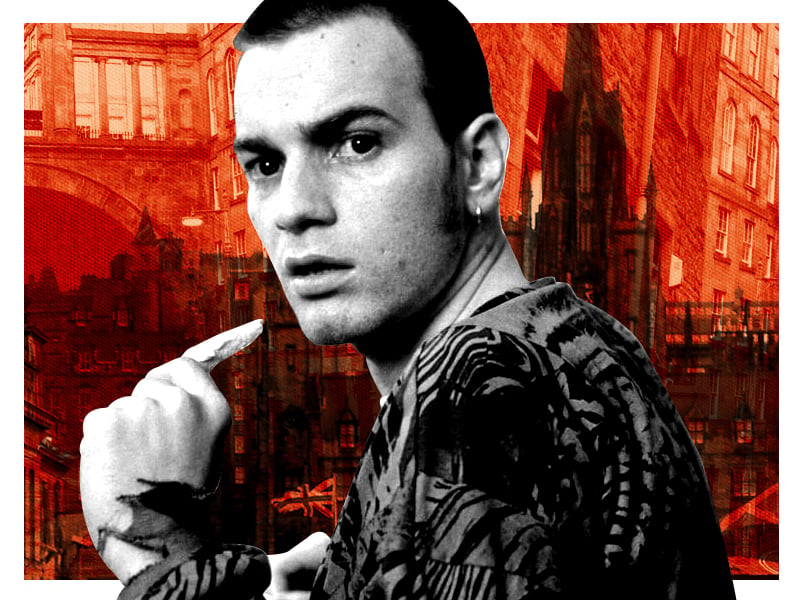
Mark chooses life (Trainspotting, Danny Boyle, 1996)
Based on Irvine Welsh’s 1993 novel of the same name, this classic British drama charts the turbulent life of Mark Renton, a young man with a heroin addiction, as he clashes with friends and the laws of contemporary society.
In a fantastic display of screenwriting and execution, Trainspotting opens and closes with two monologues that echo one another in themes, bringing the narrative to a complete circle. Mark (Ewan McGregor), introduced to the audience in a rousing speech about choosing the fast-paced and intense moments of life as he runs from security, leaves telling us he has chosen the more minor aspects of life. He promises he will do better in recovery and appreciate everything that life offers, offering a critical parallel to the opening.
Elle Woods’ graduation speech (Legally Blonde, Robert Luketic, 2001)
This 2000s classic charts the rise of former fashion student Elle Woods in law. After her boyfriend breaks up with her for a “smarter” law student, Elle (Reese Witherspoon) sets her sights on becoming the top-performing student at Harward law, defying every assumption about her appearance and background.
Her positive attitude, unique perspective, and hard work make Elle succeed at Harvard law with flying colours. During her graduation speech, she emphasises how believing in yourself and others is half the battle. It’s the perfect ending to a lighthearted film that celebrates hard work, ambition and collaboration.
Cool girl manifesto (Gone Girl, David Fincher, 2014)
This psychological thriller was written by Gillian Flynn, adapted from her novel of the same name, and follows a man who becomes a prime suspect in his wife’s disappearance.
Under Flynn’s screenplay and David Fincher’s direction, Gone Girl is hailed as a pinnacle postmodern mystery, primarily thanks to its explosive conclusion that unmasks every shocking detail, executed in a fantastic speech made by Rosamund Pike’s Amy. Revealing her vengeful motives, Amy discusses how she has to maintain a conventional appearance but not be shallow, show interest in his passions, and give him space, essentially exercising an illusion on her husband.
It’s an insightful analysis of gender dynamics and traditions. Flynn told The Guardian that it voices “the push and pull of a long-term relationship – the little power plays and dynamics.”
