


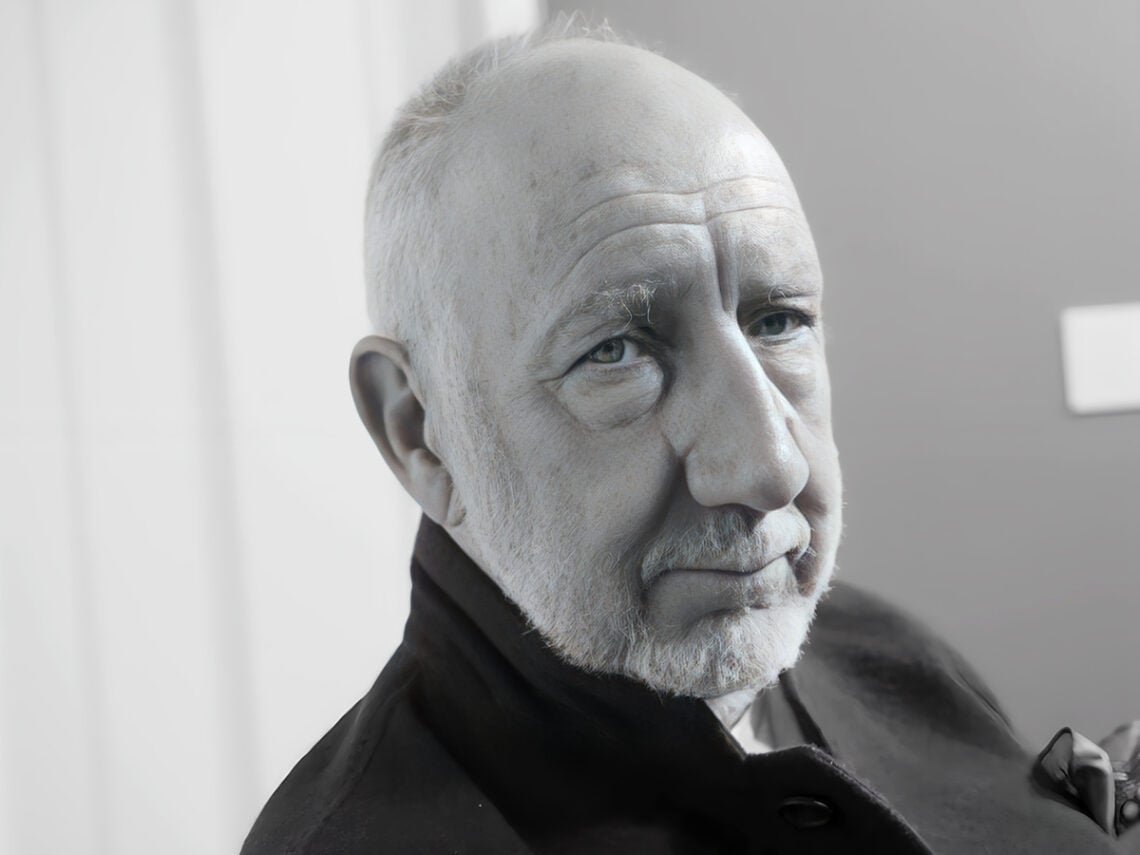
“A shrieker”: The singer Pete Townshend accused of copying Roger Daltrey

The Beatles were a happy-clappy bunch, Mick Jagger provided plenty of moody pouting and swagger, but The Who were the British invasion band that washed up on American soil with a readymade adonis. With his golden locks, trousers so tight you could count the change in his pocket, and oiled, shirtless torso, Roger Daltrey was a new, bold and daring presence in pop. In truth, if you look at the many longhaired frontmen who followed, perhaps he was actually the most influential, too.
In Pete Townshend’s eyes, he certainly saw his influence arise in the immediate aftermath of The Who’s explosive beginning. Serving as a counterpoint to the winks and smiles of the Fab Four, his gruff, macho histrionics helped to usher music towards something a little heavier, something filled with a bit more testosterone. In fact, when Daltrey really cut loose as the band rattled off their live record, Live at Leeds, Townshend proposes that they gave birth to heavy metal as we know it.
Oddly enough, that feat has never sat well with the guitarist. Townshend was always the shy and spiritual member of his group. He even says he joined them because he wanted to be part of a protective group after a childhood mired by its fair share of bullying. So, within the ranks of The Who, he might have had a few hiccups with his muscular frontman, but by the same token, he always admired the sportsman-like way he addressed the craft.
The same can be said of the man he says took more from Daltrey than any other. He might not have liked Led Zeppelin, and he certainly doesn’t use the phrase “copied” with a great deal of esteem, but he does offer a glimpse of admiration towards Robert Plant when it comes from the lessons he learnt from his ‘My Generation’ counterpart.
“I think by that time [in the early 70s], we became aware that Led Zeppelin was snapping at our heels,“ he told Jackie Brambles. “Eventually, of course, in heavy rock terms, they overtook The Who. But I think Robert Plant was a shrieker. He copied the way that Roger [Daltrey] looked on stage, you know,“ he said.
The physical comparisons are easy to draw. Plant and Daltrey may have even shared a tailor. Musically, the biggest touchstone was that they brought an operative turn to rock ‘n’ roll singing, wrestling for attention beyond mere melody with the cavalcade of sound behind them.
Yet, this knowledge that their voices had to be used as booming instruments also leads to another similarity that Townshend admired in both men. He drops the whole ‘copying’ critique with the comment, “He found his own feet in the end, but I think Roger was aware that he had to really sharpen up, and he did.”
He goes on to add, “[Plant] started to really regard his voice as an instrument and to really take care of himself.“
As far as Townshend is concerned, this is actually pretty much the most overlooked facet of rock ‘n’ roll. Surmising his view on the defining feature of rock ‘n’ roll, he told The New York Times, “At the end of the day it’s about: ‘Can you dance for two and a half hours without dropping dead? Can you sing without lip syncing for two and a half hours?’ It’s about sport. It’s about entertainment as a physicality. It’s about an endurance test.“
So, while he might have said Led Zeppelin weren’t to his taste, commenting, “I don’t like a single thing that they have done, I hate the fact that I’m ever even slightly compared to them,” he also has a begrudging degree of respect. Or at least for Plant, who honed his craft and achieved high-wire vocal antics, in part due to the athleticism key to the genre.
In fact, it is still something he strives for himself, stating, “It’s a part of what I bring to my table. I want to be fit, I want to be strong and I want to be able to move and sing and play conventionally. I’m talking about a performance standard that has risen out of the ashes of the halcyon years of rock ’n’ roll.“
