


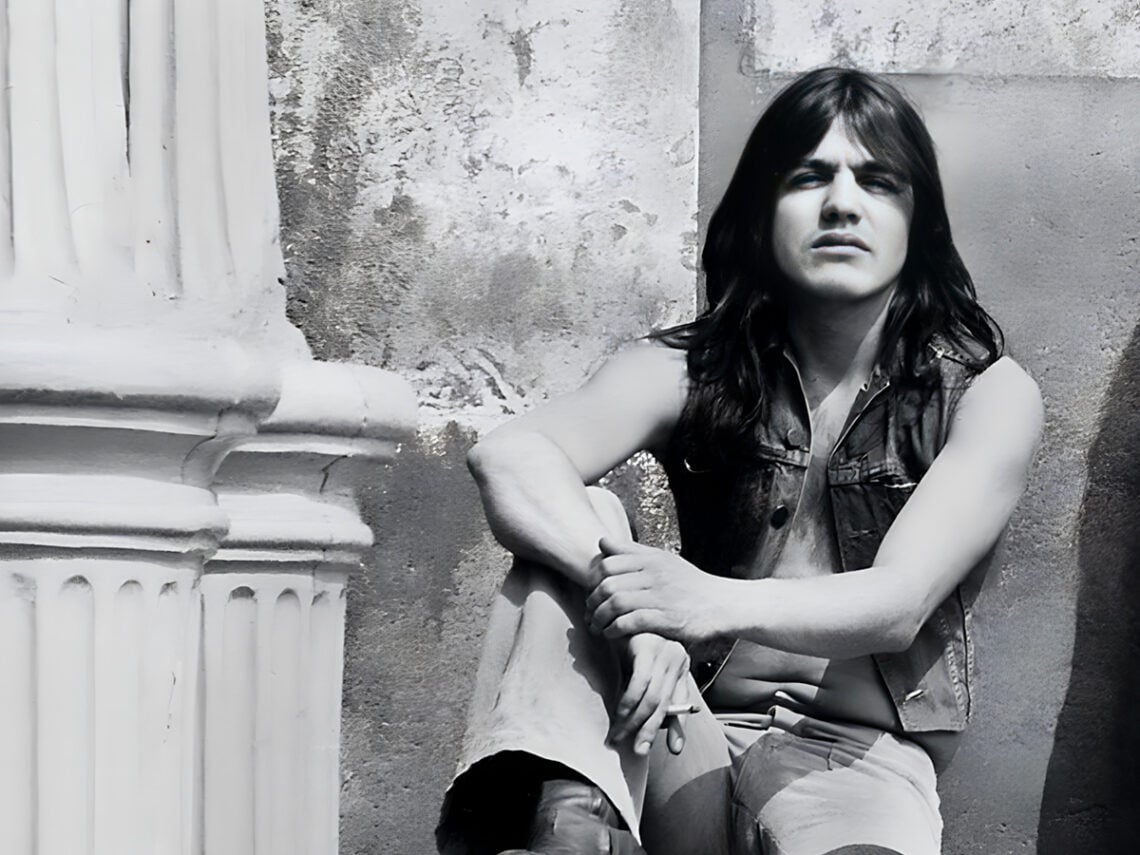
The singer Malcolm Young said could never be in AC/DC

Given how AC/DC had risen to become one of the most notable hard rock bands of the 1970s, the death of Bon Scott would have been an unforeseen tragedy for the group to deal with in many respects.
Being forced to change any member in an established band is going to provide a challenge for the remaining members to overcome, but to have to replace a vocalist who is part of the reason why the band were so beloved in the first place is the sort of thing that tends to cause a band to break down entirely.
Scott was such an integral part of AC/DC’s ascent, and his vocal contribution on records such as High Voltage, Dirty Deeds Done Dirt Cheap and Highway to Hell was something that many thought was unmatchable. A future without his gnarly vocals seemed bleak for the band.
Of course, it didn’t deter the band from persevering without him there, and both Malcolm and Angus Young continued to work hard on writing new material on the off chance that they’d strike lucky and find the right person to take the helm as lead vocalist and keep the band’s momentum going.
It was never going to be an easy task to bring AC/DC up to the same level as before if they did indeed choose to replace Scott, and given the band’s gigantic stature on the world stage, they would have ultimately had the greatest pool of talent to pick from, with the gig of becoming the new lead vocalist in one of the most successful rock acts of all time being a mouth-watering prospect.
The trouble is, the remaining members couldn’t envisage anyone else taking on the role and prospering, and despite having completed the majority of the work on writing their forthcoming seventh album, the Scott-shaped hole still needed to be filled. Their eventual decision to pick Geordie frontman Brian Johnson, a man who Scott had previously hailed as being one of his favourite vocalists in the world, paid off, with the album becoming an immediate success.
For many years Malcolm Young still didn’t quite believe that the band managed to pull off this transition between vocalists, and wondered how things would have panned out if they’d made the wrong decision with their replacement vocalist and selected an inferior or unsuitable alternative.
“Back In Black is the album we’re proud of,” Malcolm later told Rolling Stone, “Because we thought it was the end of the band, to be honest. Me and Angus had been together two weeks jamming, and after [Bon’s death] we thought, well, this is it really. I just can’t see David Coverdale singing with the band, you know what I mean?”
While Coverdale’s work with Whitesnake and Deep Purple isn’t exactly anything to be laughed at, with him proving himself to be a formidable talent, it’s probably a fair assumption that his style wouldn’t have fit with AC/DC, and the fact that after a rigorous selection process, the fact that they just happened to land on Johnson proved to be the biggest stroke of luck they could possibly have had.
